Mulch Calculator for Beds, Tree Rings and Play Surfaces
Enter your project dimensions
The decision most people are really making at this point is bulk or bags, and the mulch calculator settles it in one number. Beds that need topping every March before the dry stretch of a Carolina summer arrive at a yardage quickly, and once that yardage passes a car boot's worth of bags the argument is over. What the tool does is convert a bed you have measured in feet into cubic yards, and then into the two-cubic-foot bags a garden center sells, so you can compare the two in the same units instead of guessing.
Foundation beds in March against a play surface in June
Two illustrative jobs, deliberately different shapes of order.
The beds around the house add up to 420 square feet, and they still hold last year's mulch, so two inches over the loosened surface is the plan. 420 x 2 / 12 = 70 cubic feet. 70 / 27 = 2.59 cubic yards, which is about 35 bags.
The play surface under the swing set is 18 feet by 14, and fall protection needs six inches of certified playground chip. 18 x 14 = 252 square feet. 252 x 6 / 12 = 126 cubic feet. 126 / 27 = 4.67 cubic yards, or about 63 bags.
The play area covers 60 percent of the ground the beds do and takes 80 percent more material. Three inches either way in the depth box is worth more than a tape measure ever is.
Measuring beds that curve and rings that do not
Add the square footage of every bed before you calculate anything, or use Multiple areas and put up to five of them in at once. A bed that curves along a walk is close enough to a rectangle taken at its average width, and a tricky one splits into two rectangles that do not overlap.
Rings round trees go in as circles. A four-foot ring is 3.1416 x 2 x 2 = 12.57 square feet, so four of them come to 50.3 square feet. At three inches that is 50.3 x 3 / 12 = 12.6 cubic feet, or 0.47 cubic yards, roughly six bags. Small jobs stay small, which is worth knowing before you order a half yard you cannot use.
Putting every bed into the mulch calculator at once
Pick Rectangle, Circle or Multiple areas, then enter length and width, or a diameter, in feet, and the depth in inches. The box will accept anything from 0.25 to 24, but nothing in a planting bed should be going past four. Choose the material so the weight matches, tick "add 5% extra for compaction & spillage" if you will be wheelbarrowing a long way across a lawn, and read the result in cubic yards, tons and cubic feet. "Email my quote" sends the figures over so you are not retyping them at the product page.
The conversion into bags comes straight from the volume. A cubic yard holds 27 cubic feet, so it equals 13.5 bags at two cubic feet each, or nine bags at three cubic feet. Check the label, because bag sizes are not standard.
Why the cubic yards line matters and the tons line does not
Bulk mulch is sold and hauled by volume, and the reason is weight. A cubic yard of Shredded Mulch runs about 600 pounds, which is 0.30 tons. The same cubic yard filled with crush and run would be 3,000 pounds, five times as heavy for the identical hole. Read the yards, order the yards, and treat the tons line as background.
Moisture moves that 600 pound figure around more than it moves stone, since bark and shred soak up rain and hold it. That affects how the wheelbarrow feels on the second trip, not how much you need.
Two inches over old mulch, three on bare ground, never past four
Rake last year's layer loose first and top it with two inches. Bare soil in a new bed takes three. That depth is enough to slow weed germination and hold moisture into July, which is the point of the exercise on ground that bakes.
Past four inches, roots start losing the air they need, and a deep wet layer does more harm than no mulch at all. Keep an open collar of three to six inches between the trunk and the mulch and shape the ring like a flat plate, not a cone, or you invite bark rot and rodents. Near the house, keep the layer at two to three inches, hold it six inches clear of siding and stay below the slab line. Playground surfacing is the exception to all of this at six inches or more, and it wants certified playground chip rather than landscape shred.
Ordering a little long, and what the spare half yard is for
Round up. A pile of about three yards takes up roughly the footprint of a small car, so clear a spot on the drive and put a tarp down first, since shredded mulch will stain fresh concrete. Spread it inside a week or two; a pile left standing a month heats up and turns sour. Budget something like half an hour to three quarters with a wheelbarrow for each yard, and keep the last half yard back for the beds behind the garage that everybody forgets until the pile is gone.
Shred, chips and dyed mulch all measure the same
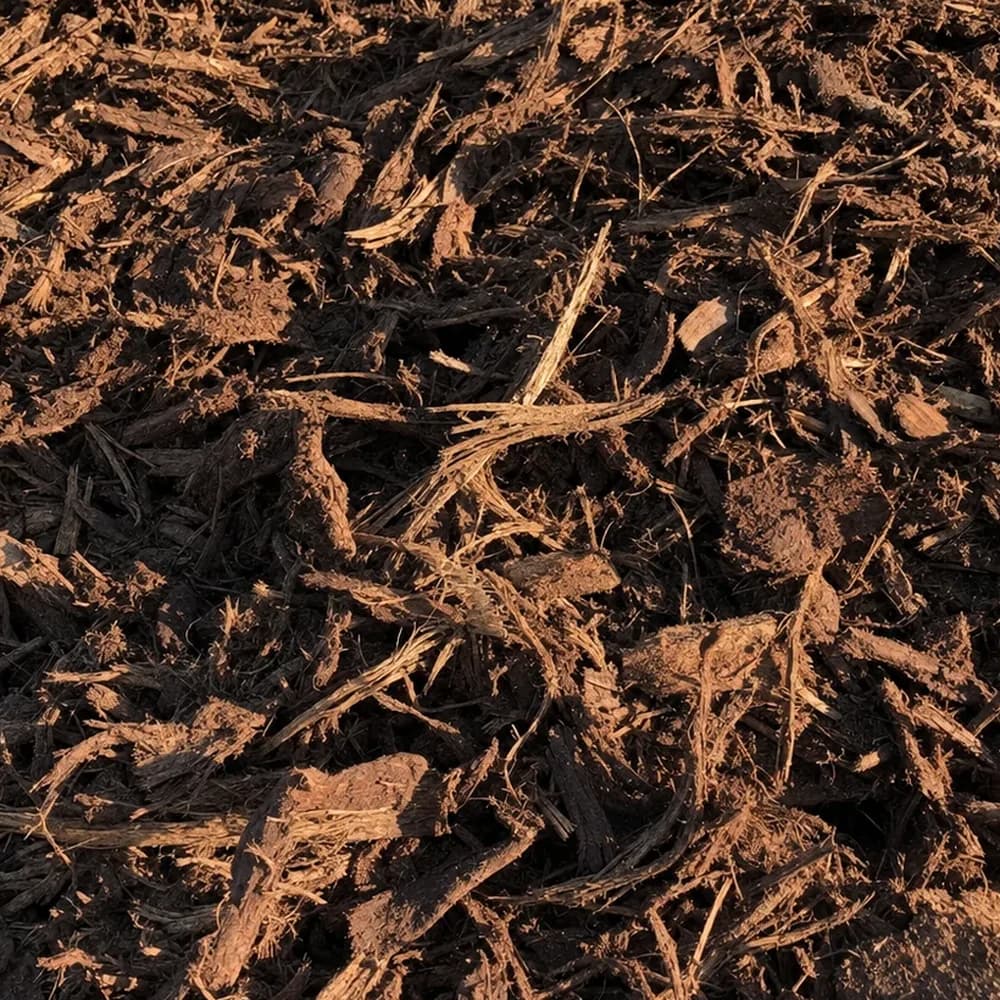
Shredded hardwood is the default here because the pieces knit together and stay put on a gentle slope, which matters when a summer storm dumps an inch in twenty minutes. Chips and nuggets can last a season longer but will float and scatter in that same rain. Dyed material holds its color and breaks down more slowly. None of that changes the arithmetic, because volume is volume.
If the beds need improving as well as covering, Garden Soil goes in underneath and is sized in the soil calculator, and a worn lawn beside the beds is a job for the topsoil calculator instead. Pick on appearance and on how often you want to be doing this again, then find it in the full material list and choose a quantity and a delivery date. Delivery is arranged at checkout by ZIP code, and the truck needs somewhere clear to tip, which how delivery works sets out. Where a job runs to three materials, other material calculators are collected in one place.
Common questions
Do I measure the bed up to the steel edging or up to the plants?
Up to the inside face of the edging, since that is where the mulch stops. Do not deduct the plants. Shrubs and perennials take up almost no volume at bed level and the small overage covers the spillage you get wheelbarrowing in.
The beds need soil improving as well as mulching. Is that one order?
Two. Bed soil goes in first at its own depth and gets worked in, then mulch goes over the finished level at two to three inches. Size the soil in the soil calculator and the mulch here, and order them as separate products.
My beds wrap round the house in a long curve. How do I enter that?
Take the average width of the curved run and treat it as a rectangle along its center line. Where the bed swells out at a corner, give that swelling its own rectangle in Multiple areas. Five areas at once is usually more than a front garden needs.
Half my beds still have good mulch and half are bare. Same depth for all of them?
No, and calculating them together will short you. Put the beds that still hold mulch in at two inches, the bare ones in at three, and add the two yardages. Multiple areas will not do it for you, because depth applies to the whole calculation.
I finished half a yard short. What now?
Spread what you have across everything at a slightly thinner layer rather than finishing some beds deep and leaving others bare, then top up on the next order. A thin coat everywhere still suppresses weeds; a bare bed in July does not.
Related calculators
Skip the 27-bag cart.
Bulk shredded hardwood by the yard, tipped in your driveway, delivery free.