Soil Calculator for Beds and Planters Over Piedmont Clay
Enter your project dimensions
Bed building in North Carolina tends to happen in a narrow window, after the clay has dried enough to walk on and before anything needs planting into it. That window is short, which is why the beds get built in a weekend and the soil order gets guessed at on the Thursday. A first raised bed almost always takes more material than the builder expected: four feet by eight, filled a foot deep, is 1.2 cubic yards, and nobody carries that home in bags. The soil calculator above converts the beds you have actually built into yards, which is how bulk soil is sold and how a delivery gets sized.
Ground that drains like a saucer, and what that does to your depth
The native soil decides how much you need before the beds do. Dense Piedmont clay sheds water slowly and stays cold; sandy Coastal Plain ground loses moisture between waterings. Both answer to the same treatment, which is not replacement. Working two to three inches of compost-blended soil through the top six inches of what is already there costs about a third of the material and a third of the lifting that digging out to full depth would, and roots move through a mixed transition far more happily than they cross a hard line between imported soil and native ground.
So there are two depths in play. A bed being improved takes 4 to 6 inches of new material worked in. A new in-ground bed takes about 6 inches. An empty raised planter takes the full 12 inches, or whatever its sides measure. Full replacement is only worth it where the existing ground is full of rubble or otherwise unusable.
Inside faces, not outside: what the soil calculator needs typed in
Choose Rectangle, Circle or Multiple areas, and remember that the multiple-areas mode will total up to five separate beds in a single calculation. Lengths and widths go in as feet, a round planter or a half barrel goes in by its Diameter in feet, and Depth goes in as inches anywhere between 0.25 and 24. Measure to the inside faces of the timber, not the outside, because the boards themselves hold no soil and on a small bed that edge is real volume.
Set the Material select to the soil you intend to buy so the tonnage matches it. The tick marked "Add 5% extra for compaction & spillage" is optional and is the only allowance the form applies; on a soil order it covers what is lost between the pile and the wheelbarrow, not the settling that comes later. Press Calculate material needed for cubic yards, tons and cubic feet together, and use "Email my quote" to keep the figures beside the measurements.
Twelve inches in a new planter, four to feed a bed that is tired
Three worked examples, all illustrative rather than customer work.
Three beds of 4 by 10 feet, filled to 12 inches, come to 120 square feet between them. 120 x 12 / 12 = 120 cubic feet. 120 / 27 = 4.44 cubic yards, and at 1.00 tons a yard that is 4.44 tons. Enter them as three areas or as one, since the arithmetic lands in the same place.
A tall planter 3 by 6 feet and 24 inches deep does not need blended soil all the way down. The bottom 8 inches can be cheaper fill or coarse organic matter that breaks down in place, and the top 16 inches is where roots actually live. The footprint is 18 square feet. Garden soil: 18 x 16 / 12 = 24 cubic feet, 0.89 cubic yards. The lower layer: 18 x 8 / 12 = 12 cubic feet, 0.44 cubic yards, which at 1.20 tons a yard is 0.53 tons. Two runs of the calculator, two products.
An existing border of 340 square feet being fed rather than rebuilt, at 3 inches worked in: 340 x 3 / 12 = 85 cubic feet, 3.15 cubic yards, 3.15 tons. That border would have taken twice the material at a full six-inch replacement, for a result the plants would not thank you for.
Two thousand pounds a yard, and why the bed still reads in yards
A cubic yard of blended garden soil runs about 2,000 lb, which works out at an even 1.00 tons a yard and makes the mental arithmetic unusually easy. Screened topsoil is heavier at roughly 2,200 lb, or 1.10, and fill dirt heavier again at about 2,400 lb, or 1.20. Those are the weights this site publishes, and they are approximate.
Yards are the figure to plan against, because a bed is a volume and nothing about it changes when the soil gets rained on. Tons are what the truck carries. Switch the material select between the three soils on an identical bed and the yardage will not move at all while the tonnage will, which is the whole reason the select exists.
What the compost gives back over the first month
Blends with compost in them settle as the organic matter breaks down, and the drop is real: something like a tenth in the first weeks, and more in a bed that has been heavily planted and watered. Fill slightly above the rim, water it in thoroughly, and top up once rather than chasing it. A bed that looks a touch overfull on the Sunday will look right by the end of the month.
That settling is not what the five percent tick covers, so a bed you intend to plant hard is worth rounding up on beyond the allowance. A spare part-yard has somewhere to go: the second top-up, a planter that was not on the list, or the low corner of a border. Most beds get a surface layer once they are planted, and that is a separate order sized in the mulch calculator, since a yard of bark and a yard of soil are nothing like each other on the truck.
One material for the beds, another for turf, a third for the hole below
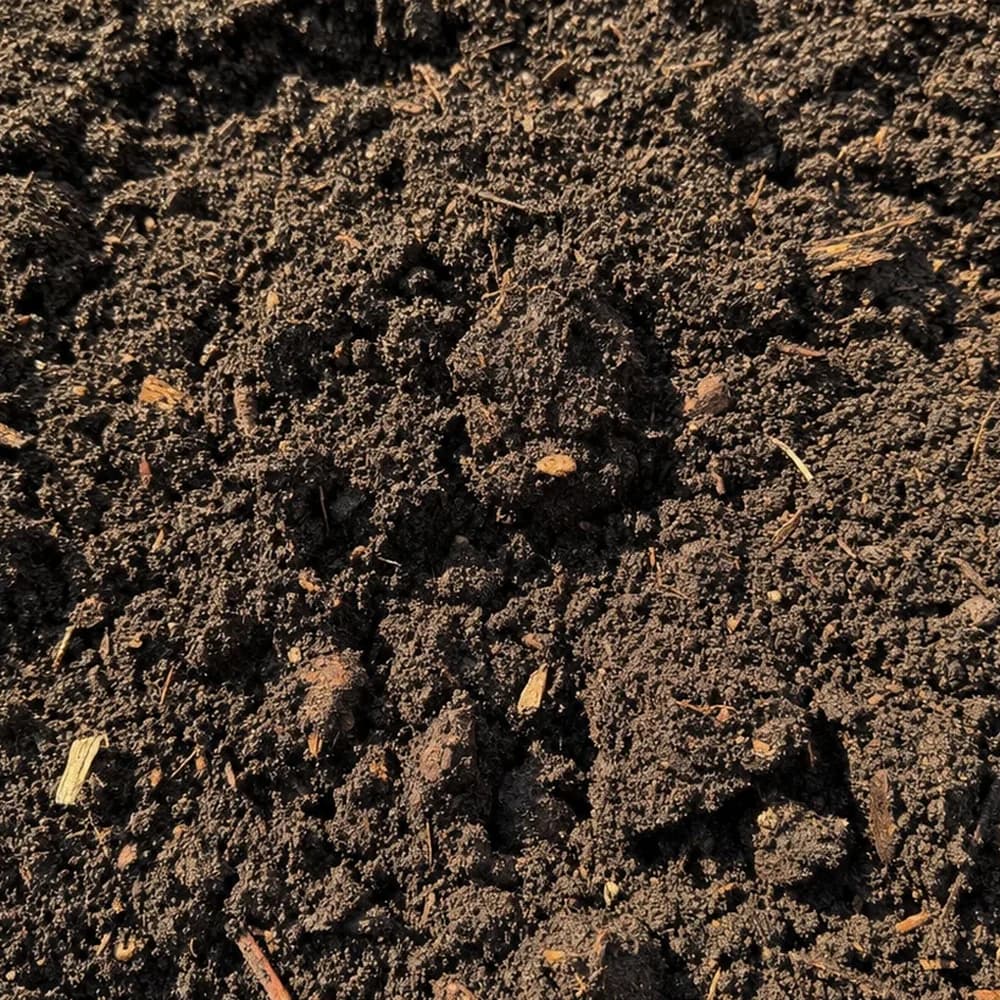
Three products, three jobs, three tools. Garden Soil is topsoil blended with compost, which is what beds, borders and planters want, and it can be planted into directly. Top Soil is screened natural soil for lawn surfaces and finish grading, sized in the topsoil calculator. Fill Dirt is compactable subsoil for raising grade and filling holes, sized in the dirt calculator, and it belongs under a growing layer rather than as one.
Once the yardage is settled, open the product page, set a quantity and a date, and clear a spot for the load. Delivery is arranged at checkout by ZIP code, and the driver needs clear access to somewhere the pile can go down. Put a tarp underneath it if the only flat spot is the driveway, since soil stains concrete and a tarp can be dragged and folded afterwards. If the beds are going in over heavy clay and you want a second opinion on depth, the contact page will get you one.
Common questions
I am a yard short with two beds still empty. Is a small top-up worth a second delivery?
Usually it is better to fill the beds you can fill properly and leave the others until the next order, rather than spreading the soil thin across all of them. A shallow bed dries out and needs watering twice as often, which shows up in the first hot spell. Order the remainder alongside whatever else the yard needs.
How exact is the yardage for beds that are not square in the corners?
The arithmetic is exact for the numbers you type, and a bed that is out of square by an inch or two will not move the result meaningfully. What does move it is depth: measure the inside height of the boards rather than assuming twelve inches, because a bed built from two six-inch boards is rarely a full foot once it sits on uneven ground.
Which product page do I open once the calculator gives me yards?
The one matching the material you selected in the form, since that is the weight the tonnage was worked out on. Beds and planters go to garden soil. If you selected topsoil or fill dirt because the job was really a lawn or a hole, open those pages instead and check you are on the right calculator first.
Four yards of garden soil has to land somewhere. Where do I point the driver?
Somewhere flat and firm the truck can reach and back away from, close enough that a loaded wheelbarrow does not have to cross the lawn repeatedly. Four yards makes a pile bigger than most people picture. Lay a tarp first, keep it off grass you care about, and do not put it where the beds themselves are going.
Why does a bed order show tons at all when soil sells by the yard?
Both numbers describe the same delivery. Yards tell you whether the bed is full, and that is the figure to plan and order against. Tons tell you what is on the truck, which matters for where the pile goes and how long it takes to move. At 2,000 lb a yard, garden soil happens to make the two numbers almost identical.
Related calculators
Beds measured? Soil's a click away.
Garden soil, topsoil and fill dirt by the yard, free delivery included.