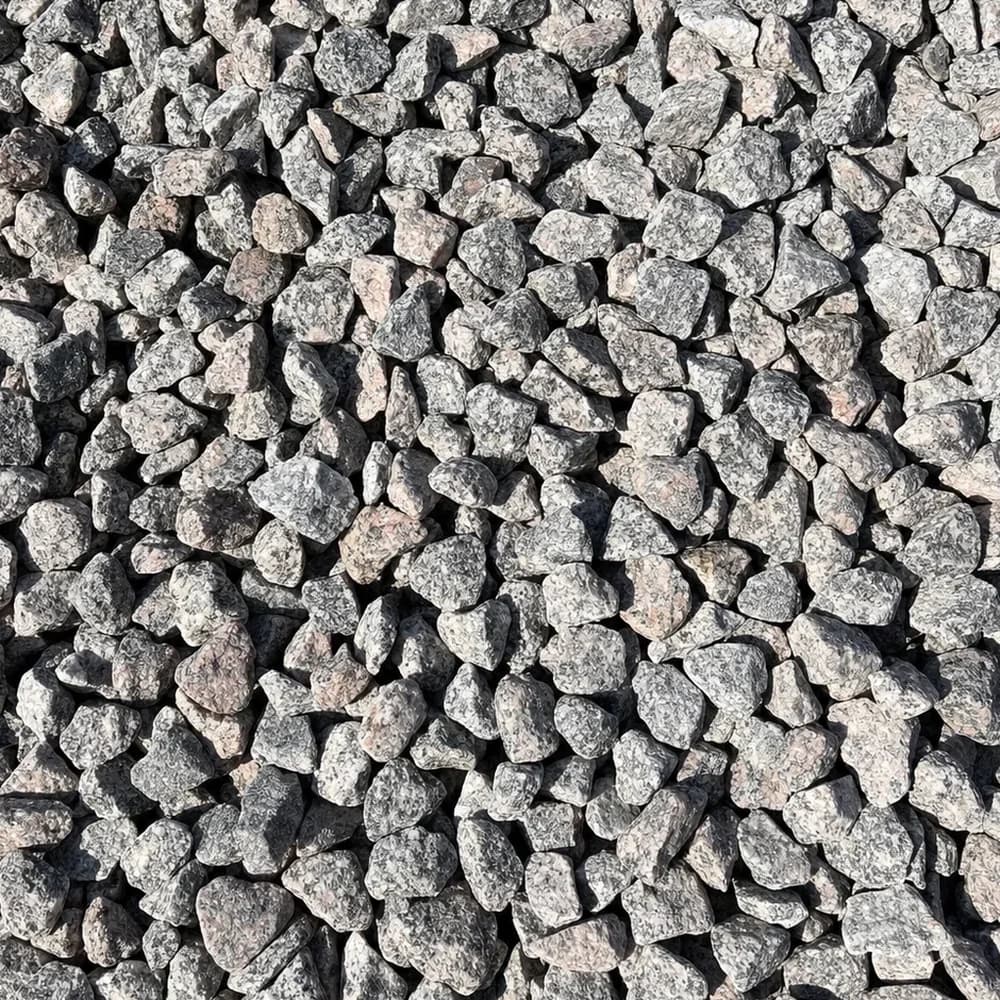
Walkway Gravel for North Carolina Garden Paths and Borders
Set Walkway Gravel over a prepared base for North Carolina garden paths, especially where heavy rain can leave Piedmont clay wet.
- Size: 3/8 inch
- Grading: Graded mix of stone sizes
- Type: Crushed stone
From $411 for 1 ton, delivery included
Larger loads cost less per ton: 500 tons is $31,460 ($62.92 per ton). Pick any quantity below for a delivered price.
Free delivery included
Free delivery anywhere in North Carolina
Pick a delivery date
Weekday delivery, earliest Oct 20
Get a Free Quote
Fill out the form and our sales team will get back to you within the hour.
Size and Grading
- Size
- 3/8 inch
- Grading
- Graded mix of stone sizes
- Type
- Crushed stone
A garden path in the Piedmont has one real enemy and it is not foot traffic. It is the two inches of rain that arrives in an afternoon, hits red clay that will not take it, and runs along the easiest line it can find, which is usually the path somebody has just spent a weekend building. Walkway gravel handles that better than almost any hard surface, because water goes through it rather than across it, but only where the layer underneath has been thought about first.
Reading a load of 3/8 inch stone before you rake it out
| Spec | What is listed |
|---|---|
| Size | 3/8 inch |
| Grading | Graded mix of stone sizes |
| Type | Crushed stone |
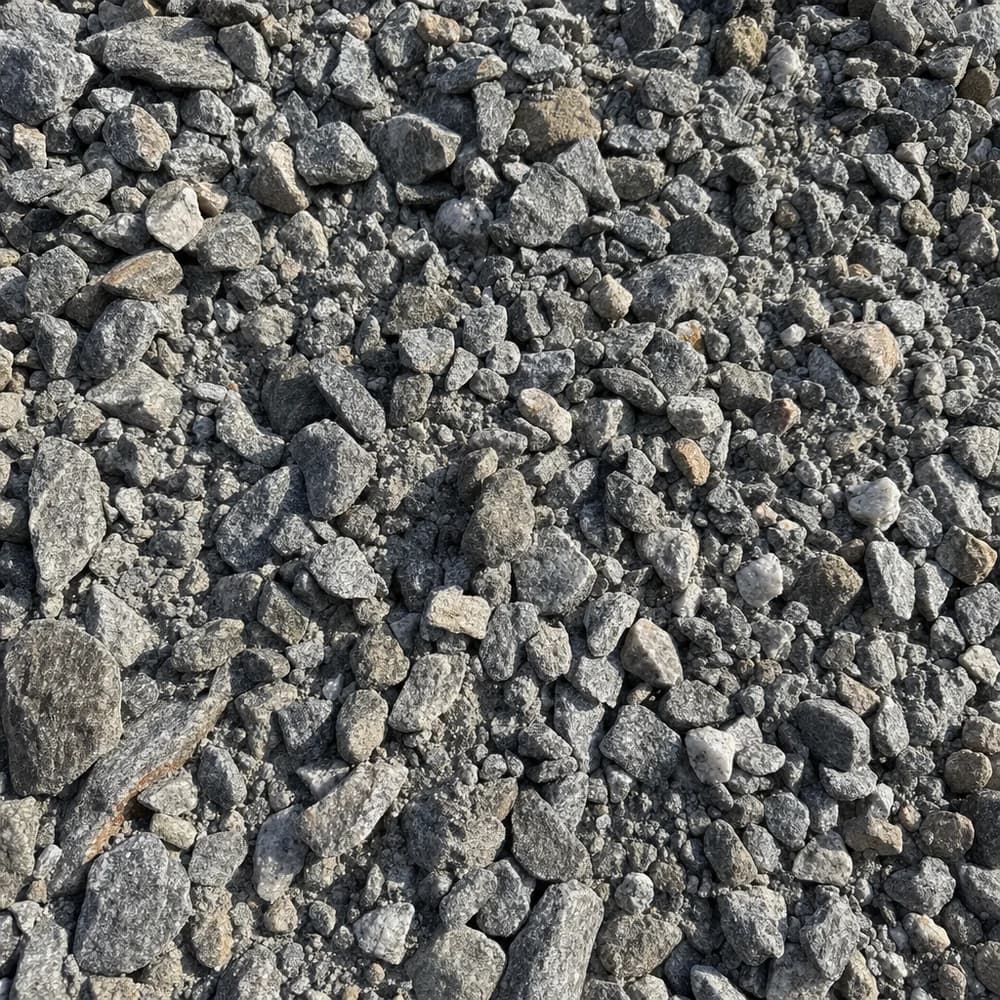
It is a small crushed stone rather than a rounded one, and it is graded, which means the load runs from the top size down through smaller material rather than sitting all at one size. Both of those facts decide how it feels underfoot.
Angular pieces at this size wedge against each other, so the surface firms up under use instead of rolling away from a heel the way a rounded gravel does. The graded range fills the gaps between the larger pieces and gives the layer a settled, closed look rather than a loose one. It stays quieter underfoot than a coarse drive stone and it does not carry into the house on shoes the way a fine grit does.
Color and tone follow whatever rock the load comes from, which is worth allowing for if a second load is going in next to a path laid a year ago.
Garden routes, stepper joints and patio edges where walkway gravel belongs
Four places it earns its place.
A garden route linking beds, a shed or a seating area is the obvious one, and a gravel path takes a curve that a poured surface will not.
A front or side walk is the same job with more traffic on it, and it replaces cracked concrete without the removal, the forms or the cure time.
The joints around flagstone or concrete steppers are where it quietly earns its place. Filling between the stones firms up the spaces that turn to mud on clay, stops weeds settling in and keeps the steppers from rocking.
A patio or courtyard border uses it as the transition between a paved surface and planted ground, giving water somewhere to drain at the edge instead of running off the paving in a sheet.
An RV pad and a long rural lane will grind it to nothing
Two hypothetical jobs it gets ordered for and should not be.
An RV or boat parking pad puts a concentrated load through a jack foot or a trailer tongue. A 3/8 inch surface layer has no depth of large stone to spread that load, so the foot punches through, and turning tires scuff the surface into ridges. Build that pad on ABC Stone compacted in lifts.
A long rural lane fails a different way. Vehicles crown a small stone into two tracks with a ridge between them inside a season, rain follows the tracks, and what started as a path becomes a pair of gullies. A lane that length wants a graded material with a larger top size and real fines, laid deep. Driveway Gravel over a compacted base is the listing for it.
A garden path, the third job of that set, is exactly what this material is for.
Two inches of surface over three inches of compacted base
Depth is quoted two ways and both of them matter here.
The surface layer goes down at around two inches, which is the site's guidance for landscape work and about right for a path. Any deeper and walking becomes wading, because a small stone gives way under a heel until it reaches something firm.
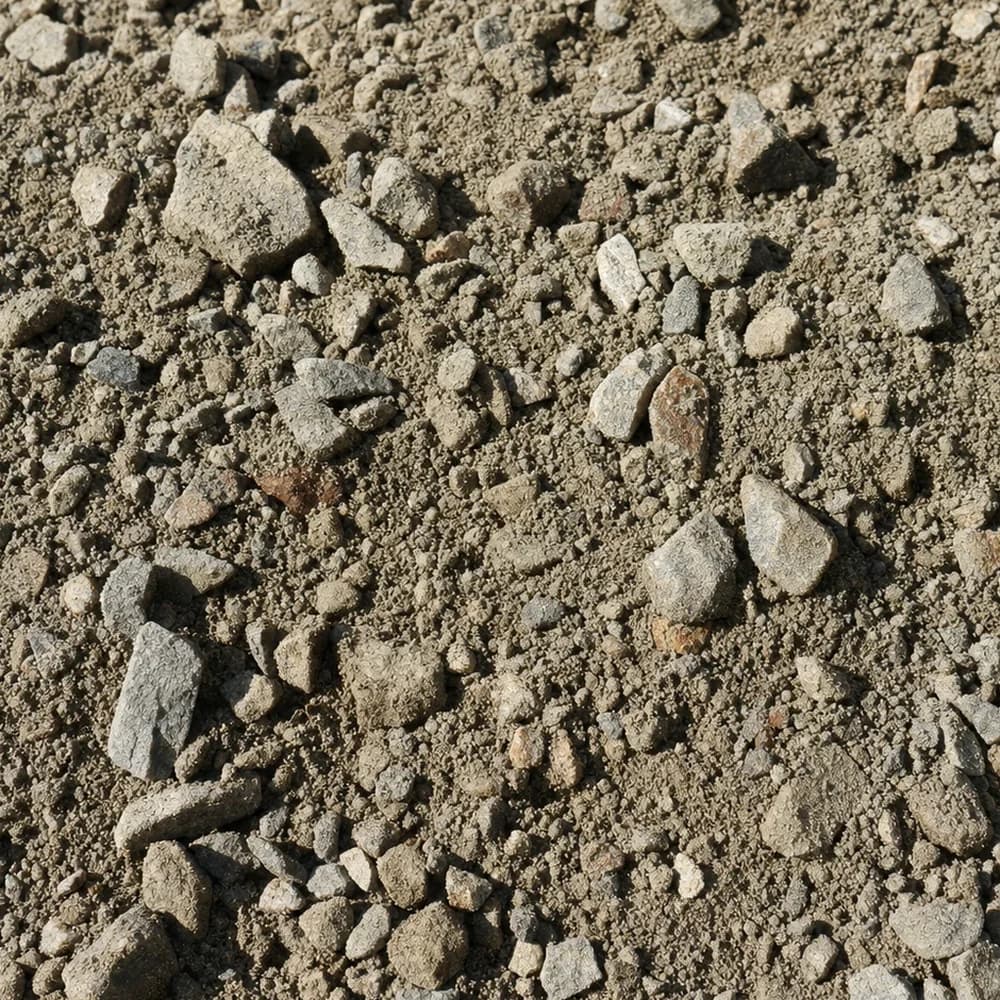
That firmness has to come from below. On red clay, lay filter fabric over the shaped subgrade, then a compacted base of around three inches of Crush and Run, then the walking surface over it. The base is the layer that gets compacted; the surface layer is spread and left. Skip the base on clay and the path will hold up beautifully until the first wet spell, when the stone starts disappearing into the subgrade and the low spots begin holding water.
Edge the path as well. A timber, steel or stone restraint keeps the surface where it was raked, and on any slope it is the only thing stopping a downpour carrying the whole layer to the bottom.
A 55-foot path, three feet wide, in cubic yards
A hypothetical path, 3 feet wide and 55 feet long, built properly on clay. Two numbers, because two materials are going in.
Area: 3 x 55 = 165 square feet.
Surface layer at 2 inches:
- Depth: 2 / 12 = 0.167 feet
- Volume: 165 x 0.167 = 27.5 cubic feet
- Cubic yards: 27.5 / 27 = 1.0
Compacted base at 3 inches:
- Depth: 3 / 12 = 0.25 feet
- Volume: 165 x 0.25 = 41.25 cubic feet
- Cubic yards: 41.25 / 27 = 1.5
One cubic yard of surface stone, one and a half of base. This site publishes walkway gravel at approximately 2,800 lb per cubic yard, or 1.40 tons per yard, and crusher run at 3,000 lb, or 1.50 tons per yard, so the surface layer is about 1.4 tons and the base about 2.3 tons (1.5 x 1.50 = 2.25), both approximate. Run both figures through the gravel calculator if you would rather not convert by hand, and keep the extra allowance it adds by default on the surface layer, since the last few feet of a path always take more than the drawing says.
Edging, fabric and the base course to order alongside it
Three things worth getting in the same order as the stone: the base material, the filter fabric that keeps clay and stone apart, and whatever is going to hold the edges. Ordering the surface on its own is the most common way a path job stalls halfway through a Saturday.
Set the quantity and the delivery date together on this page. Delivery is arranged at checkout from the ZIP code you enter, and since a path is usually in a back yard rather than beside a drive, pick a drop point with the wheelbarrow run in mind and check what the truck needs on the day before you book it.
Quickly Calculate How Much You Need
Material: Walkway Gravel
How to Measure
Measure the length and width of your project area in feet
Decide on depth in inches (2" for landscaping, 4" for driveways)
Enter the values above and we'll calculate the tonnage you need
Need help figuring out the right amount? We can help!
Call or text us at (919) 752-3797 and we'll help you calculate the right quantity for your project.
Not sure how much you need? The Gravel Calculator has depth guides, coverage charts and worked examples for this material.
Frequently Asked Questions About Walkway Gravel
Walkway Gravel delivery across North Carolina
- Charlotte
- Raleigh
- Greensboro
- Durham
- Winston Salem
- Fayetteville
- Cary
- Wilmington
- High Point
- Concord
- Greenville
- Asheville