Gravel Calculator for North Carolina Drives, Pads and Patios
Enter your project dimensions
A gravel job on Piedmont red clay goes differently than one on Coastal Plain sand, and a steep mountain drive is a different job again. This page takes the questions people ask about a stone job in the order they usually ask them, with the calculator in the middle, because the number you get is only as good as the planning and measuring before it. Answer them in turn and you'll order the right tonnage the first time.
Does my yard need one layer of stone or two?
Start by deciding what the surface has to carry. Foot traffic, a fire pit area or a garden path can take a single layer. Anything with tires on it needs two: a compacted base and a surface layer.
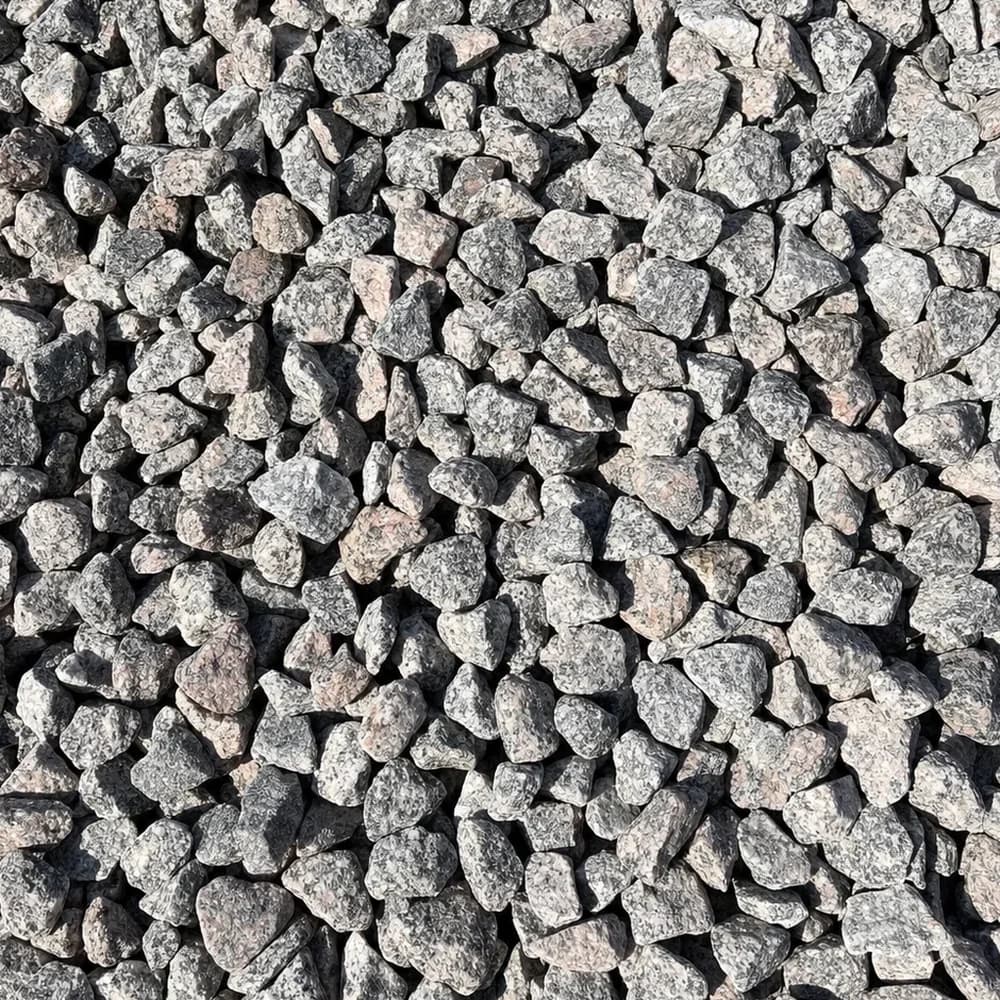
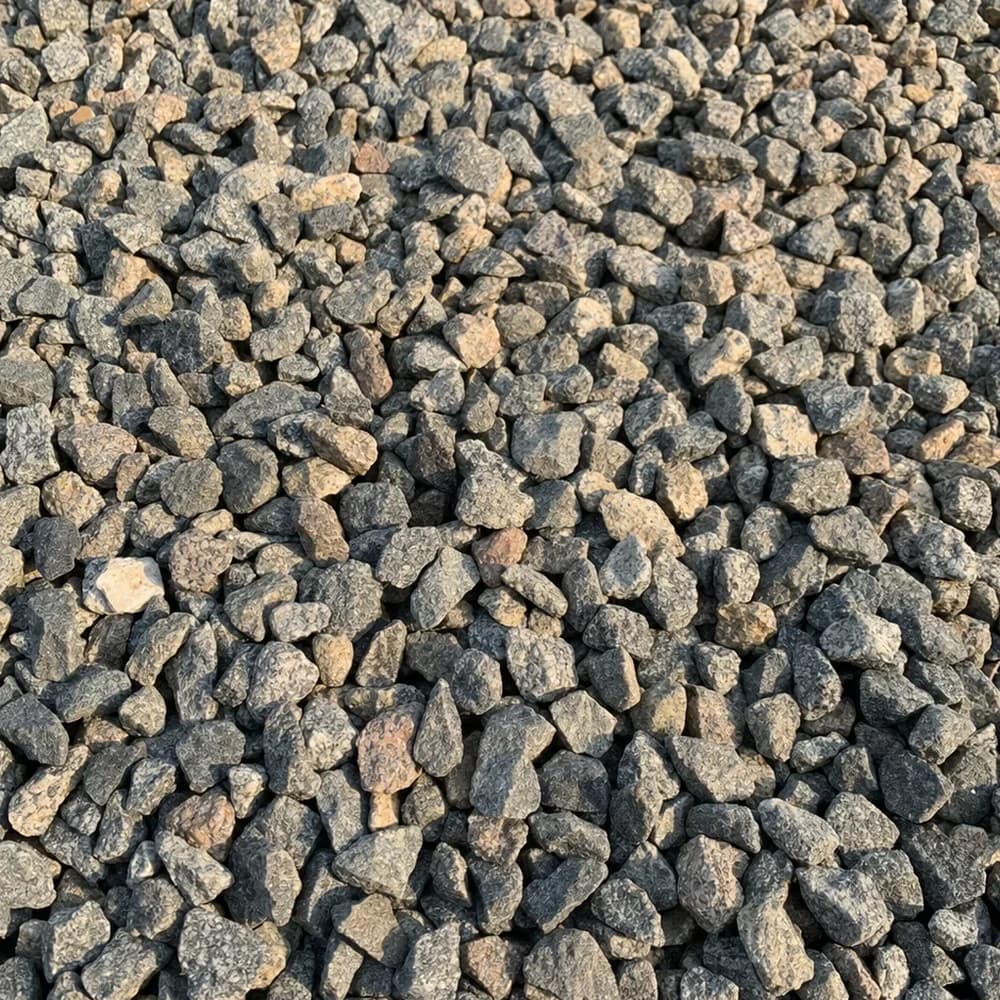
For the base, ABC stone is the standard material across North Carolina. It's a graded aggregate base course with fines that lock together when compacted. Crush and run does a similar job. For the surface, #57 stone or driveway gravel goes on top. For loose cover around a seating area, pea gravel is comfortable underfoot.
In the Piedmont, red clay drains slowly and holds water, so that compacted base and a surface that sheds water do most of the work. On sandy Coastal Plain ground, water drains fast, but loose sand still needs a firm base under anything that carries weight.
How do I measure a drive or patio in feet?
Measure length and width in feet and write down decimals: 10 feet 6 inches is 10.5. For a round area, measure straight across through the middle to get the diameter. If the space has more than one section, sketch it and split it into up to five rectangles or circles that don't overlap.
Measure the finished stone depth in inches for each layer separately.
What goes into each box on the calculator?
With measurements in hand, use the tool at the top of the page.
- Choose Rectangle, Circle or Multiple areas (up to 5).
- Enter length and width, or the diameter, in feet.
- Enter the depth in inches. The calculator accepts 0.25 to 24.
- Choose the material so the weight matches.
- Tick "add 5% extra for compaction & spillage" for any layer you'll compact.
- Press calculate and read the result in cubic yards, tons and cubic feet.
Run it once for each layer. If you want a written copy, choose Email my quote.
How do I get the ABC stone delivered?
Take the tons figure to the product page for the stone you selected and choose your date and quantity. Delivery is arranged at checkout by ZIP code, and the truck needs clear access to the spot where it'll dump. If your order is for two layers, order each product for its own layer.
What happens once the truck dumps the pile?
Dump the base close to the work, spread it in lifts, and compact each lift before adding the next. Shape the surface so water runs off, not toward a building. Then spread the top layer evenly and rake it level. Rounded pea gravel stays loose, so edge it to keep it in place.
How does the calculator turn feet into tons of ABC stone?
The calculator takes length (ft) x width (ft) x depth (in), divides by 12 to get cubic feet, and divides again by 27 for cubic yards. It then multiplies cubic yards by a weight factor for the material you chose. Driveway gravel, walkway gravel, 3/8" pea gravel and crushed stone such as #57 and 3/4" all use about 2,800 pounds a yard, or 1.40 tons. Crusher run and road base, which covers ABC stone and crush and run, use about 3,000 pounds, or 1.50 tons. River rock (1 to 3 inches) uses about 2,700 pounds, or 1.35 tons.
Worked example: a fire pit surround
This is an illustrative example, not a customer job. A circle 16 feet across, covered in 3 inches of pea gravel. The area is 3.1416 x 8 x 8 = 201 square feet. At 3 inches that's 201 x 3 ÷ 12 = 50.3 cubic feet, or 1.86 cubic yards. At 1.40 tons per yard, that's 2.61 tons. The pit itself takes up a small part of the circle, so the leftover works as spare.
Worked example: a pole barn or equipment pad
A 30 x 40 foot pad with 6 inches of ABC stone. 30 x 40 x 6 ÷ 12 = 600 cubic feet, which is 22.2 cubic yards. At 1.50 tons per yard that's 33.3 tons, or 35.0 tons with the 5% option on. On clay, compact it in two lifts of about 3 inches each.
Worked example: a single-car driveway
A driveway 60 feet long and 10 feet wide, built in two layers.
- Base: 4 inches of ABC stone. 60 x 10 x 4 ÷ 12 = 200 cubic feet = 7.41 yards x 1.50 = 11.1 tons (11.7 with 5%).
- Top: 2 inches of #57 stone. 60 x 10 x 2 ÷ 12 = 100 cubic feet = 3.70 yards x 1.40 = 5.19 tons (5.44 with 5%).
That's about 16.3 tons in total, or about 17.1 tons with the 5% option on both layers, ordered as two separate products.
Where do I go once I have my tonnage?
Run your measurements through the calculator, then open the product page for your base or surface stone to choose a date and quantity. To check delivery for your area, visit the North Carolina locations page. If you're not sure which stone fits your ground, call or text us through the contact page.
Common questions
Why does wet stone weigh more than dry?
Water sits between the stones and adds weight but no volume. The calculator uses dry-weight figures, so a load that has been rained on can weigh more for the same number of yards. Yards stay a steady measure of how much ground you'll cover.
How close will the calculator's figure be to what I actually need?
It's exact for the measurements you enter. In practice, the difference comes from uneven ground, rounding and compaction. Measure carefully, round up to the next foot, and use the 5% option on compacted layers.
Why does ABC stone need more tons than #57 stone for the same area?
ABC stone has fines that fill the gaps between larger stones, so a yard of it weighs about 3,000 pounds compared with about 2,800 for #57. Same volume, more weight.
How do I figure stone for a drainage trench?
Treat the trench as a long, narrow rectangle. Enter its length, its width in feet (a 12-inch trench is 1 foot), and the depth of stone in inches, up to 24.
What depth works for a driveway used by everyday cars?
Plan on about 4 inches of compacted ABC stone with about 2 inches of #57 or driveway gravel on top. On soft clay, a thicker base helps.
Related calculators
That tonnage ships free.
Driveway gravel, #57, crusher run: priced by the ton, delivered across North Carolina.