Dirt Calculator for Low Spots, Trench Backfill and Berms
Enter your project dimensions
Two jobs in the same back yard, and only one of them takes fill dirt. The sunken strip where the lawn never dries out wants material underneath and grass on top. The berm going in along the property line is fill the whole way up, with a skin of soil over it. Sorting out which is which before you open the dirt calculator saves ordering the wrong thing by the yard, and on Piedmont clay it also saves the sinking that shows up after the first hard rain.
A washed-out low spot and a new berm, measured side by side
Both of these are illustrative, not customer work.
The low spot runs 22 feet by 14, and probing it with a stake shows the dip varies from two inches at the edges to eight in the middle, so five inches is the honest average. 22 x 14 = 308 square feet. 308 x 5 / 12 = 128.33 cubic feet. 128.33 / 27 = 4.75 cubic yards.
The berm is 30 feet long and 5 feet wide at the base and stands 18 inches at the ridge. A berm is a triangle in cross section rather than a box, so the average depth across the footprint is about half the ridge height, 9 inches. 30 x 5 = 150 square feet. 150 x 9 / 12 = 112.5 cubic feet. 112.5 / 27 = 4.17 cubic yards.
The berm covers half the ground the low spot does and still takes nearly as much material, because nine averaged inches is close to twice five. With dirt, depth decides the order and area barely gets a vote.
Reading an average depth out of ground that is not level
Nothing you fill is a neat box. Walk the area with a stake or a length of rebar, note the shallowest point and the deepest, and take the midpoint rather than either extreme. For a trench or a straight-sided hole, measure length, width and open depth, all in feet, since the sides are doing what your averaging normally has to do.
One ceiling to know about: the depth box accepts inches from 0.25 up to 24. Anything deeper than two feet, which describes most foundation backfill and plenty of holes, goes in as two passes. Calculate the bottom two feet, calculate the remainder, add the yardages. The tool will not do that step for you.
Entering a low corner in the dirt calculator
Choose Rectangle, Circle or Multiple areas, then put length, width or diameter in as feet and the average depth in as inches. Set the material so the weight is right, leave "add 10% extra for compaction & spillage" ticked, and read the result in cubic yards, tons and cubic feet. "Email my quote" keeps a copy of the figure beside the measurements you took.
The low spot above comes back as 4.75 cubic yards and 5.70 tons, or 5.23 yards and 6.27 tons with the ten percent. The berm comes back as 4.17 yards and 5.0 tons, or 4.59 and 5.50 with it ticked.
Cubic yards for the hole, tons for the truck
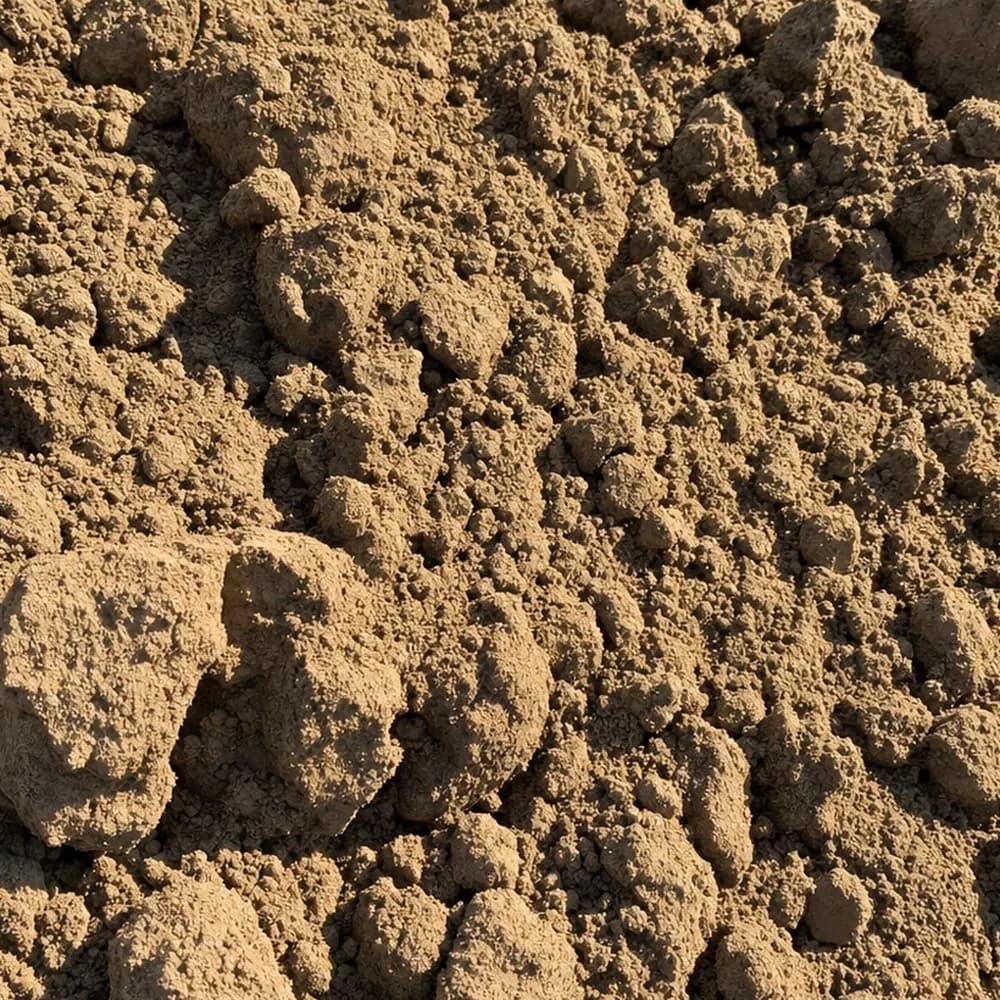
Yards answer the question you actually asked, which is how much space needs filling. Tons answer what arrives. Dry Fill Dirt runs about 2,400 pounds a cubic yard, which is 1.20 tons. Screened topsoil is lighter at roughly 2,200 pounds, or 1.10, and a blended garden soil lighter again at about 2,000, or 1.00. Those are approximate and they are the numbers this site publishes.
A soaked yard of fill can run up to 3,000 pounds, closer to 1.50 tons. Rain adds weight, not volume, so a wet load does not change the yardage you ordered. It changes how the wheelbarrow feels and whether the material smears instead of packing, which is an argument for booking the delivery into a dry stretch rather than an argument for ordering differently.
Settling is the reason the second load gets ordered
Loose fill can lose a tenth to a seventh of its height as it consolidates, and nobody notices until the rain comes and the patch is an inch low again. Place it in layers of six to eight inches and compact every layer. Where you have no compactor, water each layer heavily and let it settle before the next goes down. On a lawn repair, finish the surface about half an inch proud of grade so it drops flush rather than dishing.
Keep wood, roots and yard waste out of it. Buried organic material rots and leaves a soft hollow years after everyone has forgotten the fill went in. Anything structural, under a slab or a footing, needs thinner lifts, real equipment and a compaction specification from an engineer, which is a different job from raising a lawn.
Fill dirt below, topsoil above, garden soil in the beds
Fill dirt is screened subsoil with very little organic content in it, and that is exactly why it packs and stays put. It is also why nothing grows well in it. Stop the fill four to six inches below finished grade anywhere grass or plants are going, then put Top Soil on for the growing layer and size that separately in the topsoil calculator. Raised beds and planting pockets want Garden Soil, calculated in the soil calculator.
Three tools rather than one, because three different weights and three different depths are involved. Filling a hole, resurfacing a lawn and loading a raised bed are unrelated errands that happen to involve brown material.
Booking a dirt delivery around a wet Carolina week
Clay that has been rained on for a week will not take a compactor, and a loaded truck crossing soft ground leaves ruts you then have to fill as well. Watch the forecast, clear a dump spot the truck can back to, and give the driver somewhere the pile will not sit in the path of the work; how delivery is arranged covers what the driver needs to find when they get there. Delivery itself is set at checkout by ZIP code. Once you have a yardage, browse the bulk materials, open the page for what you need, choose a quantity and a date, and order the growing layer on the same visit if the job calls for one.
Common questions
The berm will have a stone border round the foot of it. Do I measure to the border or to the grass?
Measure the footprint the dirt actually occupies, which stops at the inside face of the border. Edging, timber and paver borders take up real width, and on a narrow berm that can be a tenth of the area. Measure the border separately if it is being filled or bedded, since it will not be the same material.
How do I split one hole between fill dirt and topsoil?
Run the calculator twice. The first pass is the fill, measured from the bottom of the hole to four to six inches below finished grade. The second is the topsoil, at that four to six inch depth over the same footprint. Order them as two products, because their weights differ and they arrive as separate materials.
The low area is a rough oval, not a rectangle. What do I type?
Either box it into a rectangle that just contains the wet ground and accept a little spare, or use Multiple areas and cut the shape into two or three rectangles that do not overlap. An oval with a clear long axis can also go in as a circle measured across its middle, which lands close enough for fill.
How do I measure a lawn that has only sunk an inch or two?
Lay a straight board or a string line across the dip and measure down to the turf at a few points along it. Average those readings. An inch and a half over a large area is still real yardage, and it is the kind of job people guess at and underbuy.
What if the load turns out short?
You stop short of grade and the finished patch settles below the lawn around it. Round the yardage up rather than down, leave the ten percent ticked, and remember that settling eats into the order before the surface is even finished.
Related calculators
Cheap by the yard, free to your gate.
Screened fill dirt for grading and backfill, delivered across North Carolina.