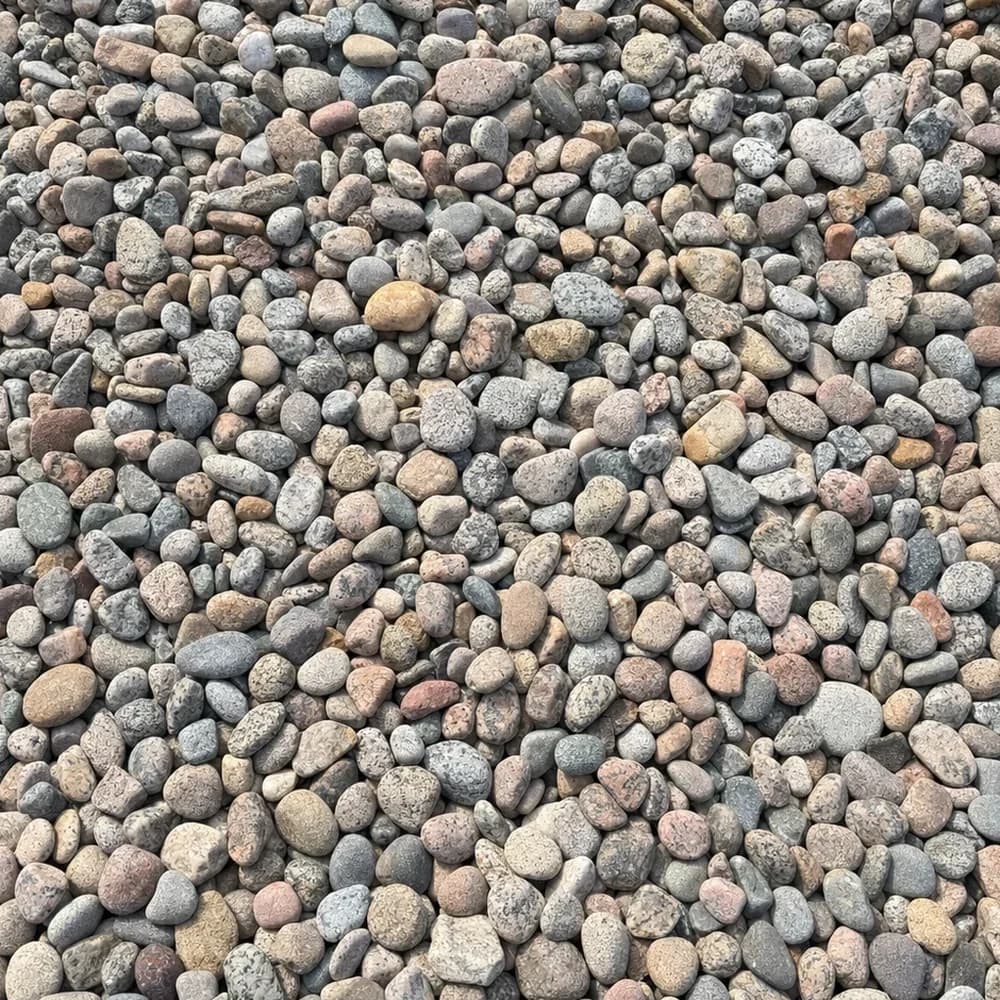
Pea Gravel Calculator for Paths, Seating Areas and Fall Zones
Enter your project dimensions
The decision that matters on this page is depth, and it is worth making before you touch the pea gravel calculator, because the same rounded three-eighths stone goes down two and a half inches under a garden path and a foot under a swing set. Those are not variations on one order. They are two different sizes of job, and the gap between them is where most of the guessing goes wrong.
A garden path against a swing set, and the eight tons in between
Both illustrative, both plausible in a Carolina back yard.
The path runs 34 feet by 3, which is 102 square feet, at two and a half inches. 102 x 2.5 / 12 = 21.25 cubic feet. 21.25 / 27 = 0.79 cubic yards. At 1.40 tons a yard, 1.10 tons.
The fall zone under the swing set is 14 by 13 feet, 182 square feet, at a full twelve inches. 182 x 12 / 12 = 182 cubic feet. 182 / 27 = 6.74 cubic yards, or 9.44 tons.
Under twice the footprint, more than eight times the stone. A ton covers about 116 square feet at two inches and only about 19 at twelve, so a fall zone is the one job here where guessing will embarrass you.
Where two to three inches is right and where nine to twelve is not negotiable
Walking surfaces, patios, seating areas and garden paths all sit at two to three inches. Below two, the base grins through wherever traffic concentrates. Above three, your feet sink and the surface feels unstable rather than generous.
A fire pit surround takes three, and the stone will not burn, so rain drains out of the seating area overnight instead of standing. A dog run wants two to three, where rounded stone is easier on paws and rinses clean. Playground fall zones are the exception and they are governed by the equipment, not by taste: nine to twelve inches of loose material, checked against the manual that came with the frame. One thing to be plain about: this is landscape pea gravel and it is not sold as certified playground surfacing. The required depth, the fall-zone footprint and the maintained depth all come from the equipment manufacturer's instructions rather than from us.
Sending path and fall-zone measurements to the pea gravel calculator
Choose Rectangle, Circle or Multiple areas at the top. Length and width go in as feet, a round fire pit area goes in as a diameter in feet, and depth goes in as inches from 0.25 up to 24, which comfortably covers a fall zone. Set the material so the weight matches, tick "add 5% extra for compaction & spillage" if you are wheelbarrowing across grass, and read cubic yards, tons and cubic feet. "Email my quote" sends the figures to you.
Run it once per layer and once per depth. A path at two and a half inches and a seating circle at three are two calculations, not an average.
Rounded stone still weighs what crushed stone weighs
People expect smooth stone to be light because it feels soft underfoot. It is not. This site publishes 3/8" Natural Pea Gravel at about 2,800 pounds a cubic yard, or 1.40 tons, which is the same approximate figure as washed #57 and 3/4 inch stone. Rounded stone packs with less air space between the pieces than most people picture.
For comparison, River Rock comes in around 2,700 pounds, or 1.35 tons, and Screenings at about 2,900, or 1.45. Identical measurements, three different tickets.
Round stone walks, so the edging decides how long this lasts
Pea gravel migrates. That is the whole nature of it, and stone escaping a bed almost always points at edging that was never installed or has since sunk. Set steel, aluminum, timber or paver edging so it stands about an inch proud of the finished gravel surface. Flush edging lets stone work over the top within a season.
Past roughly a five percent grade, runoff and foot traffic carry the stone downhill regardless of the border, and Carolina rain delivers that runoff in short violent doses. On a slope, either bed the gravel over a honeycomb stabilizing grid or switch to an angular material that locks together, such as Walkway Gravel.
Screenings underneath, gravel on top, ordered as two products
Anything with chairs on it wants two inches of compacted screenings below the gravel, or the legs sink. For the 102 square foot path above, that base works out at 102 x 2 / 12 = 17 cubic feet, 0.63 cubic yards, and at 1.45 tons a yard about 0.91 tons of screenings, calculated separately from the gravel that goes over it.
Pea gravel, walkway gravel or river rock on the same footprint
Three materials, three tools, one decision. Pea gravel is for bare feet on level ground. Angular walkway and driveway material grips and stays where it is put, which is what the gravel calculator covers. River rock is larger and decorative, sized in the river rock calculator, and belongs in beds and dry creek lines rather than under chairs. A single back yard can reasonably use all three.
Once you have a tonnage, open the product page, choose a quantity and a delivery date, and order the base layer at the same time if the job has one. Delivery is arranged at checkout by ZIP code, and the truck needs clear access to the spot where the pile is going, which how delivery is arranged covers. On anything sloping, ask which stone suits the slope before you commit to rounded material.
Common questions
There is a paver border round the seating area. Do I measure to it or inside it?
To the inside face of it, because that is where the gravel stops. Then set the border an inch above where the finished gravel will sit, otherwise the stone simply migrates over the top and you spend next spring sweeping it back.
Do I need something underneath, and does it get its own calculation?
For a path or a seating area, yes on both counts. Two inches of compacted screenings goes down first so chair legs and heels do not sink, and it is calculated on its own at 1.45 tons a yard. The two layers arrive as two products.
My seating area is a kidney shape, not a rectangle. What do I enter?
Cut it into pieces that do not overlap and use Multiple areas. Most curved patios resolve into a circle and one or two rectangles, and the tool takes up to five at once. Round each piece up to the next foot rather than trying to be clever about the curve.
The path has worn thin in patches. Can I just top it up?
Enter the depth of the new stone, not the depth of the whole path. Drag a board along the worn line, see how deep the low spots really run, and average across the length. An inch across a tired path is a small order and a big improvement.
What happens if I run out at the fire pit end?
You finish thin where people sit, which is exactly where the base shows through. Round the tonnage up to the next quarter ton, keep the five percent ticked, and spread from the far end back so the last, thinnest area is the least visible one.
Related calculators
Under two tons covers most patios.
3/8 inch natural pea gravel, priced by the ton, delivered free.