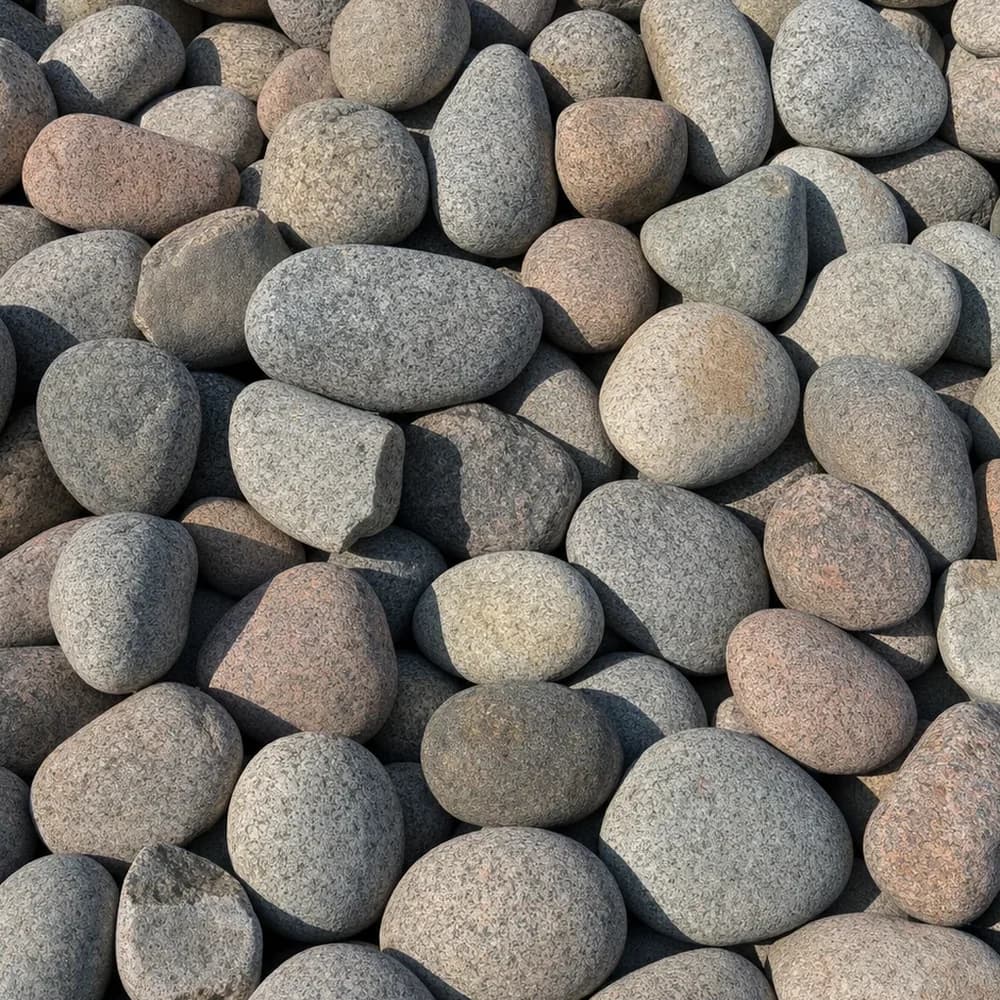
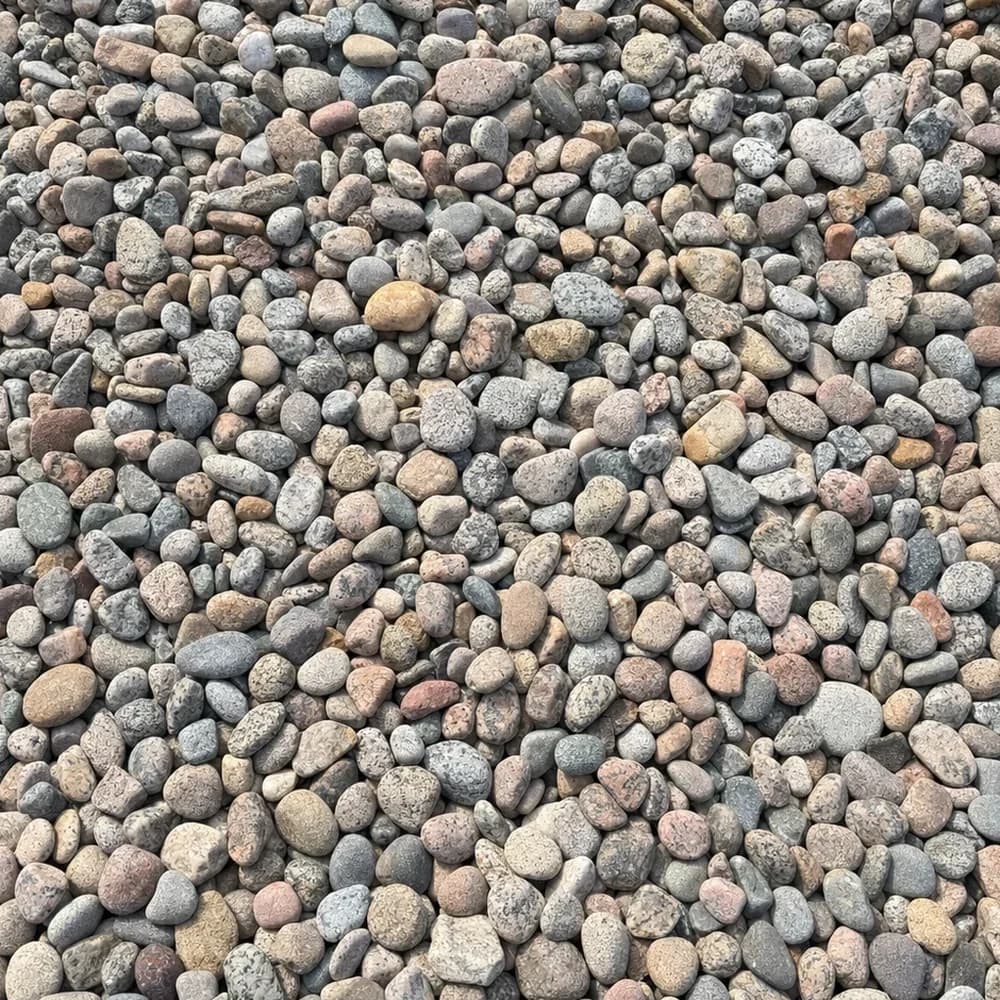
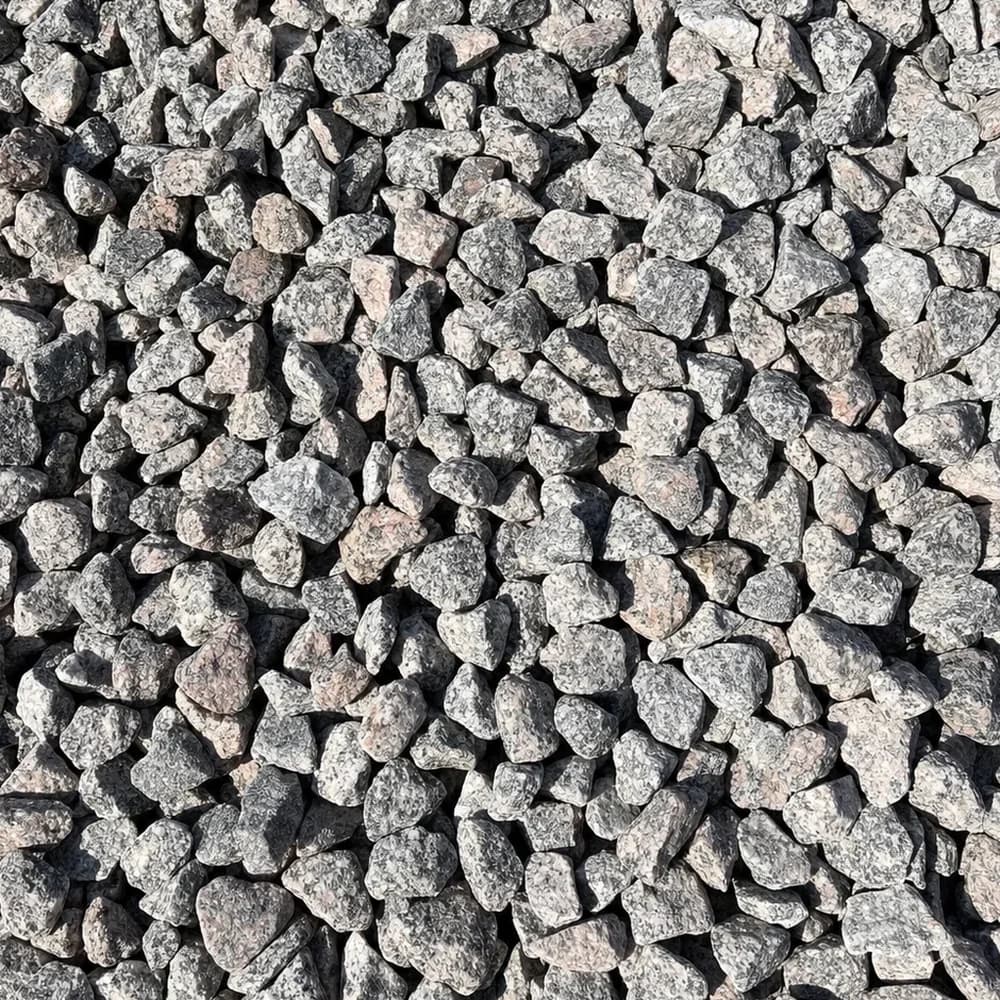
River Rock for North Carolina Creek Beds, Borders and Splash Areas
Red clay in North Carolina can hold water near a bed or slope; River Rock provides rounded cover with open drainage paths and earth-tone contrast.
- Size: 1 inch to 3 inches
- Type: Smooth, naturally rounded stones
- Color: Tans, grays, browns and occasional reds
From $806 for 1 ton, delivery included
Larger loads cost less per ton: 500 tons is $67,515 ($135.03 per ton). Pick any quantity below for a delivered price.
Free delivery included
Free delivery anywhere in North Carolina
Pick a delivery date
Weekday delivery, earliest Oct 20
Get a Free Quote
Fill out the form and our sales team will get back to you within the hour.
Size and Grading
- Size
- 1 inch to 3 inches
- Type
- Smooth, naturally rounded stones
- Color
- Tans, grays, browns and occasional reds
The order that comes up more than any other here is a shaped channel: a run of rounded stone taking roof water or a hillside seep across a yard that red clay refuses to absorb. Somebody has watched the same strip of lawn turn to a gully every summer, given up on grass holding it, and decided to give the water a route it can have. River rock is what gets bought for that, and most of the rest of this page is about picking it over the four materials people weigh it against.
River rock, pea gravel, #57 and mulch on the same red-clay bed
| Spec | What is listed |
|---|---|
| Size | 1 inch to 3 inches |
| Type | Smooth, naturally rounded stones |
| Color | Tans, grays, browns and occasional reds |
Four ways to cover the same ground, and the differences that matter once it is down:
| Material | Size and shape | What it does better | Where it gives way |
|---|---|---|---|
| River Rock | 1 to 3 inch, rounded | Holds a channel, stays put at this size, reads as finished | Rolls underfoot, not a walking surface |
| 3/8" Natural Pea Gravel | 3/8 inch, rounded | Comfortable to walk on, fills tight spaces | Migrates into lawn and gets carried on shoes |
| #57 Stone | 3/16 to 1 inch, angular | Interlocks and stays where placed, drains freely | Gray, industrial, sharp underfoot |
| Shredded Mulch | Organic | Feeds soil, soft, cheap to refresh | Floats away in a downpour, needs redoing |
The short version: rounded and this size is heavy enough to stay in a channel a storm is running through, and large enough to look intentional at the edge of a bed. Pea gravel is the same shape three sizes down, which makes it pleasant to walk on and impossible to keep out of the lawn. #57 is the functional choice where nobody is looking. Mulch is the one that will not survive the kind of rain this material is being bought to handle.
A dry creek bed that carries a Piedmont downpour
The channel is where it earns its keep, and the difference between a working channel and a decorative one is all in the shaping.
Cut a dished profile into the clay rather than scattering stone across a flat strip, with the low point running where the water already goes. Set the channel slightly below the surrounding grade so runoff finds it instead of jumping the edge. Fabric down, larger stones along the bottom and at the outside of any curve where the flow crowds hardest, smaller ones up the sides. Large River Rock is worth ordering for the invert and the bends on a channel that takes real flow, with this size filling everything around it.
The same material makes a splash area under a downspout, a border along a bed where mulch keeps washing out, a ring around a tree that a mower has been nicking, and a lining for a pond edge or a water feature.
A construction entrance and a paver base both want angular stone
Two jobs people try rounded stone on, both hypothetical, both a false economy.
A construction entrance is meant to knock mud off tires before a truck reaches the road. Rounded stone rolls under a loaded wheel instead of scrubbing it, sinks into the clay beneath, and needs replacing. That job wants big angular rock, which is what #4 Crushed Stone is listed for.
A paver patio base has to compact into an immovable layer, and rounded stone cannot. Round pieces have no faces to lock against each other, so the layer shifts under load no matter how long the plate runs. Build the base from a graded blend with fines in it, such as Crush and Run, and keep the rounded stone for the beds around the patio.
Two inches is one stone deep
Depth decides whether a bed looks finished or looks sparse, and with a stone this size the arithmetic is blunt. At a 1 to 3 inch size, two inches of cover is a single layer of stone, which means fabric shows between the pieces and any gap opens straight down to it. Three inches gives full coverage with stones sitting on stones, which is what stops light reaching weed seed and stops the layer shifting when somebody steps in it.
A channel carrying water is deeper again at the low point, since the stone has to stay put under flow rather than simply cover ground. Edging matters as much as depth: a bed with a lawn edge, a steel or stone restraint, or a shallow trench at the boundary keeps stone off the grass and out of the mower.
A 40-foot channel and a 60-foot border, in cubic yards
Two hypothetical areas on the same property.
A dry creek bed averaging 4 feet wide across 40 feet, at 4 inches through the channel:
- Area: 4 x 40 = 160 square feet
- Depth: 4 / 12 = 0.333 feet
- Volume: 160 x 0.333 = 53.3 cubic feet
- Cubic yards: 53.3 / 27 = 2.0
A border 3 feet wide running 60 feet, at 3 inches:
- Area: 3 x 60 = 180 square feet
- Depth: 3 / 12 = 0.25 feet
- Volume: 180 x 0.25 = 45 cubic feet
- Cubic yards: 45 / 27 = 1.7
Around 3.7 cubic yards between them. This site publishes 1 to 3 inch river rock at approximately 2,700 lb per cubic yard, or 1.35 tons per yard, so 3.7 x 1.35 comes to about 5.0 tons, which is an approximate figure rather than a weighed one. The river rock calculator does the same sum for other shapes, and keep the extra allowance it adds by default for a channel where the profile is dished rather than flat.
Quantity and delivery date are both set on this page, with delivery arranged at checkout from your ZIP code. Stone for a back-garden channel usually has to be wheelbarrowed, so check what the truck needs and pick the drop spot with that carry in mind.
Quickly Calculate How Much You Need
Material: River Rock
How to Measure
Measure the length and width of your project area in feet
Decide on depth in inches (2" for landscaping, 4" for driveways)
Enter the values above and we'll calculate the tonnage you need
Need help figuring out the right amount? We can help!
Call or text us at (919) 752-3797 and we'll help you calculate the right quantity for your project.
Not sure how much you need? The River Rock Calculator has depth guides, coverage charts and worked examples for this material.
Frequently Asked Questions About River Rock
River Rock delivery across North Carolina
- Charlotte
- Raleigh
- Greensboro
- Durham
- Winston Salem
- Fayetteville
- Cary
- Wilmington
- High Point
- Concord
- Greenville
- Asheville