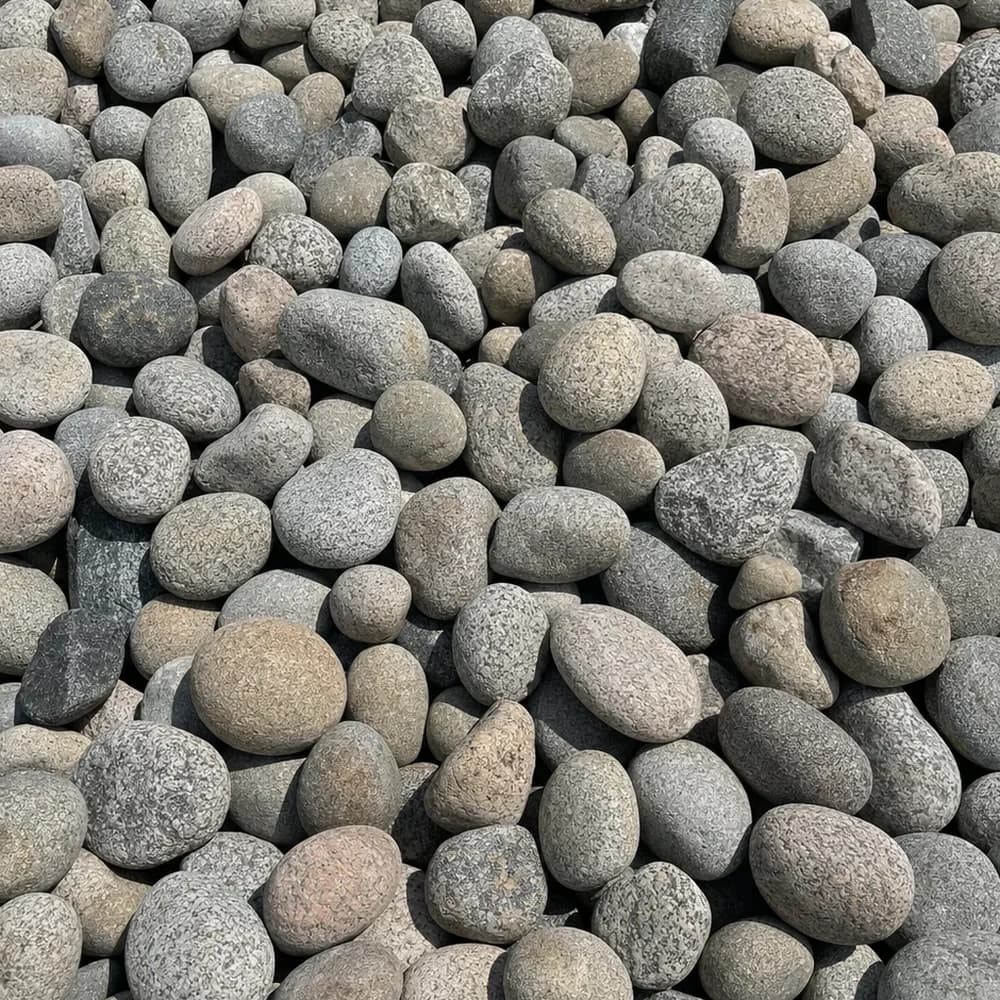
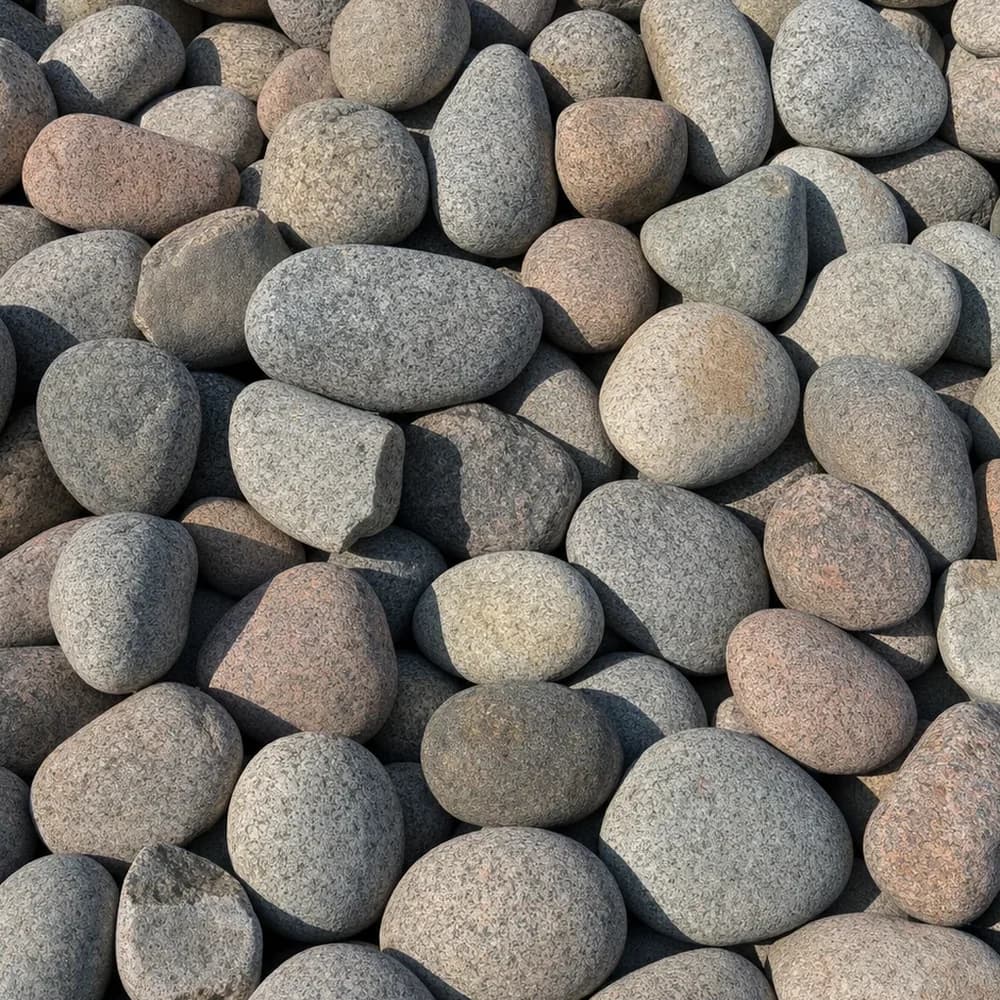
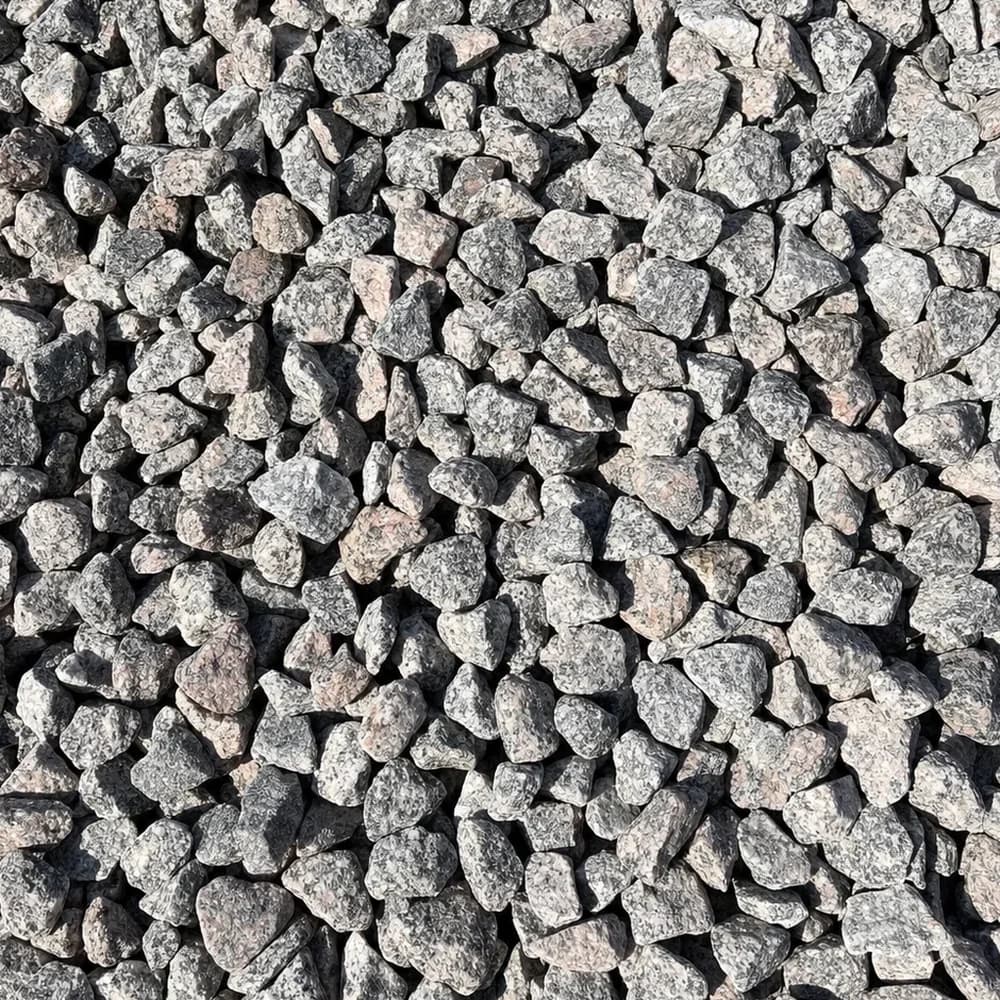
3/8" Natural Pea Gravel for North Carolina Garden Paths, Patios and Play Areas
A path or patio over Piedmont red clay can hold water at the surface. 3/8" Natural Pea Gravel lets water pass through and feels smooth underfoot in North Carolina.
- Size: Approximately 3/8 inch
- Type: Small, smooth, naturally rounded stones
- Color: Tans, creams, grays, browns and occasional reds
From $669 for 1 ton, delivery included
Larger loads cost less per ton: 500 tons is $49,610 ($99.22 per ton). Pick any quantity below for a delivered price.
Free delivery included
Free delivery anywhere in North Carolina
Pick a delivery date
Weekday delivery, earliest Oct 20
Get a Free Quote
Fill out the form and our sales team will get back to you within the hour.
Size and Grading
- Size
- Approximately 3/8 inch
- Type
- Small, smooth, naturally rounded stones
- Color
- Tans, creams, grays, browns and occasional reds
There is a stretch of weeks each autumn when this job goes in best: the summer storms have passed, the clay has given back enough water to be dug and shaped, and the leaves have not started falling into everything. 3/8" natural pea gravel is one of the few landscape materials that can go down almost any month of the year here, but the excavation and base work beneath it cannot, and that is what sets the timing.
When in the North Carolina year should pea gravel go down?
Frost is shallow across this state and real only in the western counties, so cold weather is rarely the limit. Saturated ground is. Digging out a patio footprint in wet Piedmont clay destroys the subgrade you are about to build on, and compacting a base in that condition achieves nothing.
Autumn is the best window in most of the state: drier ground, workable temperatures, and a finished surface ready before winter rain arrives. Late winter into early spring works too, in the dry stretch between systems. High summer is possible but the afternoon storm pattern makes a multi-day excavation frustrating. In the mountains, both shoulder seasons run a few weeks shorter.
What arrives when you order 3/8" natural pea gravel?
The listing is 3/8" Natural Pea Gravel: approximately three-eighths of an inch, small smooth naturally rounded stones, in tans, creams, grays, browns and occasional reds.
Rounded is the word doing the work. These stones have been tumbled smooth rather than crushed, which is why they are comfortable to walk on barefoot, and why they will never lock together into a firm surface. Every property on this page follows from that one fact.
The color range is natural variation rather than a single shade, so expect a mixed, warm-toned surface that shifts noticeably when it is wet. Anyone matching it to existing stonework should look at it damp as well as dry.
Will it hold a fire pit surround people sit around?
Yes, and it is one of the better uses for it. A ring of pea gravel around a fire pit gives a non-combustible surface, drains after rain so chairs are not sitting in mud, and is forgiving of embers in a way that mulch or turf is not.
Two details matter. The surround needs a contained edge, because chairs being dragged back from the heat will push stone outward all evening. And it needs a base beneath it on clay: geotextile, then a compacted layer, then the gravel, or the whole surround presses into the subgrade over a season.
Paths, patios and play areas follow the same recipe. So do beds and borders, downspout run-outs and pipe bedding, where the drainage rather than the feel is the reason for it.
Can it carry a pole barn pad or a single-car drive?
A pole barn or equipment pad, no. Loads like that need a layer that spreads weight, and rounded stone cannot do it because there are no flat faces to lock. It shifts under every wheel and presses into whatever is beneath. Build that pad from ABC Stone or a bottom lift of #4 Crushed Stone on soft ground.
A single-car drive is a qualified no. It can be made to work, but only with a proper compacted base beneath it, a firm restraint down both sides, and acceptance that turning wheels will plow it and it will need raking. Most people who try it replace the surface with Driveway Gravel within a few years. Where a drive has a parking apron beside it that nothing turns on, pea gravel is fine there.
How deep, and what goes underneath it on Piedmont clay?
Three inches is the working depth for a surface people walk on, which is roughly eight stone diameters and enough that a foot does not push through to the fabric. Two inches is enough for a bed or border where the only job is cover. A play area is deeper, and the depth should follow whatever standard the equipment supplier specifies rather than a general figure.
Underneath, on clay, the build is fabric, then a compacted base of about four inches, then the gravel. The base is what stops the stone disappearing into the subgrade and what gives the water somewhere to go before it reaches ground that will not accept it. On sandy Coastal Plain ground the base can be lighter, but the fabric still matters because rounded stone works down into sand readily.
How many tons for a 12-foot fire pit circle and a 40-foot path?
Two hypothetical areas, both at three inches.
The fire pit surround, a 12-foot circle with a 4-foot pit in the middle:
- Outer area: 3.14 x 6 x 6 = 113 square feet
- Pit area: 3.14 x 2 x 2 = 12.6 square feet
- Gravel area: 113 - 12.6 = 100.4 square feet
- Depth: 3 / 12 = 0.25 feet
- Volume: 100.4 x 0.25 = 25.1 cubic feet
- Cubic yards: 25.1 / 27 = 0.9
The path, 40 feet by 3 feet:
- Area: 40 x 3 = 120 square feet
- Depth: 3 / 12 = 0.25 feet
- Volume: 120 x 0.25 = 30 cubic feet
- Cubic yards: 30 / 27 = 1.1
That is 2.0 cubic yards. This site publishes pea gravel at approximately 2,800 lb per cubic yard, or 1.40 tons per yard, so 2.0 x 1.40 works out at 2.8 tons. Round up to 3 and the extra covers the settling that happens in the first month. The pea gravel calculator takes circles and multiple areas directly if you would rather not do the arithmetic.
Who keeps it out of the lawn once it is down?
Nobody, unless there is an edge. This is the part people underestimate: rounded stone rolls, and any boundary without a physical stop will bleed gravel into the grass until a mower finds it.
Steel, aluminum or composite edging set proud of the base holds it. So does a soldier course of pavers, a timber, or a shallow trench at the boundary that catches strays. Finishing the gravel slightly below the surrounding turf level helps as well, because a mower wheel then rides over the edge rather than into the stone.
Quantity and delivery date are set together on this page, with delivery arranged at checkout from your ZIP code. Do the shaping, the fabric and the base before the load arrives, since a pile of rounded stone is much easier to wheelbarrow than to shovel twice. What the truck needs is covered separately.
Quickly Calculate How Much You Need
Material: 3/8" Natural Pea Gravel
How to Measure
Measure the length and width of your project area in feet
Decide on depth in inches (2" for landscaping, 4" for driveways)
Enter the values above and we'll calculate the tonnage you need
Need help figuring out the right amount? We can help!
Call or text us at (919) 752-3797 and we'll help you calculate the right quantity for your project.
Not sure how much you need? The Pea Gravel Calculator has depth guides, coverage charts and worked examples for this material.
Frequently Asked Questions About 3/8" Natural Pea Gravel
3/8" Natural Pea Gravel delivery across North Carolina
- Charlotte
- Raleigh
- Greensboro
- Durham
- Winston Salem
- Fayetteville
- Cary
- Wilmington
- High Point
- Concord
- Greenville
- Asheville