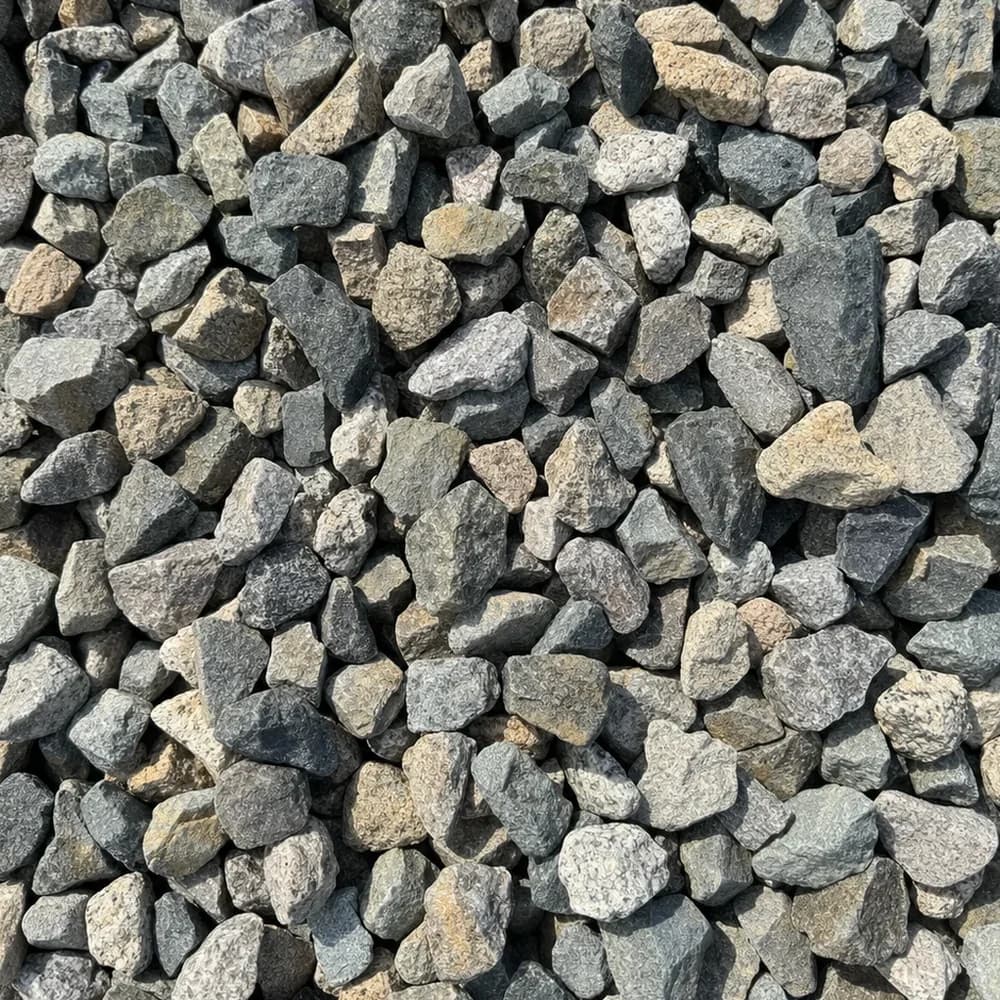
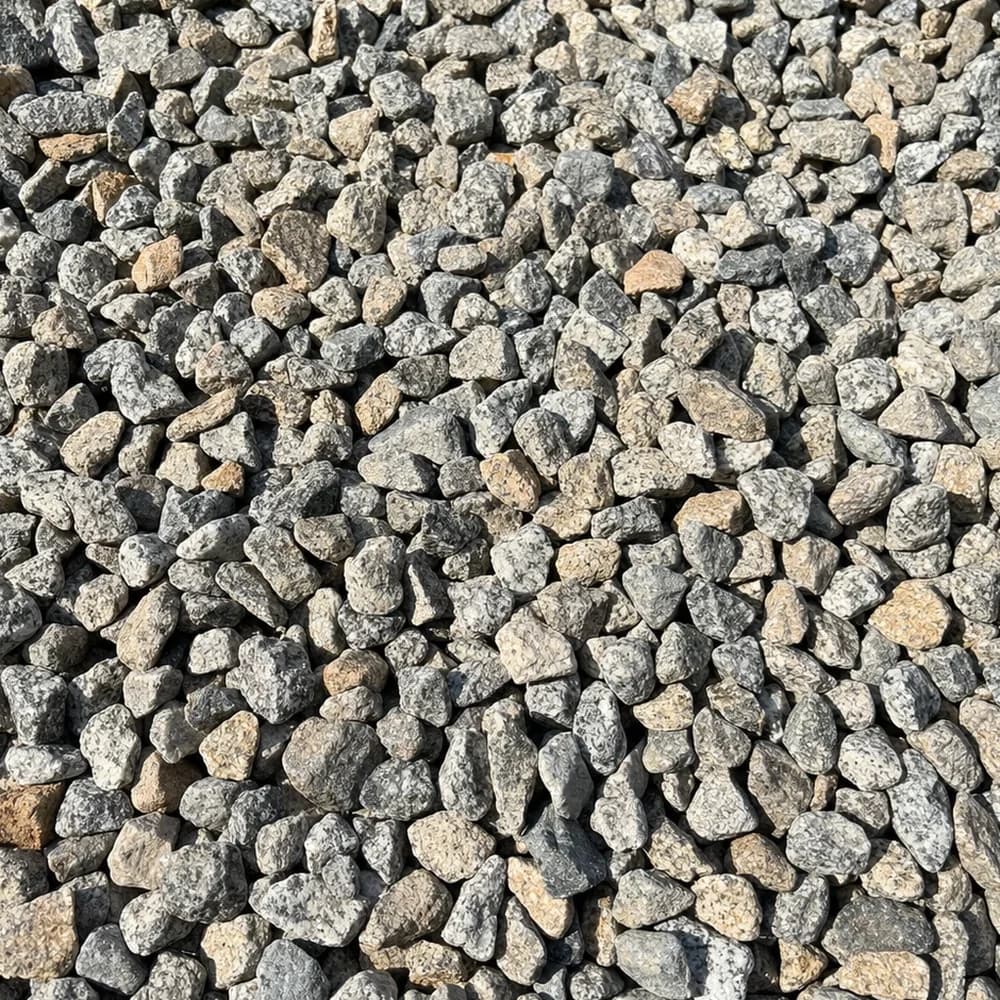
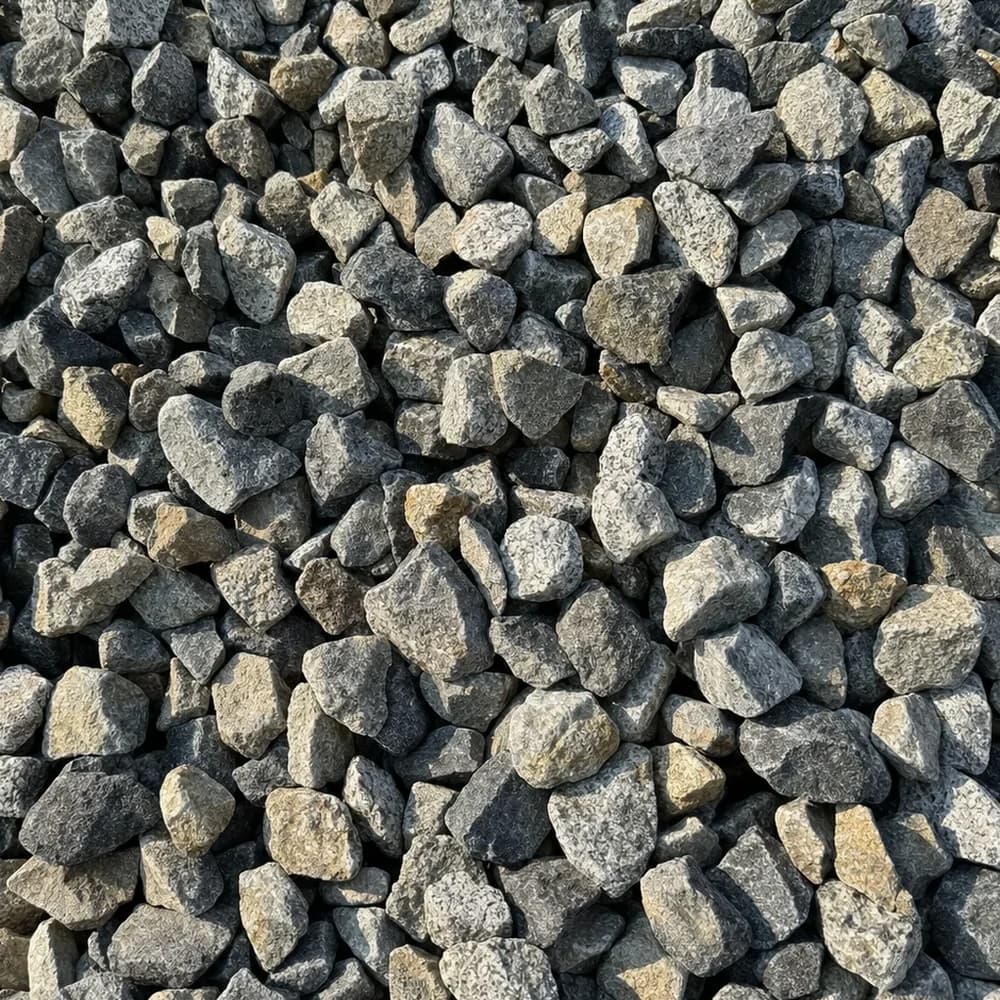
Screenings for Bedding Pavers and Flagstone in North Carolina
Also sold as #10 Stone Screenings
Also known as: stone dust, man sand
Screenings belong at the finish stage of a North Carolina hardscape base, where they create a smooth, firm bed for pavers or flagstone.
- Size: 1/4 inch minus
- Grading: Stone dust and fine particles
- Type: Angular crushed stone
From $463 for 1 ton, delivery included
Larger loads cost less per ton: 500 tons is $34,195 ($68.39 per ton). Pick any quantity below for a delivered price.
Free delivery included
Free delivery anywhere in North Carolina
Pick a delivery date
Weekday delivery, earliest Oct 20
Get a Free Quote
Fill out the form and our sales team will get back to you within the hour.
Size and Grading
- Size
- 1/4 inch minus
- Grading
- Stone dust and fine particles
- Type
- Angular crushed stone
Tip a load of screenings out and it does not look like gravel at all. It looks like damp gray dust with grit through it, holds the shape of a boot print, and squeezes into a ball in your hand that crumbles when you open your fingers. That is the whole point of the material, and it is why a flagstone set into a screened bed stops rocking while the same slab dropped on loose sand keeps moving for years.
The rocking flagstone, and what a 1/4 inch minus bed actually cures
The listing is Screenings, at a quarter inch minus, stone dust and fine particles, angular crushed stone throughout.
Rocking is a bedding problem, not a stone problem. A slab or a paver needs continuous contact across its whole underside, and anything that bridges a void will pivot on the high point the first time somebody stands on the edge. Rounded sand grains roll away from pressure and migrate toward the joints, so voids reopen. Angular fines at this gradation have flat faces that interlock, and a screeded bed struck with a straight edge stays exactly where it was struck while you set the stone into it.
Beyond bedding, the same material sweeps into flagstone joints where a wider gap needs filling, and packs into a walkable surface on a garden path where nobody wants the loose feel of gravel underfoot.
Fines on red clay behave differently than fines on Coastal Plain sand
Across the Piedmont, water that reaches clay stops. A screened bed laid straight onto clay with no drainage layer beneath it stays saturated after a storm, and a saturated fine layer has no bearing strength at all. That is how a patio that looked perfect in October develops dips by March. The fix is a compacted open base underneath that lets water leave, with the screened bed sitting on top of it as a thin leveling course rather than as the structure.
Out on the Coastal Plain and through the Sandhills the ground drains freely, so the water is less of a concern and the base course is really about stopping the bed from disappearing into the sand below. In the mountain counties, where freeze and thaw is real rather than occasional, keeping water out of the bed matters more than anywhere else in the state, because a wet fine layer heaves when it freezes.
Screeding a bed, setting flagstone, and the plate compactor pass
Get the base right first: a compacted layer of Crush and Run or ABC Stone shaped to fall away from the house at about a quarter inch per foot.
Lay two screed rails on the compacted base at the bed thickness you want, fill between them, and pull a straight board across. Do not compact the bed after screeding and before setting, because the stone has to press into it. Set each slab or paver, tap it home, and check it against its neighbors as you go rather than at the end.
Once the field is laid, sweep screenings into the joints, run a plate compactor over the surface with a rubber mat or a sheet of plywood between the plate and the stone, then sweep more in and repeat until the joints stop taking material. A path being surfaced rather than paved gets a different treatment: place it in two lifts, dampen each one lightly, and compact in passes at right angles to each other.
Sweeping screenings back into the joints after the first wet winter
Joints lose material. Rain washes it, brooms lift it, and freeze-thaw in the western counties lifts it further. Expect to resweep a patio once in the first year and then every couple of years after that, which takes an hour and a broom.
A compacted path surface needs a different habit. Pooling anywhere on it means the fall has gone, and the answer is to break the surface with a rake, add material, and recompact that patch rather than laying a thin skim over the top. Skims never bond. Weeds arriving in the joints are a sign the joint material has thinned enough to hold seed, which is the same signal to resweep.
A downspout splash area, a wall backfill and a pond edge will all wash it out
Three hypothetical jobs where somebody reaches for a bag of fines and should not.
A downspout splash area takes concentrated water at speed several times a week. Fines are gone within a season, and what is left is a scoured hole that channels water toward the foundation. Put #57 Stone there instead, over fabric.
Retaining wall backfill has to let water escape from behind the wall, because hydrostatic pressure is what pushes walls over. Fines do the exact opposite: they clog the drainage zone and hold water against the back of the blocks. That zone takes clean washed stone, with #67 Stone the usual size for a residential wall.
A pond or shoreline edge is constant wetting, wave action and the occasional storm surge of runoff. Nothing at a quarter inch minus survives it. Armor that edge with RipRap sized for the water it takes.
Cubic yards and tons for a 4 by 30 foot walk and a 12 by 14 patio
Two hypothetical areas, both bedded at one and a half inches over a compacted base.
The flagstone walk, 4 feet by 30 feet:
- Area: 4 x 30 = 120 square feet
- Depth: 1.5 / 12 = 0.125 feet
- Volume: 120 x 0.125 = 15 cubic feet
- Cubic yards: 15 / 27 = 0.56
The patio, 12 feet by 14 feet:
- Area: 12 x 14 = 168 square feet
- Depth: 1.5 / 12 = 0.125 feet
- Volume: 168 x 0.125 = 21 cubic feet
- Cubic yards: 21 / 27 = 0.78
That comes to 1.34 cubic yards, and joint filling on both will take more, so round to 1.5. This site publishes stone screenings at approximately 2,900 lb per cubic yard, or 1.45 tons per yard, which puts 1.5 yards at about 2.2 tons. The paver base calculator will do the same sum for a shape that is not a neat rectangle.
Pick the quantity and the delivery date on this page together. Delivery is arranged at checkout from your ZIP code, and fines are one material worth landing on a tarp or a hard surface, since the last wheelbarrow load is always the part that stains a drive. Check what access the truck needs before you choose the drop spot.
Quickly Calculate How Much You Need
Material: Screenings
How to Measure
Measure the length and width of your project area in feet
Decide on depth in inches (2" for landscaping, 4" for driveways)
Enter the values above and we'll calculate the tonnage you need
Need help figuring out the right amount? We can help!
Call or text us at (919) 752-3797 and we'll help you calculate the right quantity for your project.
Not sure how much you need? The Stone Calculator has depth guides, coverage charts and worked examples for this material.
Frequently Asked Questions About Screenings
Screenings delivery across North Carolina
- Charlotte
- Raleigh
- Greensboro
- Durham
- Winston Salem
- Fayetteville
- Cary
- Wilmington
- High Point
- Concord
- Greenville
- Asheville