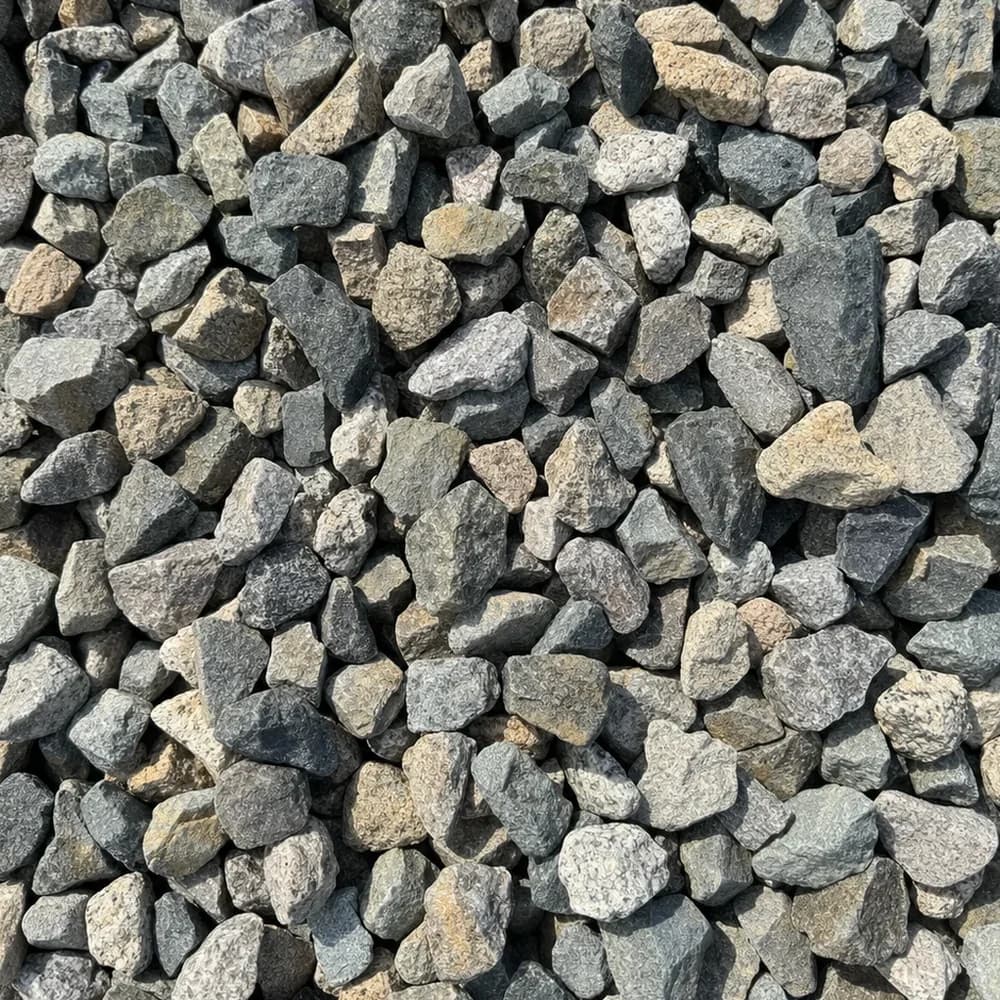
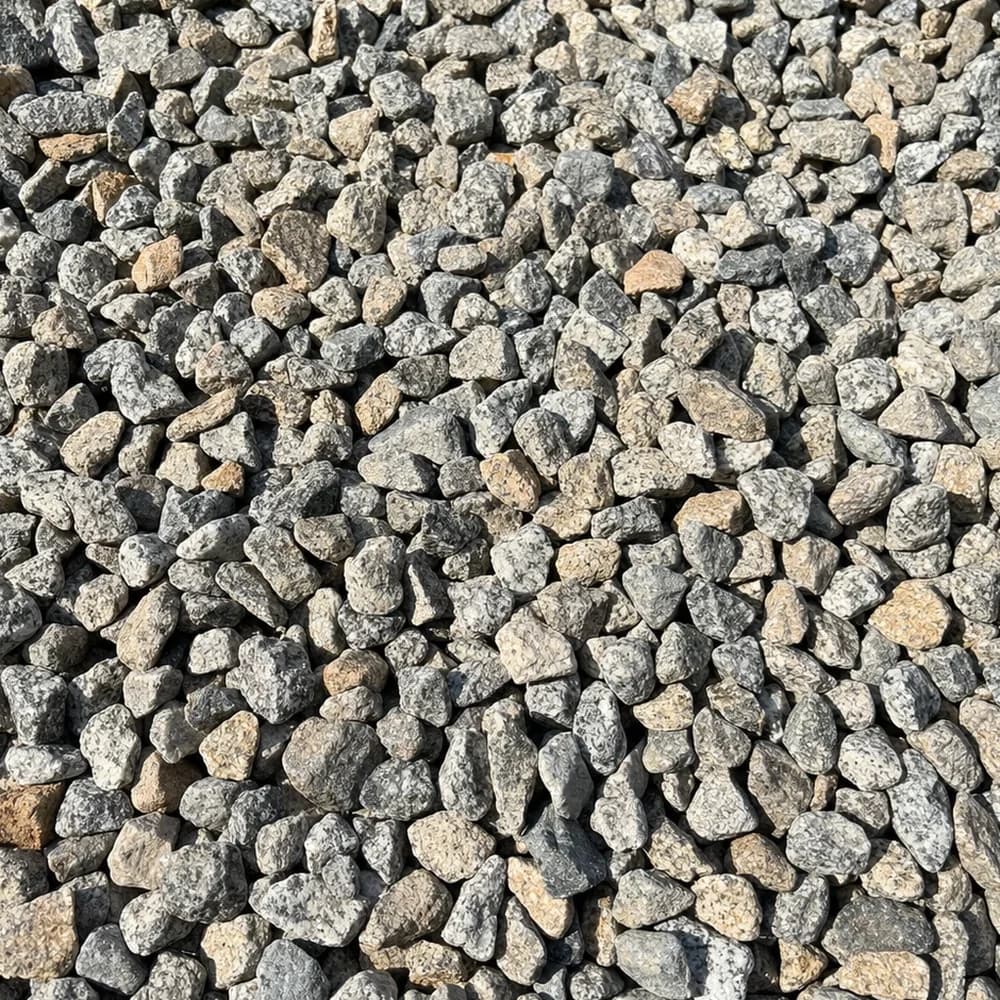
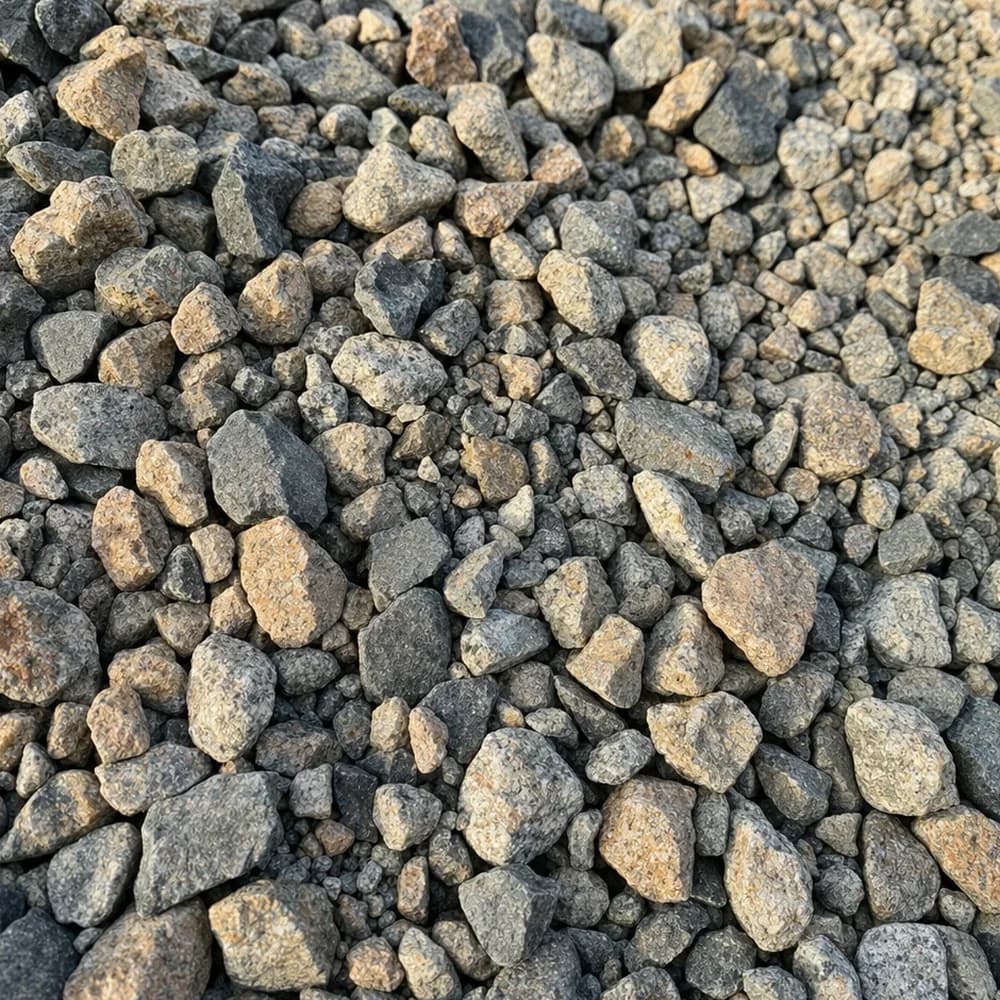
#57 Stone: Washed Drainage Aggregate for North Carolina Ground
Also known as: 57 washed stone
A drain set into Piedmont clay needs room for water to move. #57 Stone is a practical aggregate for North Carolina drainage and concrete work.
- Size: 3/16 inch to 1 inch
- Grading: #57
- Type: Angular crushed rock
From $406 for 1 ton, delivery included
Larger loads cost less per ton: 500 tons is $31,175 ($62.35 per ton). Pick any quantity below for a delivered price.
Free delivery included
Free delivery anywhere in North Carolina
Pick a delivery date
Weekday delivery, earliest Oct 20
Get a Free Quote
Fill out the form and our sales team will get back to you within the hour.
Size and Grading
- Size
- 3/16 inch to 1 inch
- Grading
- #57
- Type
- Angular crushed rock
Almost every order for #57 stone in this state is really an order about water. Piedmont red clay holds a two-inch afternoon storm for days, the crawlspace corner stays damp long after the yard has dried, and the answer is nearly always a trench, a pipe and a rock with enough space between the pieces to let the water travel. That is the job this aggregate exists for, and the parts of it worth getting right are timing, trench prep and the quantity.
Late summer into autumn, when the ground finally lets a trench stand open
Work here runs close to year round, so the constraint is not frost. It is water. Heavy rainfall, tropical systems and hurricane remnants are what drive the drainage work in the first place, and they are also what makes the work miserable while it is in progress.
The practical window is a dry stretch when clay has given back enough moisture to hold a trench wall without slumping. Late summer through autumn usually offers that in the Piedmont, with the added advantage that the drain is finished before the winter rain arrives to test it. Mountain counties compress the window at the back end, since freeze and thaw is real up there and frost, though shallow statewide, reaches deepest in the west. The coastal plain is the exception on both counts: sandy ground works sooner after rain, but a trench wall in sand will not stand as long, so open and backfill without leaving a trench standing overnight.
Opening a trench in clay that has just handed back its water
Wet clay smears. A trench cut when the ground is saturated leaves a slick, sealed face, and that glazed surface is a barrier the drain has to fight for the rest of its life. Cut when the clay is damp enough to hold its shape and dry enough to crumble off the blade.
Line the trench with filter fabric before anything goes in, wrap the pipe to the fabric after backfilling, and keep soil away from the stone at every stage. The material itself is washed, which means the fines have already been taken out; the risk comes from what falls back in.
| Spec | What is listed |
|---|---|
| Size | 3/16 inch to 1 inch |
| Grading | #57 |
| Type | Angular crushed rock |
Numbered gradings are how washed stone gets specified in North Carolina, the way #57 and #67 appear on plans and at counters here. It describes the size band rather than anything about a supplier.
Under flagstone, under raised beds and under the swing set
Three hypothetical jobs, all of them using this stone as the layer nobody ends up looking at.
A flagstone walkway gets it as the sub-base. Angular pieces lock under compaction and water keeps moving through, which matters on clay that would otherwise hold a puddle under every stone. The setting layer on top is a different material: Screenings is what beds flagstone level.
Raised vegetable beds sitting straight on Piedmont clay behave like planters with no drain holes. A shallow layer of washed stone beneath the frame gives water somewhere to go before it reaches the roots. The growing medium goes above it, not mixed into it, and Garden Soil is the listing for that part.
A playground or play yard uses it the same way, as the drainage layer under a surface rather than the surface itself. Angular 3/16 to 1 inch rock is not something to land on. Put it below, and keep the soft surface material above it.
Four 4 by 12 beds and a 40-foot flagstone run, worked out
Both figures are hypothetical, and both stop where the published information stops.
Four raised beds, each 4 feet by 12 feet, with a 3-inch drainage layer beneath:
- Area: 4 x 12 = 48 square feet per bed, x 4 beds = 192 square feet
- Depth: 3 / 12 = 0.25 feet
- Volume: 192 x 0.25 = 48 cubic feet
- Cubic yards: 48 / 27 = 1.8
A flagstone walk 3 feet wide and 40 feet long, with a 4-inch sub-base:
- Area: 3 x 40 = 120 square feet
- Depth: 4 / 12 = 0.333 feet
- Volume: 120 x 0.333 = 40 cubic feet
- Cubic yards: 40 / 27 = 1.5
Between them that is around 3.3 cubic yards. This site publishes #57 and 3/4 inch crushed stone at approximately 2,800 lb per cubic yard, or 1.40 tons per yard, so 3.3 x 1.40 puts the pair at roughly 4.6 tons; treat that figure as approximate. Put the yardage through the stone calculator if you would rather it did the converting. Running both areas through in one go saves adding them by hand, and the small extra allowance it adds by default is worth keeping on a trench you cannot easily top up later.
Silt is what finishes a drain, not the stone
The rock does not wear out. What ends a drain is the gradual arrival of fine material into the voids, until the spaces that were doing the work are packed with clay and the trench holds water instead of moving it.
That is why fabric matters more than depth, and why soil pushed straight back against unwrapped stone is a false economy. Keep the top of the trench capped with clean material or a proper soil layer over fabric rather than loose dirt raked in. If a run does silt up years later, the stone can usually be lifted, washed off and reset, which is more than can be said for most buried fixes.
Quantity and a delivery date are both set on this page, and delivery is arranged at checkout from the ZIP code entered there. Give the truck a clear line to the drop point and somewhere firm to stand; the delivery page covers the rest.
Quickly Calculate How Much You Need
Material: #57 Stone
How to Measure
Measure the length and width of your project area in feet
Decide on depth in inches (2" for landscaping, 4" for driveways)
Enter the values above and we'll calculate the tonnage you need
Need help figuring out the right amount? We can help!
Call or text us at (919) 752-3797 and we'll help you calculate the right quantity for your project.
Not sure how much you need? The Stone Calculator has depth guides, coverage charts and worked examples for this material.
Frequently Asked Questions About #57 Stone
#57 Stone delivery across North Carolina
- Charlotte
- Raleigh
- Greensboro
- Durham
- Winston Salem
- Fayetteville
- Cary
- Wilmington
- High Point
- Concord
- Greenville
- Asheville