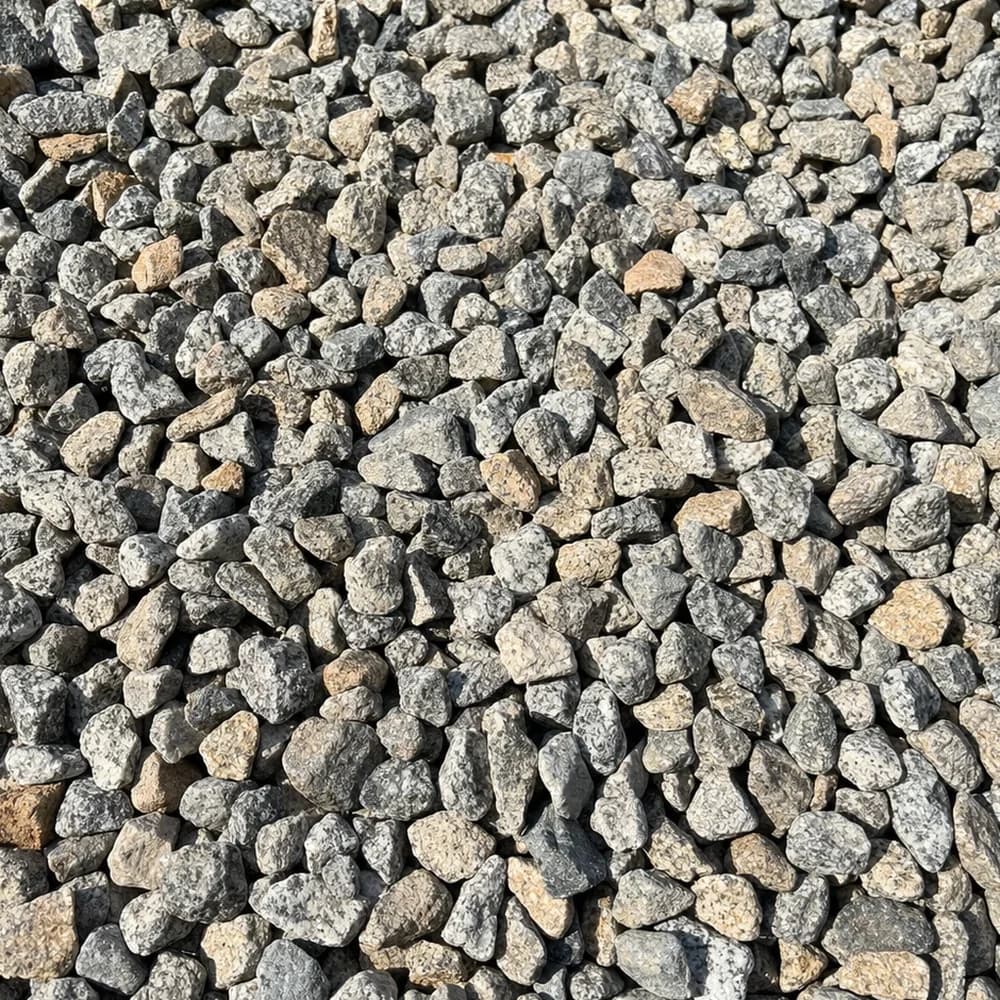
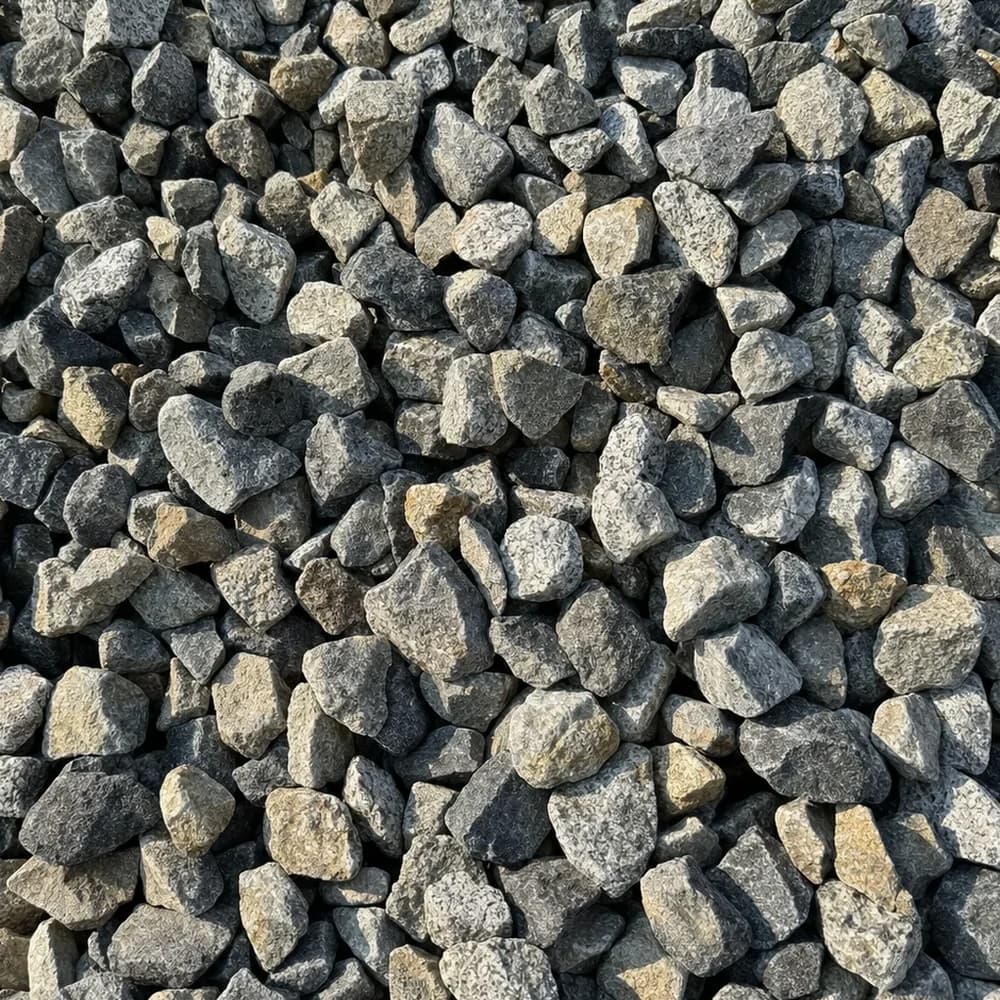
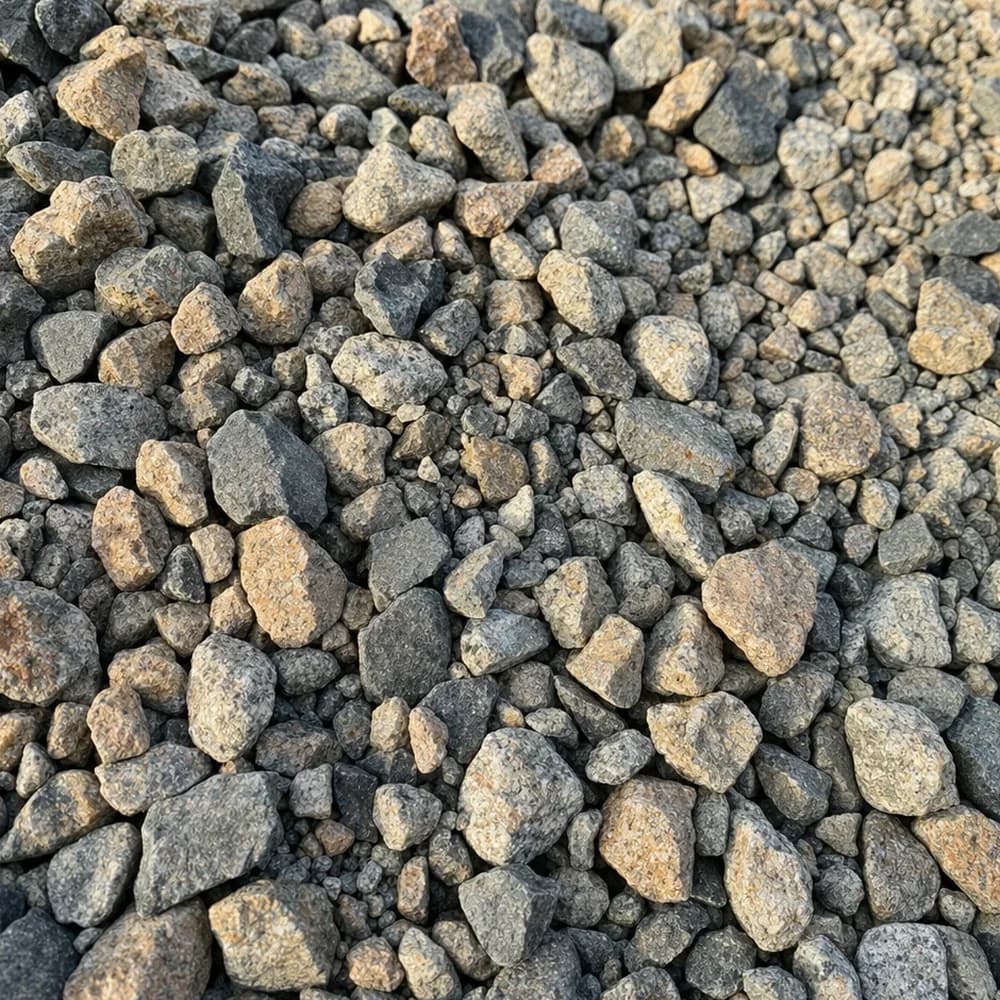
3/4" Crushed Stone for North Carolina Sub-Base, Pads and Backfill
Putting stone straight onto wet red clay can lead to movement. 3/4" Crushed Stone gives North Carolina projects angular support and drainage.
- Size: Approximately 3/4 inch
- Type: Angular crushed stone
From $409 for 1 ton, delivery included
Larger loads cost less per ton: 500 tons is $31,175 ($62.35 per ton). Pick any quantity below for a delivered price.
Free delivery included
Free delivery anywhere in North Carolina
Pick a delivery date
Weekday delivery, earliest Oct 20
Get a Free Quote
Fill out the form and our sales team will get back to you within the hour.
Size and Grading
- Size
- Approximately 3/4 inch
- Type
- Angular crushed stone
Half the confusion about 3/4" crushed stone in this state comes from the counter habit of calling it washed stone, which is also what a good many people around the Piedmont call the #57 in the next listing. They are not interchangeable, and the difference decides whether a crawlspace pad stays dry or a driveway base starts pumping clay up through it by the second spring. What follows is the set of questions that come up before an order goes in, in roughly the order they get asked.
| Spec | What is listed |
|---|---|
| Size | Approximately 3/4 inch |
| Type | Angular crushed stone |
Is this the same rock as the #57 stone in the next listing?
Close relatives, not the same listing. #57 Stone is a washed grading running about 3/16 inch to 1 inch. This one is listed at approximately 3/4 inch, angular, so it is the tighter and more uniform of the two.
In practice they overlap heavily. Both are open enough to move water, both interlock under load because the faces are fractured rather than rounded, and both behave the same way on Piedmont clay, which is to say they carry weight while letting water through instead of holding it at the surface. Where the two diverge is at the extremes. A narrower, more consistent 3/4 inch works into a wall backfill zone or under a footing with fewer gaps left behind. The slightly larger washed grading leaves marginally bigger voids, which is a small advantage in a trench whose only job is flow. If a plan or an inspector specifies a number, follow the number.
When does a job want washed stone instead of ABC stone?
This is the question that actually matters, and the answer comes down to whether the layer has to drain or has to bind.
ABC Stone, the aggregate base course that everything in this state gets built on, is graded crushed stone with fines in it. Compacted, the fines lock the larger pieces together into a dense, firm layer that sheds water off the top. That is what you want under a driveway surface or a slab, because it is stiff and it stays put.
3/4 inch washed stone has had the fines taken out. Compacted, it consolidates into a tight mass of interlocked pieces but the voids between them stay connected, so water runs down through the layer rather than across it. That is what you want anywhere water has to leave: behind a retaining wall, around a foundation, under a crawlspace pad on ground that holds moisture for days after a storm.
So: firm and dry on top, take ABC stone. Structural but free-draining, take this. A great many jobs in the Piedmont want both, in that order, one above the other.
How thick can a lift go down over Piedmont clay?
Thinner than people expect, and more times than people expect. A clean stone layer built in one deep dump does not consolidate the whole way through; the top settles and the bottom stays loose, and the pad finds its level later under load. Building up in lifts, each one compacted before the next goes on, is what gives a uniform layer.
Red clay adds a second problem. Wet clay under a stone lift will pump upward into the voids under traffic, and once clay is in the stone, the layer is no longer draining. Fabric between the subgrade and the first lift is what stops that, and on ground that stays genuinely soft rather than just damp, a coarse bridging course of #4 Crushed Stone goes under everything else to give the build a floor. The sandier Coastal Plain subgrade drains on its own but moves laterally, so the fabric still earns its keep and the edges need containing.
Under a pole barn pad, and why a single-car drive needs more on top
Under a pole barn or equipment pad, it is the layer between wet ground and whatever is going on top. Equipment sits still for weeks at a time on soil that holds water, and a free-draining stone base keeps that water from sitting against the underside of a slab or soaking the bottom of a stored implement. Build it over fabric, in lifts, and keep it running out past the edge of the pad so water leaving it has somewhere to go rather than undercutting the perimeter.
A single-car gravel drive is where it needs a partner. A drive surfaced in clean 3/4 inch stone alone gives excellent drainage and poor driving. There is nothing binding the layer, so tires push the pieces sideways, ridges form down the center, and the stone drifts toward the low end of the run. Use it as the sub-base and put a graded material carrying fines over the top: Driveway Gravel or a compacted crush and run surface. The same logic covers a fire pit surround, where clean stone underneath keeps the seating area from going soggy while the surface people actually stand on is something finer.
What does the first winter on Piedmont clay do to the layer?
Less than you would think, if it was built right, and a great deal if it was not.
A properly built layer settles in the first few weeks as the pieces find their positions, then goes quiet. Heavy rainfall and the remains of tropical systems run straight through it, which is the point. Freeze and thaw is mild in the Piedmont and real in the mountain counties, and a free-draining layer copes with it well, since there is no trapped water in it to expand.
A layer built without fabric, straight onto saturated clay, tells a different story. By the end of the first wet winter there is red in the bottom third of the stone, the surface is starting to hold puddles in the wheel tracks, and the fix is excavation rather than a top-up. Judge the build by the bottom of the layer, not the top.
How many tons for a 24 by 36 pad and a 9 by 60 drive base?
Two hypothetical builds at the same depth. Tonnage uses this site's published weight for the #57, #67 and 3/4 inch crushed stone family, about 2,800 lb per cubic yard or 1.40 tons per yard, which is an approximate figure.
A pole barn pad, 24 feet by 36 feet, with a 4-inch stone layer:
- Area: 24 x 36 = 864 square feet
- Depth: 4 / 12 = 0.333 feet
- Volume: 864 x 0.333 = 288 cubic feet
- Cubic yards: 288 / 27 = 10.7
- Tons: 10.7 x 1.40 = 14.9
A drive sub-base, 9 feet wide by 60 feet long, also at 4 inches:
- Area: 9 x 60 = 540 square feet
- Depth: 4 / 12 = 0.333 feet
- Volume: 540 x 0.333 = 180 cubic feet
- Cubic yards: 180 / 27 = 6.7
- Tons: 6.7 x 1.40 = 9.3
About 17.4 cubic yards and 24.2 tons across the two, before the surface course on the drive. The stone quantity tool takes up to five areas at once if the site has more than one pad on it. Amount and delivery date are both chosen on this listing, with delivery arranged at checkout from the ZIP code you enter and the truck needing a firm standing and a clear route to the drop. For an awkward pad shape or a staged build, send the dimensions through and get a quantity back by email before you order.
Quickly Calculate How Much You Need
Material: 3/4" Crushed Stone
How to Measure
Measure the length and width of your project area in feet
Decide on depth in inches (2" for landscaping, 4" for driveways)
Enter the values above and we'll calculate the tonnage you need
Need help figuring out the right amount? We can help!
Call or text us at (919) 752-3797 and we'll help you calculate the right quantity for your project.
Not sure how much you need? The Stone Calculator has depth guides, coverage charts and worked examples for this material.
Frequently Asked Questions About 3/4" Crushed Stone
3/4" Crushed Stone delivery across North Carolina
- Charlotte
- Raleigh
- Greensboro
- Durham
- Winston Salem
- Fayetteville
- Cary
- Wilmington
- High Point
- Concord
- Greenville
- Asheville