#4 Crushed Stone for Soft Ground and Heavy Drainage in North Carolina
Choosing #4 Crushed Stone as the finish for a red-clay drive is a common mistake; in North Carolina, it belongs lower in a drainage-focused build.
- Size: About 3/4 inch to 1-1/2 inches
- Grading: #4
- Type: Angular crushed stone
From $437 for 1 ton, delivery included
Larger loads cost less per ton: 500 tons is $32,535 ($65.07 per ton). Pick any quantity below for a delivered price.
Free delivery included
Free delivery anywhere in North Carolina
Pick a delivery date
Weekday delivery, earliest Oct 20
Get a Free Quote
Fill out the form and our sales team will get back to you within the hour.
Size and Grading
- Size
- About 3/4 inch to 1-1/2 inches
- Grading
- #4
- Type
- Angular crushed stone
Saturated red clay swallows small stone. Drive over a soft patch after two wet Piedmont weeks and a three-quarter inch layer presses straight down into it, mixes with the clay, and vanishes as a working surface while still being present as a cost. #4 crushed stone is the size that stops doing that, because individual pieces are too large to be pushed into the subgrade one at a time and they bridge across the soft spot instead.
Three specification lines, and what each one decides
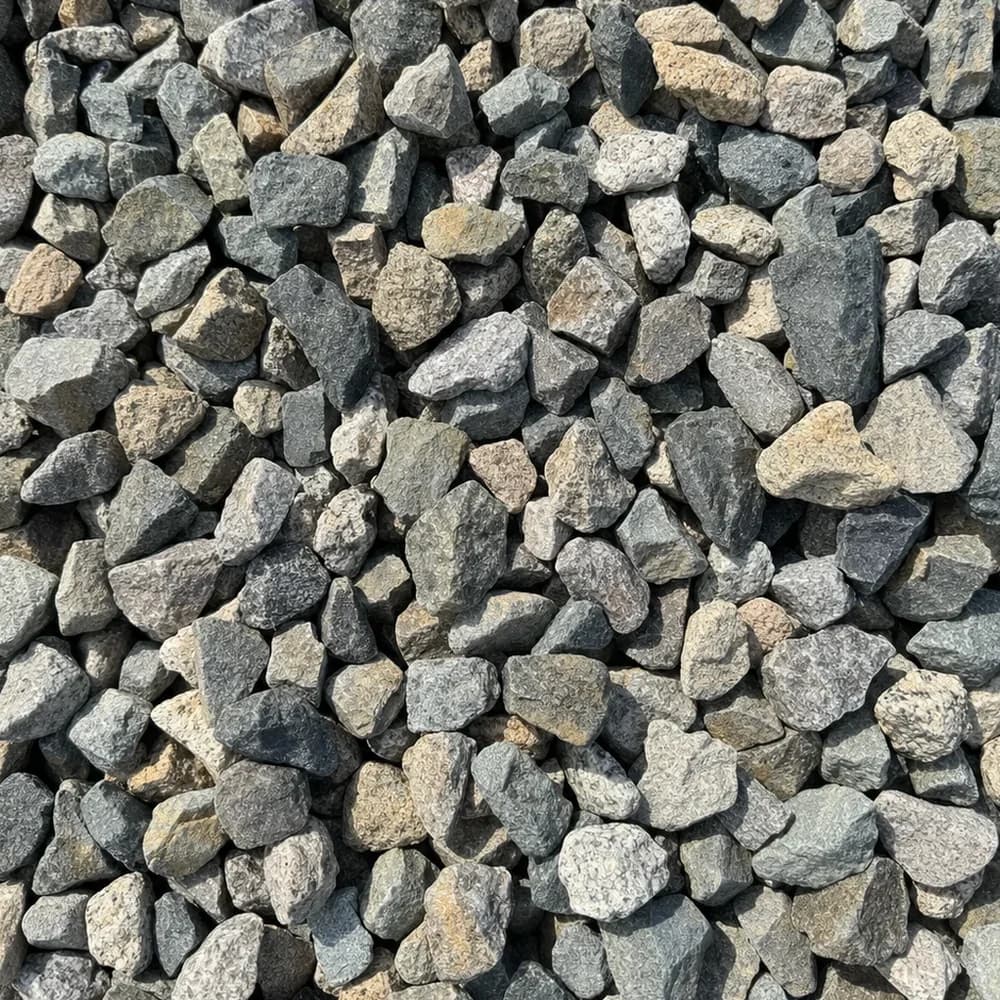
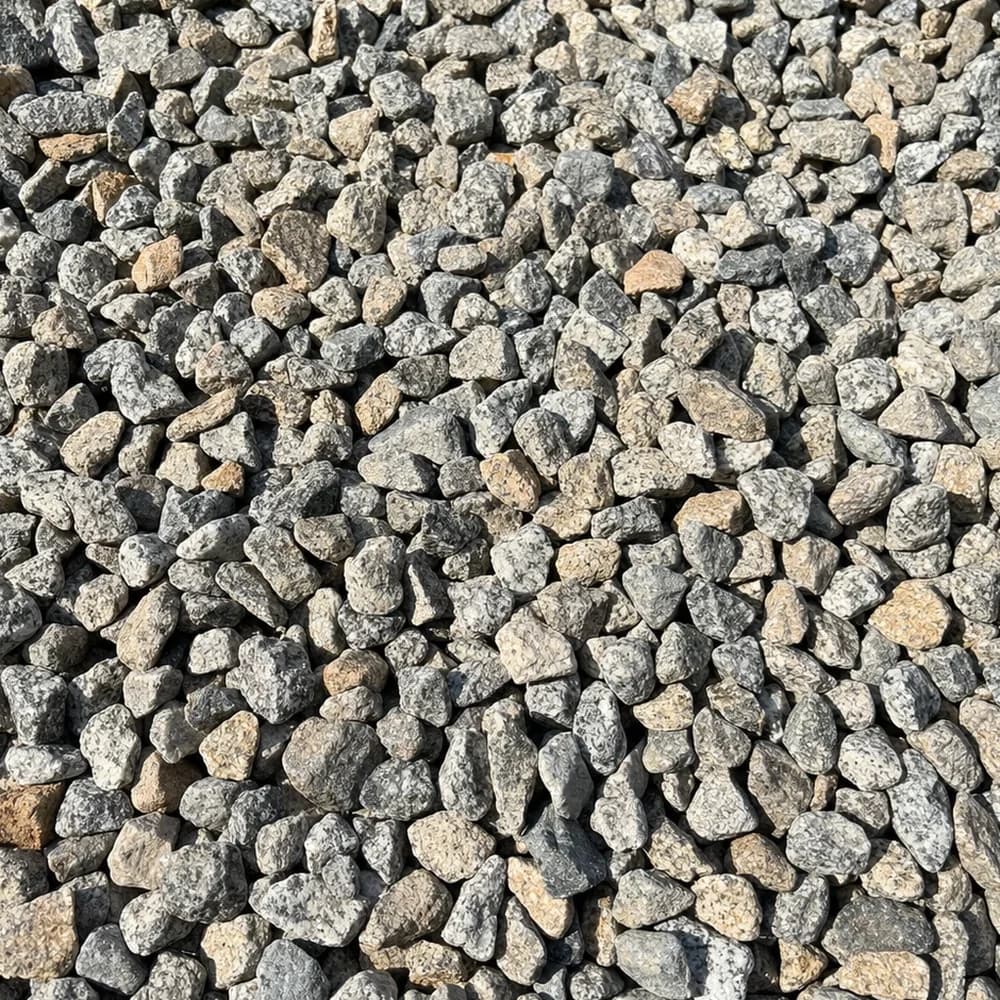
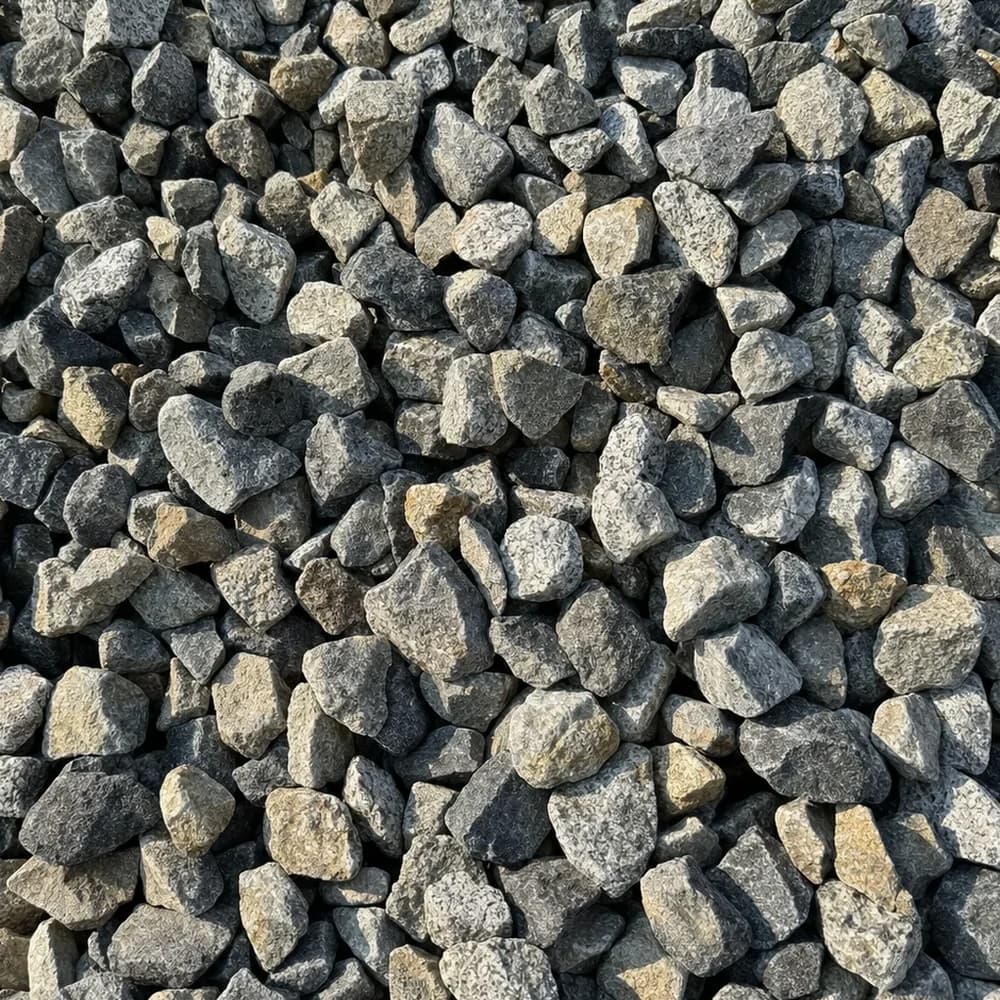
The listing is #4 Crushed Stone, sized about 3/4 inch to 1-1/2 inches, graded to the #4 designation, angular crushed stone.
Size, 3/4 to 1-1/2 inches. That is the line that makes it a bridging material rather than a surfacing one. At this size, pieces span a soft area between firmer points instead of sinking individually, and voids between them stay large enough to move a serious volume of water.
Grading, #4. North Carolina specifies washed stone by number, and #4 is the coarse end of that ladder. It is a narrow band, not a blend running down to dust, which is why it stays open once it is placed.
Type, angular crushed. Crushed faces wedge against each other under load. That is the difference between a layer that locks and a layer that rolls, and it rules out rounded stone for every use on this page.
Turnaround, foundation drain, yard regrade: which of the three it suits
| Hypothetical job | Fit | Why |
|---|---|---|
| Turnaround or parking pad | As the bottom lift only | Bridges soft clay, then needs a base and a wearing course above it |
| French drain along a foundation | Usually too coarse | A four-inch perforated pipe wants stone that packs around it, not over it |
| Low spot or yard regrade | Wrong material | Filling a low area is a fill and soil job, not a stone job |
The turnaround is the real use. A pad built where trucks turn on clay needs the load spread before anything else happens, and a bottom lift of 3/4 to 1-1/2 inch stone laid over geotextile does that. What it does not do is finish the job: nobody drives on this size comfortably, tires ride on the high points, and the surface never levels. A compacted layer of ABC Stone goes over it, and a wearing course of Driveway Gravel over that.
The foundation drain is the common mistake. Around a perforated pipe the stone needs to fill the space between pipe and trench wall without leaving caverns, and 3/4 to 1-1/2 inch pieces bridge instead of filling. #67 Stone is the size for that trench.
The regrade is a category error worth naming, because a yard that ponds is usually a grading and soil problem. That is Fill Dirt to build the level and Top Soil to finish it, with stone involved only if a drain is going in at the same time.
It does have two uses beyond the pad. Gabion baskets take this size well, because the openings in the mesh hold it and water passes straight through. And a construction entrance built from it scrubs mud off tires before a truck reaches the road, which is the one place where being too coarse to walk on is the point.
What hurricane remnants do to a lane built on clay
The storm pattern here is the reason this material sells. Tropical systems and their remnants deliver the year's heaviest rain in a few hours, and clay slopes shed almost all of it. A farm lane or an access track that was perfectly firm in August turns to a rutted channel in September, and the damage is done by water moving along the wheel track rather than by the traffic itself.
A layer of open stone deep enough to stay above the saturated zone changes the behavior. Water passes down through the voids rather than running along a rut, and the layer keeps its bearing because the clay below is separated from it. The mountain counties add freeze-thaw to that, which is a second argument for an open layer that will not hold water where it can expand.
None of this fixes a drainage line that is wrong. If runoff is being funneled onto the lane from a field or a roof, the stone will buy time and nothing more.
Depth under a bottom lift, and holding it at the edges
Four inches is the sensible minimum where this size is being used at all, because a layer thinner than a couple of stone diameters has nothing to interlock with. Six inches is the working figure for a pad or a lane carrying loaded vehicles, and eight where the clay is genuinely soft and stays wet.
Geotextile under the stone is not optional on clay. Without it the bottom of the layer grinds into the subgrade and the two materials become one muddy mixture, at which point the drainage has gone.
Edges need a physical stop. Stone at this size on a slope or against a soft shoulder migrates outward under every load, so a cut edge, a timber, or a shoulder of finer material holds the field in place.
Flagging the drop and getting the tonnage right
A hypothetical property with a turnaround and a short foundation drain, both being priced.
Turnaround, 20 feet by 24 feet, bottom lift at six inches:
- Area: 20 x 24 = 480 square feet
- Depth: 6 / 12 = 0.5 feet
- Volume: 480 x 0.5 = 240 cubic feet
- Cubic yards: 240 / 27 = 8.9
This site publishes the #4 stone and railroad ballast family at approximately 2,900 lb per cubic yard, or 1.45 tons per yard, so 8.9 x 1.45 comes to 12.9 tons. Call it 13.
Run irregular shapes through the stone calculator rather than averaging by eye, and keep the five percent it adds by default for an area that is not flat.
On the day, mark the drop point with something the driver can see from the cab, and make sure the pile is going somewhere you can work from rather than somewhere that needs a second handling. Thirteen tons of 3/4 to 1-1/2 inch stone does not move easily with a shovel, so a tractor bucket or a skid steer is worth having on site. Delivery is arranged at checkout from your ZIP code, with quantity and date set together on this page, and the access the truck needs is worth reading before you pick the spot.
Quickly Calculate How Much You Need
Material: #4 Crushed Stone
How to Measure
Measure the length and width of your project area in feet
Decide on depth in inches (2" for landscaping, 4" for driveways)
Enter the values above and we'll calculate the tonnage you need
Need help figuring out the right amount? We can help!
Call or text us at (919) 752-3797 and we'll help you calculate the right quantity for your project.
Not sure how much you need? The Stone Calculator has depth guides, coverage charts and worked examples for this material.
Frequently Asked Questions About #4 Crushed Stone
#4 Crushed Stone delivery across North Carolina
- Charlotte
- Raleigh
- Greensboro
- Durham
- Winston Salem
- Fayetteville
- Cary
- Wilmington
- High Point
- Concord
- Greenville
- Asheville