Crush and Run vs #57 Stone for a North Carolina Driveway
Pick the wrong base and a North Carolina driveway ruts, pools water, or shifts under the first heavy truck that pulls in. The choice usually comes down to two materials sold everywhere in the state, and they behave nothing alike once they're spread and driven on.
Here's the short version, then the reasoning behind it.
Crush and Run vs #57 Stone: Which One Compacts Better for a Driveway?
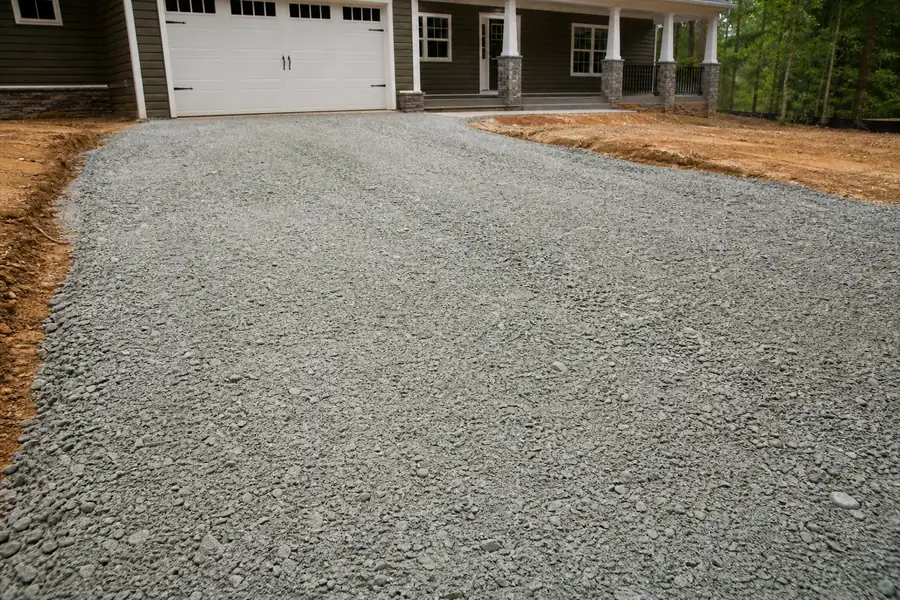
Crush and Run compacts into a solid, locked-in base that #57 Stone cannot match. Crush and Run carries stone dust and fine particles mixed in with the crushed rock, and those fines fill the gaps between larger pieces so a plate compactor can lock the whole layer tight. #57 Stone is washed clean of fines, so it stays loose and angular no matter how much you compact it. That makes it a fast-draining topping stone, not a load-bearing base.
| Material | Composition | Compaction | Best use | Typical cost |
|---|---|---|---|---|
| Crush and Run | Crushed stone with stone dust and fines (also called CR-6) | Locks tight under a plate compactor | Driveway base, under pavers, parking pads | Typically $30 to $45 per ton, material only |
| #57 Stone | Washed crushed stone, roughly 3/16 to 1 inch | Stays loose, drains instead of locking | Topping layer, drainage trenches, French drains | Typically $40 to $60 per ton, material only |
What Crush and Run Is Made Of
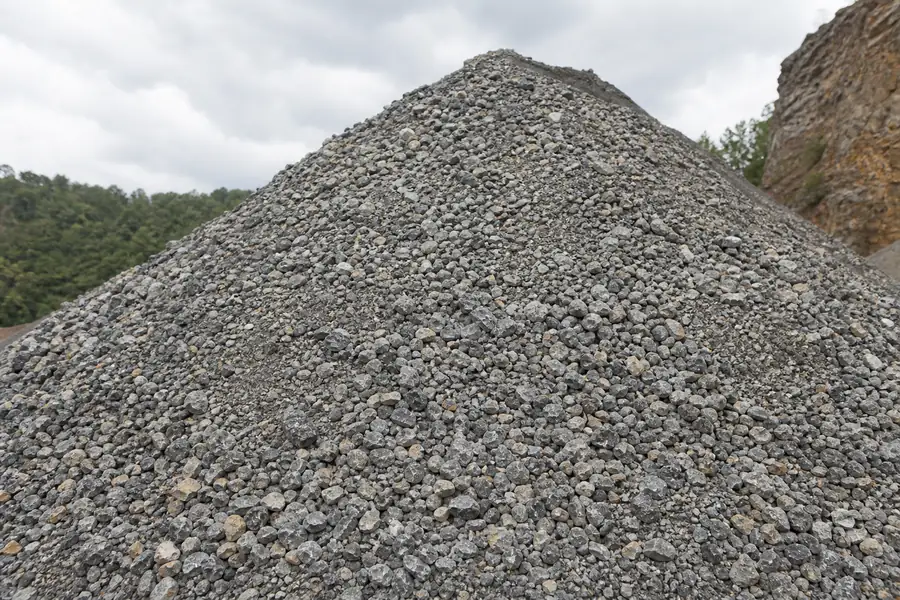
Crush and Run is a graded mix of crushed stone ranging from about 3/4 inch down to fine dust, all from the same quarry run. That range of particle sizes is what lets it pack down instead of shifting underfoot. Some contractors call the same category ABC Stone, since both are crushed, unwashed stone sold for base work, so ask for either by name and you'll get a material built to hold a driveway shape rather than drain water away from it.
Because the fines bind the larger stone together, Crush and Run sheds surface water slowly. That's a feature under a driveway, where you want a firm platform, not a fast drain.
What #57 Stone Is Made Of
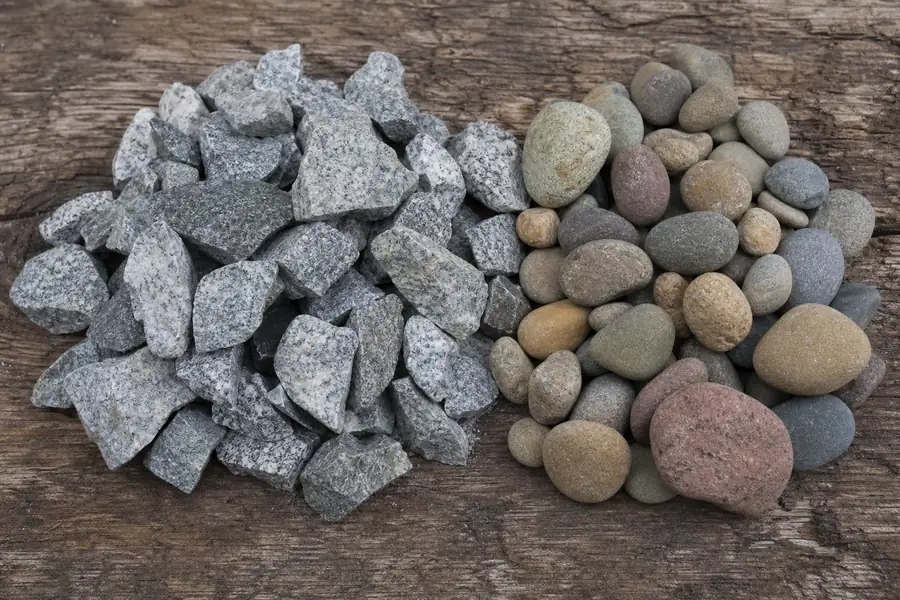
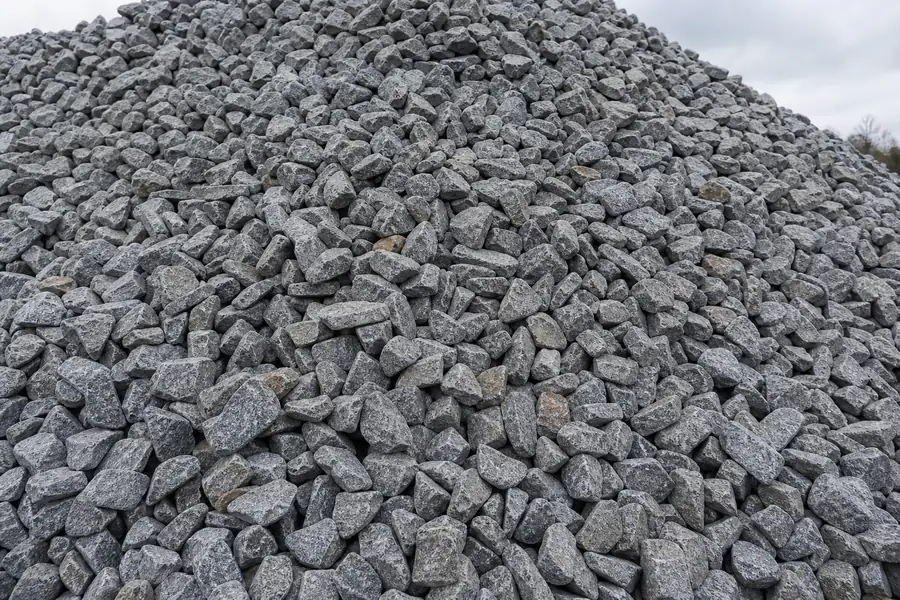
#57 Stone is washed crushed stone, roughly 3/16 inch to 1 inch across, with the dust and fines screened out before it's bagged for delivery. Removing the fines is exactly what makes it drain fast: there's nothing left to trap water between the stones. That's why it shows up in French drains, around footings, and as a topping layer people like for the look and the crunch underfoot.
On its own, #57 Stone shifts and rolls under tire weight the way marbles do. It needs a compacted base underneath it to stay put on a driveway.
Cost and Drainage Differences Between Crush and Run and #57 Stone
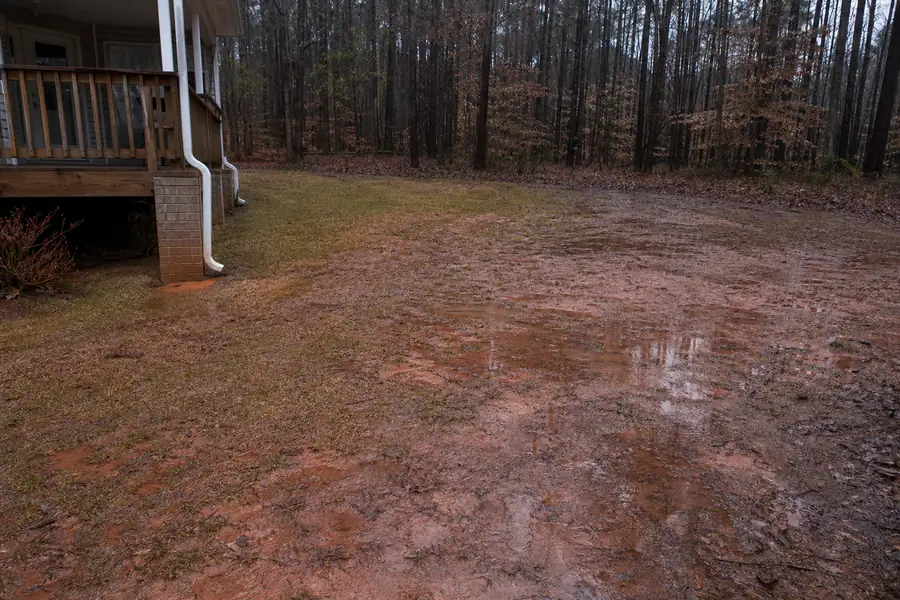
Crush and Run generally costs less per ton than #57 Stone, but #57 Stone drains faster because it carries no fines to trap water against Piedmont red clay. Red clay holds moisture and turns greasy under load, so a driveway built straight on grade with no stone at all becomes a mud pit after one heavy rain. Crush and Run's fines seal the surface enough to shed water off to the sides instead of pooling, which matters more here than raw drainage speed.
Freight adds to the difference. Piedmont quarries sit close to Charlotte, Raleigh, and Greensboro, so deliveries there carry less freight than the same order out toward the coast, where crushed stone has to travel farther. Run your driveway's length, width, and depth through the crusher run calculator before you order so you're not guessing at tonnage on a job that's already priced by weight.
Crush and Run vs #57 Stone: Which One for Your North Carolina Driveway?
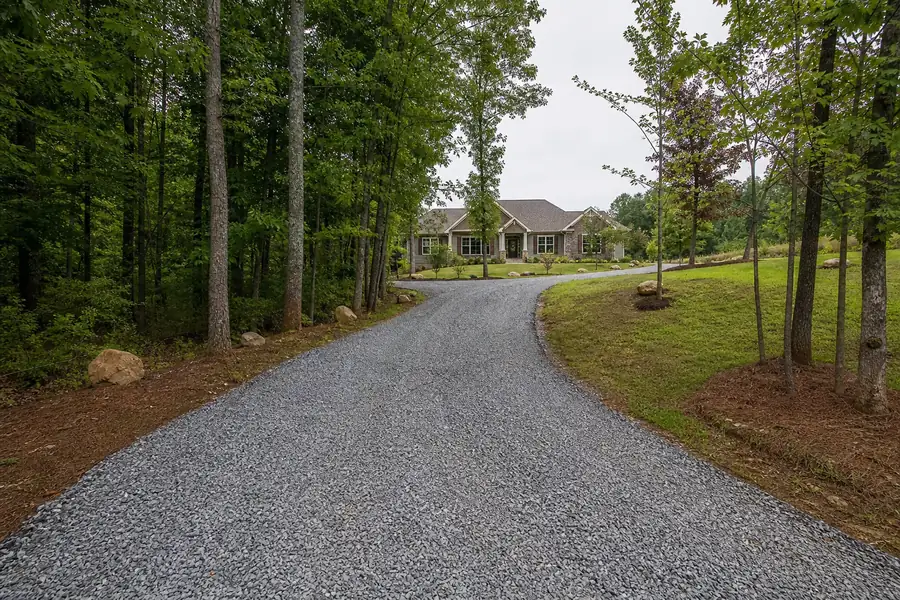
Most North Carolina driveways need Crush and Run as the compacted base, then #57 Stone or a similar gravel on top if you want a looser, more decorative surface to drive on. On Piedmont clay, Crush and Run's fines lock down and keep the base from pumping mud up through the top layer. In the coastal counties, where sandy soil has the opposite problem and won't hold a shape on its own, Crush and Run's binder-like fines do the work that clay can't, giving the sand something to grip.
If you're only draining water away from a downspout or footing, skip the base layer and order #57 Stone by itself. If you're building something you'll park a car or truck on, put Crush and Run down first. North Carolina Rock Supply delivers both materials to cities across North Carolina, from Charlotte and Raleigh to Wilmington and Asheville, though eastern deliveries tend to carry a bit more freight than a Piedmont order of the same size.
FAQs
Can I use #57 stone alone as a driveway base?
Not for a daily-use driveway. #57 Stone has no fines to lock it in place, so it rolls and shifts under tire weight without a compacted base underneath it. Use it as a topping layer over Crush and Run instead.
How deep should crush and run be for a driveway?
Most North Carolina driveways need a 4 to 6 inch compacted layer of Crush and Run, sometimes deeper on soft or sandy sections. Heavier vehicle traffic and poor drainage on the site both push that number toward the higher end.
Does crush and run turn to mud in red clay?
No, Crush and Run is what keeps red clay from turning to mud under a driveway. Its fines compact into a dense, low-permeability layer that sheds surface water instead of letting it soak down and soften the clay underneath.
Which is cheaper, crush and run or #57 stone?
Crush and Run typically costs less per ton than #57 Stone, since #57 Stone goes through an extra washing step to remove the fines. Delivery distance and order size affect the total more than the small per-ton gap between the two materials.
Can I mix crush and run and #57 stone in the same driveway?
Yes, and it's the most common setup. A compacted Crush and Run base with a thin topping layer of #57 Stone gives you a firm driveway underneath and a well-draining, textured surface on top.