Best Rock for Drainage in North Carolina Yards: Downspouts, Ditches, Foundations and Soggy Lawns
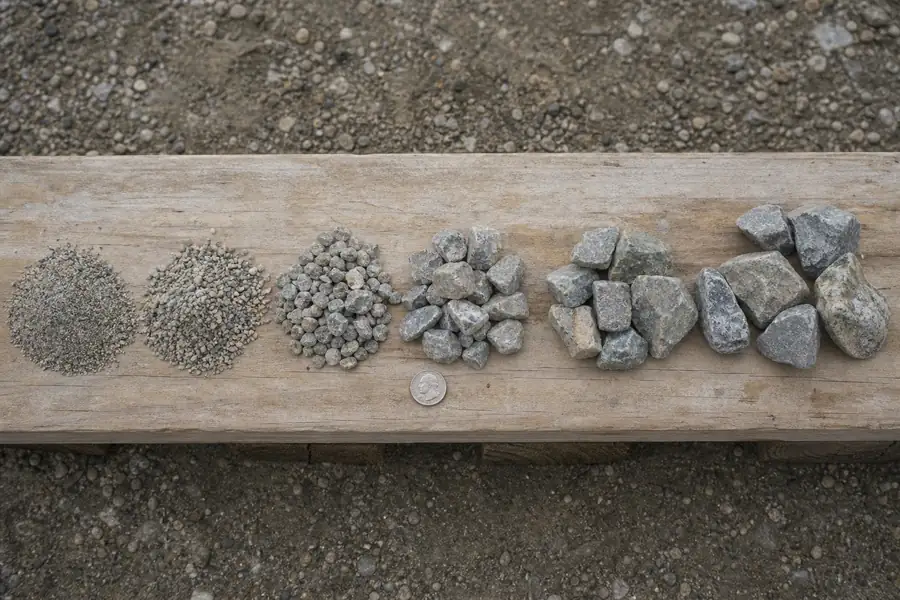
The best rock for drainage in a North Carolina yard depends on the job. Washed, angular stone in the 3/4 inch to 1.5 inch range moves water fastest through compacted clay, while river rock and riprap are built for open channels where water needs to slow down instead of disappearing underground.
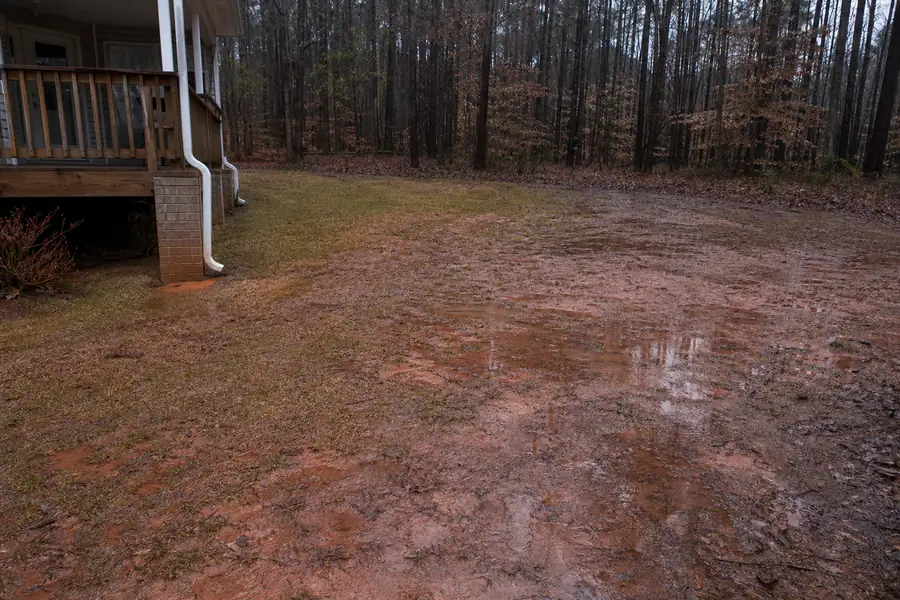
Piedmont red clay is the reason this matters more here than in sandier soils. Clay compacts hard and holds water on the surface instead of letting it soak in, so the stone does the draining the soil won't. We break down how that plays out lot by lot in our guide to yard drainage in North Carolina red clay, but the short version is: pick stone by application, not by what's cheapest per ton.
What's the best rock for drainage under a downspout?
A downspout splash pad needs a stone big enough to stay put under a hard rain but small enough to sit flush against the foundation. Most homeowners run 3/4 inch to 1 inch stone, 3 to 4 inches deep, in a fan or trench extending 3 to 6 feet from the wall.
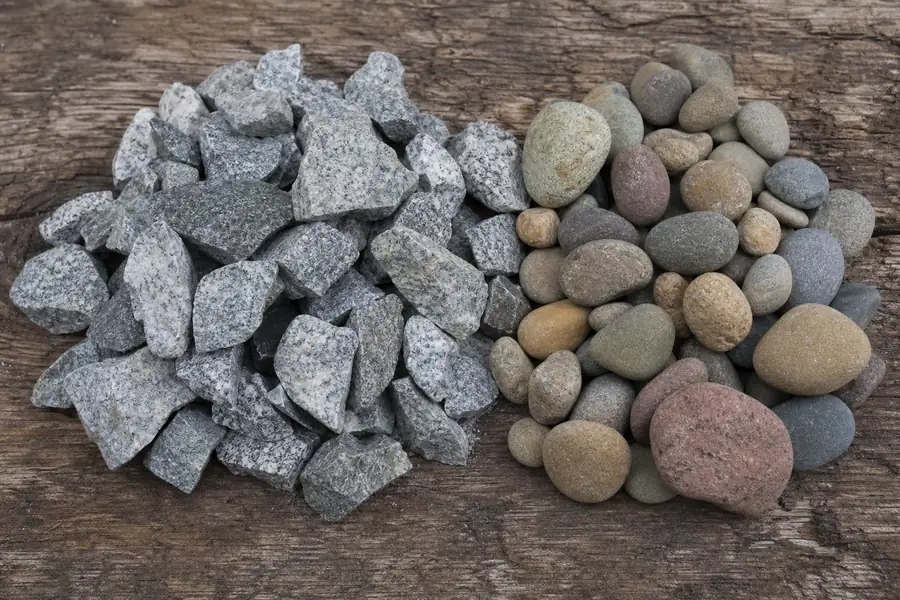
67 stone is the workhorse choice here: uniform, angular, and it stays open under the flow instead of packing tight. If you want the same drainage function with a cleaner look near a patio or entryway, river rock does the job in rounded stone instead of crushed. Either way, a single downspout usually only needs a few hundred pounds, so it's a small order worth pairing with whatever else you're buying that trip.
What's the best rock for drainage in a ditch or swale?
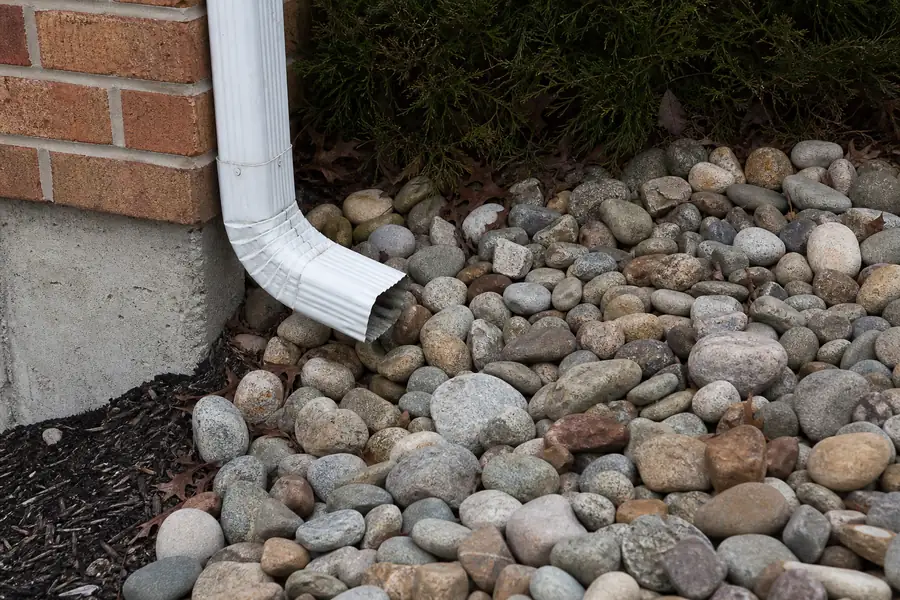
For a drainage ditch or driveway low spot carrying real storm volume, riprap is the best rock for drainage because its size and mass resist the current instead of washing downhill with it. Riprap in the 6 to 12 inch range holds a bank on a graded ditch or a culvert outlet where a summer thunderstorm can move a surprising amount of water in twenty minutes.
A shallower swale, the kind that just carries sheet flow across a lawn to a lower point, doesn't need rock that heavy. Smaller washed stone lining the swale bed slows the water without scouring a channel. If that ditch runs alongside a gravel driveway, it's often built on the same ABC stone base used on North Carolina driveways, so it's worth grading the shoulder at the same time you address the ditch. Our full breakdown of stone sizing for this exact situation is in rock for drainage ditches and swales, including how grade and length change the math.
What's the best rock for drainage in a French drain?
A French drain is a gravel-filled trench with a perforated pipe at the bottom that carries groundwater away from a wet yard or foundation. The best rock for drainage inside that trench is clean, washed drain rock, typically 3/4 inch to 1 inch, wrapped in fabric so clay fines can't migrate in and clog the voids.
Under the pipe itself, a lot of NC installers spec 57 stone for bedding, since its consistent, open grading keeps water moving even after the trench settles. Most residential French drains run 12 to 18 inches deep and 12 to 18 inches wide, and tonnage adds up fast on a long run. Our French drain gravel guide walks through trench math in detail, or run your own numbers on the stone calculator before you order.
What's the best rock for drainage around a foundation?
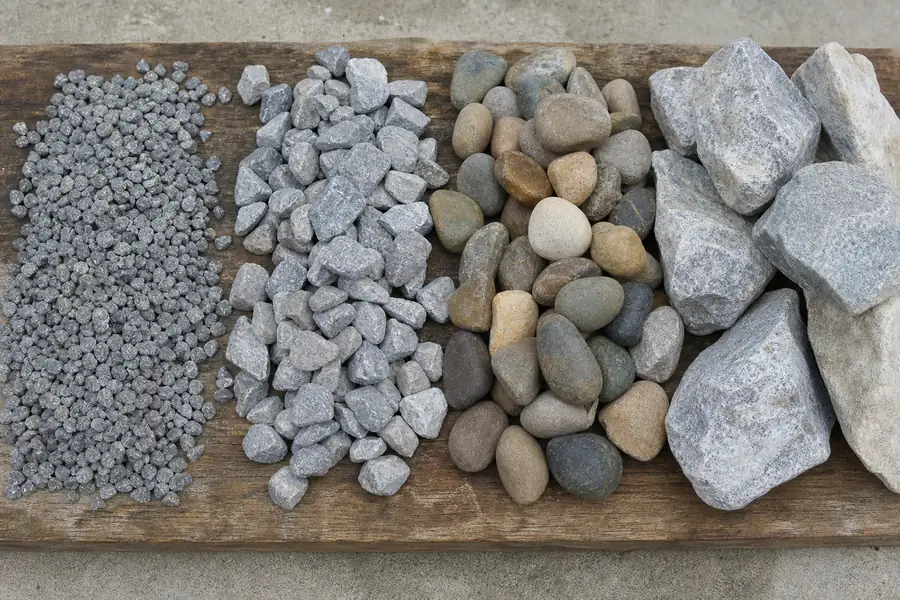
Foundation and crawlspace perimeter drains need clean stone with no fines mixed in, so water passes through instead of pooling against the wall. 4 crushed stone, roughly 1 to 2 inches, is the standard choice for a footing drain trench, since the larger, open-graded stone leaves plenty of void space even after backfill settles.
Most footing drains in North Carolina run 12 inches deep to match the region's frost line, though the real driver here is keeping the trench below the foundation footing, not frost. Our guide to gravel around a foundation in NC covers trench depth against a slab versus a crawlspace, which changes the numbers.
What's the best rock for drainage in a soggy lawn?
A soggy low spot that never has a defined channel is usually better solved with a shallow dry creek bed than a buried pipe. Rounded river rock laid over landscape fabric moves surface water visibly during a storm and looks intentional the rest of the year, instead of a muddy dip in the grass.
Depth matters more than most people expect: 3 to 4 inches of rock over fabric is enough for a decorative dry creek, but the bed needs a real low-to-high grade or the water just sits in it anyway. We cover layout and sizing in river rock drainage ideas if the wet spot in your yard doesn't have a fix as simple as a French drain.
FAQs
What size rock drains fastest through North Carolina clay?
Stone in the 3/4 inch to 1.5 inch range drains fastest through compacted clay because the angular voids between the stones stay open under load. Smaller material like sand or screenings packs down and seals over, which works against you in a drainage application.
How deep should a French drain be in North Carolina?
Most residential French drains run 12 to 18 inches deep, with 4 to 6 inches of stone bedding under the pipe and stone backfilled up to grade above it. Depth can run deeper around a foundation if it needs to sit below the footing.
Does riprap stop erosion in a drainage ditch?
Yes, riprap sized 6 inches and larger resists the force of moving storm water enough to hold a ditch bank or culvert outlet in place. Smaller stone in the same spot tends to wash downhill during a heavy Piedmont thunderstorm and needs replacing every season.
Can I use the same rock for a French drain and a foundation drain?
Not ideally. A French drain around a pipe wants smaller, uniform stone like drain rock or 57 stone to keep flow moving through a fabric-wrapped trench, while a foundation footing drain usually calls for a larger, more open stone like 4 crushed stone to handle standing groundwater against a wall.
How much drainage rock do I need for one downspout?
A single downspout splash pad, roughly 3 feet by 3 feet and 3 to 4 inches deep, typically takes a few hundred pounds of stone, well under half a ton. It's usually cheapest to add that quantity onto a larger delivery rather than order it alone.