Crushed Stone vs Gravel vs Pea Gravel: What's Actually the Difference?
Ask for "gravel" at a North Carolina stone yard and you might get angular quarry rock, smooth river stone, or anything in between. The terms get used loosely, but the material underneath them behaves very differently once it's in the ground. Order the wrong one and a driveway base stays soft, or a drainage bed clogs with fines instead of moving water.
Here's what crushed stone, gravel, pea gravel and river rock actually are, why their shape changes how they compact and drain, and which one fits your project.
Crushed Stone vs Gravel: What Each One Actually Is
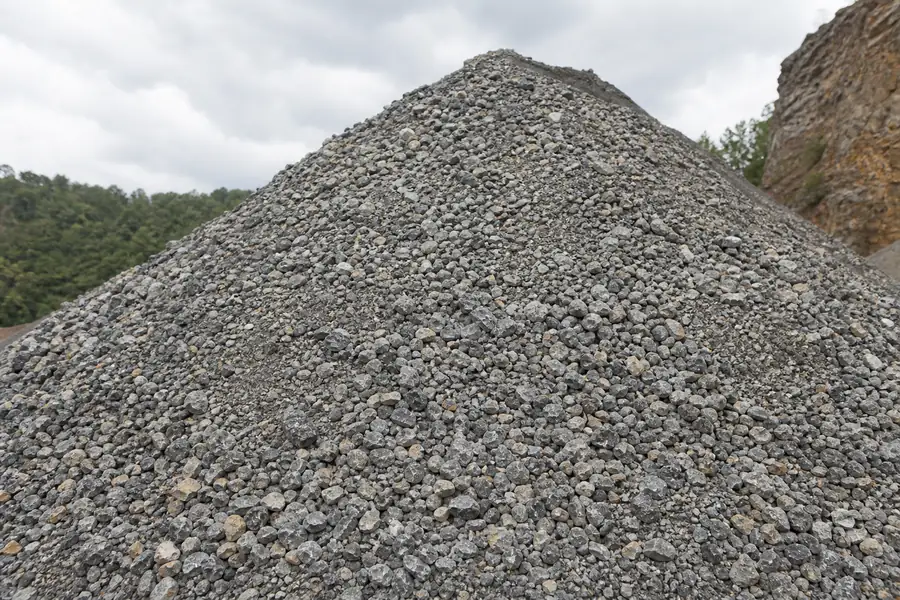
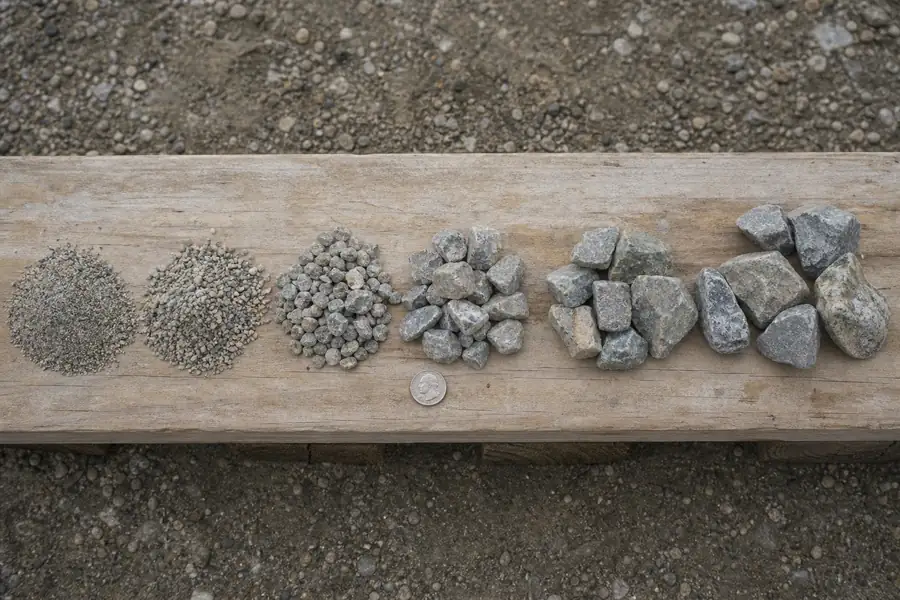
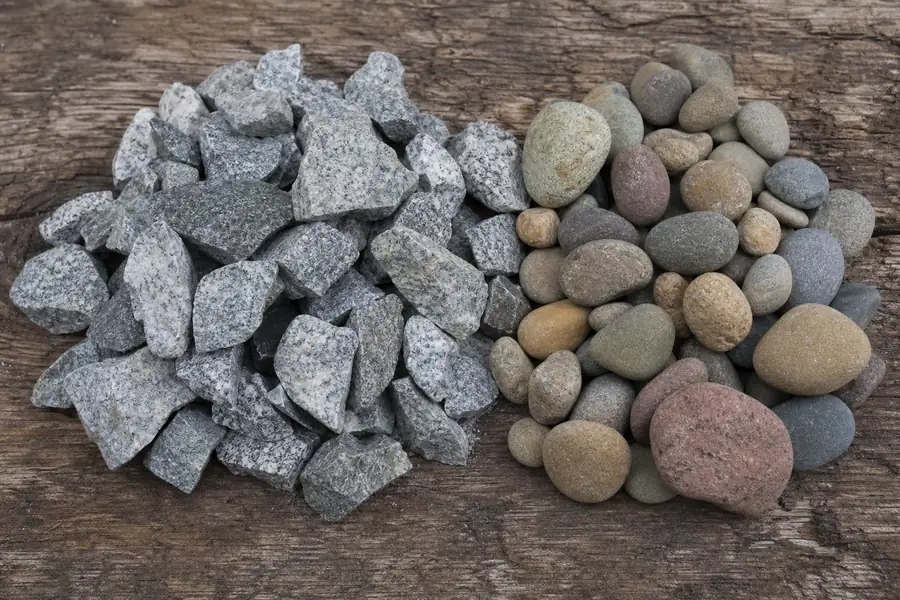
Crushed stone is quarried rock, usually granite or gneiss in the Piedmont, that's mechanically crushed and screened into graded sizes. The crushing fractures each piece, leaving sharp, angular faces that bite into each other. Three-quarter inch crushed stone and #57 stone are both crushed stone, just screened to different gradations. If you're not sure which number size you need, crushed stone sizes explained breaks down what each grade is actually for.
Gravel, in the strict sense, is rock that nature already rounded. Water and weathering wore the edges smooth long before it was ever dug up, so it arrives loose and rounded instead of fractured. In everyday NC yard talk, "gravel" often gets used as a catch-all for both, which is where the confusion starts.
Pea Gravel and River Rock: Where They Fit Next to Crushed Stone and Gravel
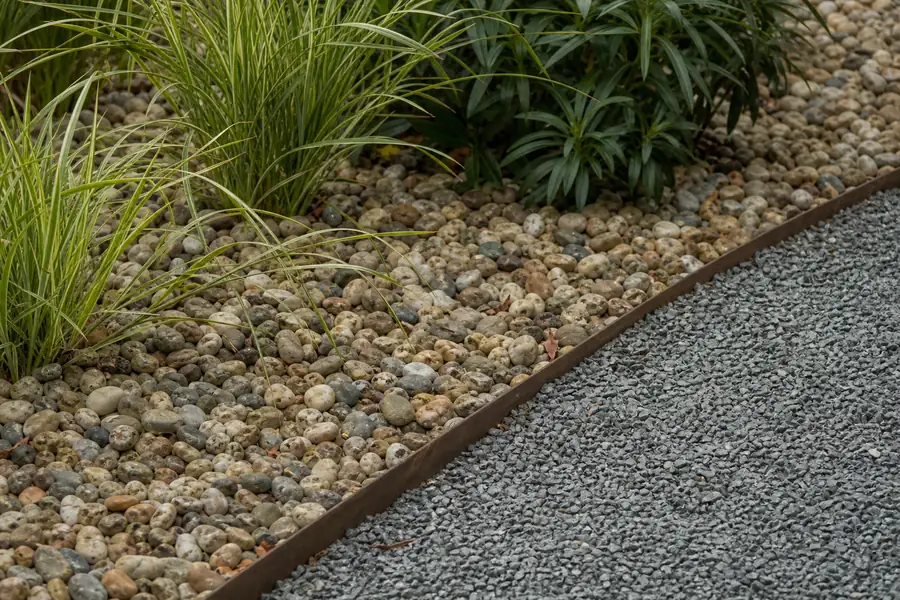
Pea gravel is small, naturally rounded stone, roughly the size of a pea (about 3/8 inch), smooth on every side with no sharp edges. Natural pea gravel is the go-to for walkways, play areas and decorative beds where bare feet and rolling wheels matter more than load-bearing strength.
River rock is the larger cousin: smooth, rounded stone that runs from about an inch up to several inches across, used for drainage swales, dry creek beds and landscape accents rather than structural fill. River rock and pea gravel get mixed up constantly since both are rounded, but they serve different scales of project. Pea gravel vs river rock covers that comparison in more depth.
Angular vs Rounded: Why Shape Decides Compaction and Drainage
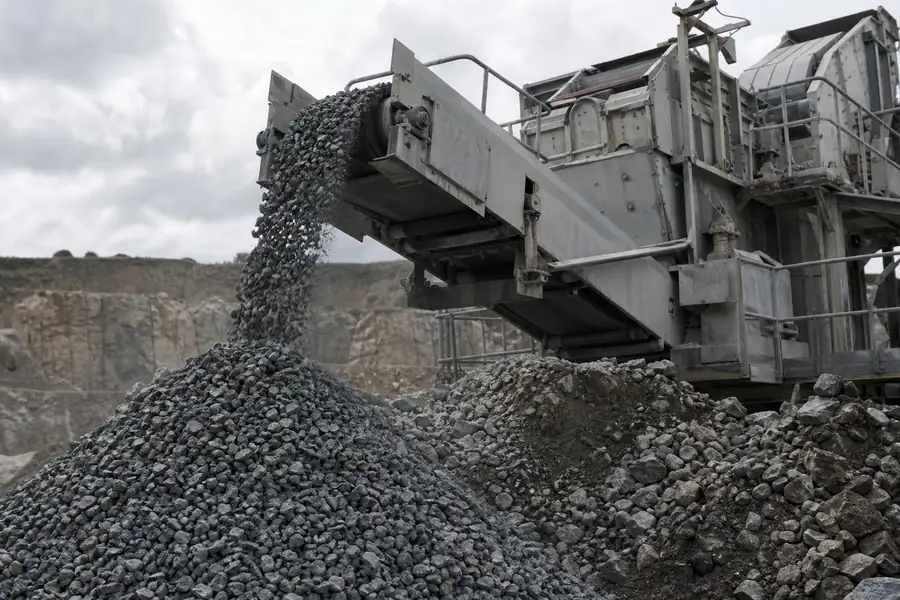
Angular stone locks together when compacted; rounded stone doesn't, and that single fact decides what each material is good for. Crushed stone's fractured faces wedge against each other under a plate compactor, building a dense, interlocked layer that resists rutting under a driveway or crawlspace pad. Rounded gravel pieces just roll past each other instead, so a base built from pea gravel or river rock stays loose and shifts under tires no matter how much you tamp it.
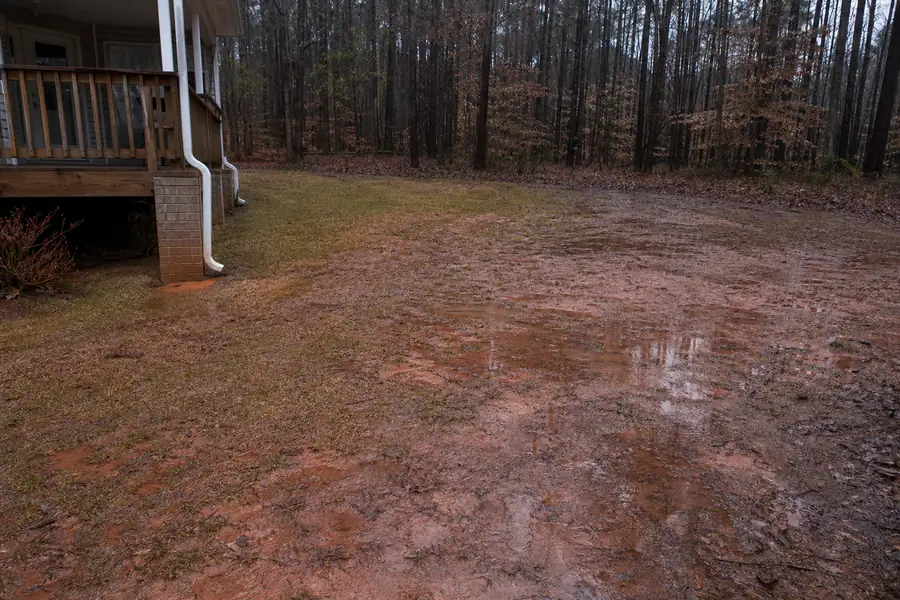
That's exactly why Piedmont red clay projects lean on angular base material. Clay already holds water and turns greasy under load, so the base has to do the compaction work that frost depth handles further north. A loose, rounded base over wet clay just sinks. For how this plays out with specific driveway base products, crusher run vs washed stone compares two common angular options.
Drainage runs the other way. Rounded stone's consistent shape leaves bigger, more uniform gaps between pieces, so water moves through fast with less risk of clogging. That makes river rock and pea gravel the right call for French drains, dry creek beds and anywhere water needs to pass through rather than sit on top.
What North Carolina Calls These Materials (and What to Actually Order)
In North Carolina, the same crushed stone gets several different names depending on who's selling it and what it's screened for. ABC stone, crush and run, and CR-6 all point to the same compacted angular base material used under driveways and patios. #57 stone usually means a clean, washed, angular stone without fines, used for drainage and drain rock beds rather than compaction. If you're weighing those two angular options against each other for a driveway specifically, crush and run vs #57 stone for a driveway walks through which one holds up better under tires.
When you're pricing a job, it helps to say what the material is for rather than just a name you heard at a job site. "I need something that compacts hard for a driveway base" gets you crush and run or ABC stone. "I need something water can move through" gets you #57 stone, river rock or pea gravel, depending on the scale.
Crushed Stone vs Gravel vs Pea Gravel: Which One for Your Project
The table below is the fastest way to match the material to the job once you know whether you need it to lock tight or let water through.
| Material | Shape | Compacts well | Drains fast | Typical use |
|---|---|---|---|---|
| Crushed stone | Angular | Yes | Moderate | Driveway base, walkways, drain beds |
| Crush and run / ABC stone | Angular, mixed with fines | Yes, best of the group | Low | Driveway and patio base |
| Pea gravel | Rounded, small | No | Yes | Walkways, play areas, decorative beds |
| River rock | Rounded, larger | No | Yes | Drainage swales, dry creek beds, accents |
FAQs
Is crushed stone the same thing as gravel?
No. Crushed stone is quarried rock that's mechanically crushed into angular pieces, while gravel in the strict sense is naturally rounded rock worn smooth by water and weather. North Carolina yards sometimes use "gravel" loosely to mean both, which is why it helps to describe what you need the material to do.
Can I use pea gravel for a driveway base?
Pea gravel isn't a good choice for a driveway base because its rounded shape won't lock together under compaction, so it stays loose and shifts under tire weight. A driveway base needs angular material like crush and run or ABC stone that interlocks when compacted.
Why does crushed stone compact better than gravel?
Crushed stone's fractured, angular faces wedge against neighboring pieces when compacted, forming a dense, interlocked layer. Rounded gravel pieces have no flat faces to grip, so they roll past each other instead of locking tight, which is why they stay loose no matter how much you tamp them.
What's the difference between pea gravel and river rock?
Pea gravel is smaller, roughly 3/8 inch and pea-sized, and is mainly used for walkways, play areas and decorative ground cover. River rock runs from about an inch to several inches across and is sized more for drainage beds, dry creek beds and landscape accents than foot traffic areas.
Which material drains water the fastest?
Rounded stones like river rock and pea gravel drain fastest because their uniform shape leaves larger, more consistent gaps between pieces for water to pass through. Angular crushed stone can still drain reasonably well, but its interlocking shape leaves smaller voids, so it's better suited to a compacted base than a pure drainage layer.