Road Base Calculator: One Lane From Stakes to Roller
Enter your project dimensions
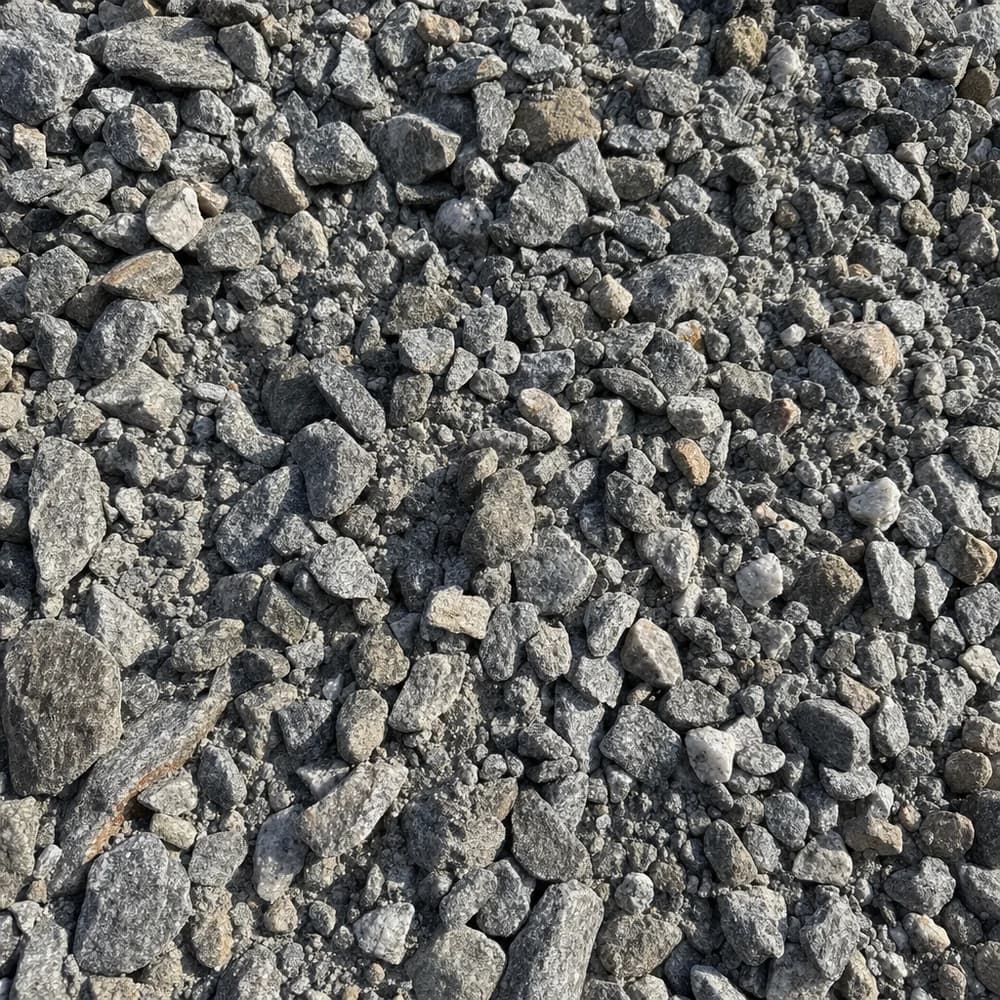
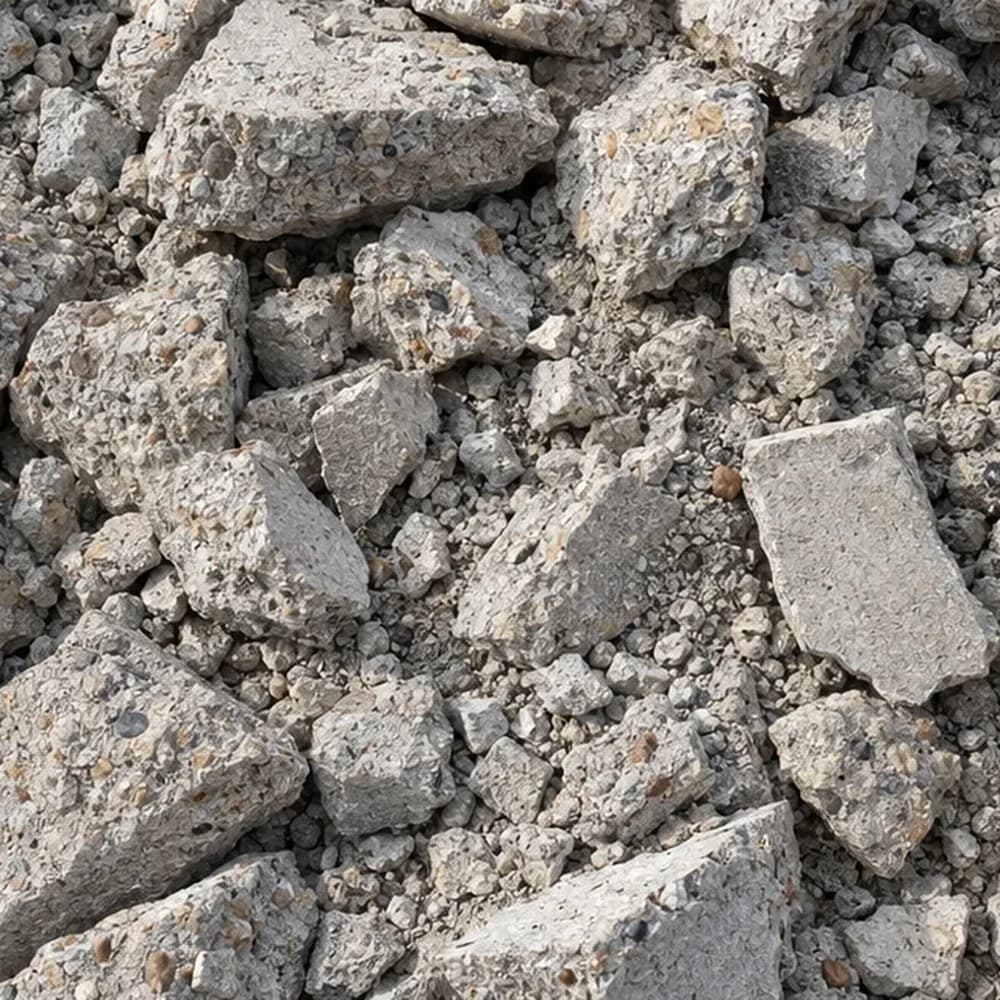
Ask for road base in North Carolina and you will be handed one of two things. ABC stone, the aggregate base course NCDOT specifies, carries a larger top stone and is built to take load. Crush and run is finer and screeds smoother, which is what a paver base or a close finish grade wants. Both are graded crushed stone with fines in them, both bind when they are rolled, and both are figured at the same weight, so the road base calculator on this page will give you an honest tonnage for either. Choosing between them is about what the layer has to do. This page follows one lane the whole way, because the order is only one stage of six.
ABC stone or crush and run, decided before the tape comes out
For a lane, a yard, a barn apron or anything with a loaded axle on it, ABC Stone is the default across the state and the reason a base course is usually called ABC here rather than road base at all. Where the surface has to come out flat and tight, under pavers or against a threshold, Crush and Run is the easier material to work, and the crusher run calculator is set up for those jobs. Neither one belongs in a drain: the fines that make them bind are the fines that would block it.
The lane in this walkthrough runs 120 feet from a county road back to a barn, 11 feet wide, on Piedmont clay that ruts every wet spring.
Walking the run and staking the width before a number is ordered
Measure the length along the center of the lane rather than along one edge, because a curve makes the outside longer than the inside and the center is the average of the two. Then take the width in three or four places and average those readings too. Lanes are rarely the width anyone thinks they are, and a foot of extra width across 120 feet is more than a ton.
Stake the edges while you are there. A lane that spreads while it is being spread is the usual reason a load runs short at the far end.
Reading the subgrade after a wet week, and stripping what has to come off
Scrape the topsoil and anything organic off before stone touches the ground. Stone laid on turf will bring mud up through itself no matter how deep it goes. Then look at what is underneath. Firm, well-drained ground needs nothing more. Clay that has been under rain for a week, or ground already showing ruts, wants woven geotextile between the soil and the stone, which keeps the two from mixing and stops the lane from eating stone every year.
Depth is decided here rather than at the keyboard. Four inches compacted suits firm ground under light residential traffic. Six is the figure for daily vehicles and delivery trucks. Eight to twelve is for soft or saturated subgrade, for red clay that stays wet, and for anywhere equipment is going to sit. Add thickness before you add width; a thin lane wears out from below.
Putting the staked lane into the road base calculator
Now the form. Choose Rectangle for a straight run, or Multiple areas if the lane has an apron or a turnout, and up to five areas can be totaled at once. Length and width go in as feet, Diameter instead if a turning circle is going in as a circle, and Depth goes in as inches between 0.25 and 24. Set the Material select to the base you settled on so the weight applied is the right one.
The tick marked "Add 10% extra for compaction & spillage" is on when the page loads, and it is the only allowance the form has. Leave it on for a base course, because this is a material that will be rolled and will lose height doing it. Press Calculate material needed and the answer comes back in cubic yards, tons and cubic feet. "Email my quote" sends it to you with the measurements, worth having when the order and the spreading happen on different days.
The 120 by 11 foot lane at 6 inches: 120 x 11 = 1,320 square feet. 1,320 x 6 / 12 = 660 cubic feet. 660 / 27 = 24.44 cubic yards. At 1.50 tons a yard that is 36.7 tons, or 26.9 yards and 40.4 tons with the ten percent left ticked. An equipment pad beside the barn, 24 by 36 feet at 8 inches, works out at 864 square feet, 576 cubic feet, 21.33 cubic yards and 32 tons, or 23.5 yards and 35.2 tons with the allowance. Both figures are illustrative rather than quoted work.
Setting two drop points instead of one pile at the gate
Thirty-odd tons is a long way to move twice. Before the delivery, clear two places along the run where the truck can tip, roughly a third and two thirds of the way down, so the material is spread outward from each pile rather than wheelbarrowed uphill from the gate. Delivery is arranged at checkout by ZIP code, and how delivery works covers what the driver needs to find: clear overhead access and firm ground to back onto, which on a wet clay lane is worth checking the day before rather than the morning of.
Moving twenty tons by hand is a week of work. A tractor with a box blade or a skid steer turns it into an afternoon, and that decision belongs in the plan rather than in the middle of the job.
Rolling four inches at a time and crowning the middle
Spread in lifts no deeper than 4 inches and roll each lift before the next goes on. A six-inch lane is two lifts, not one pass with a heavy machine. As the surface comes up, build a crown of two to three percent from the center so rain runs to the shoulders instead of soaking into the base, which on clay is the difference between a lane that lasts and one that potholes by the second winter.
If you want a low-dust travel surface on top, finish with #57 stone or driveway gravel. Size that layer separately in the stone calculator, which is built around washed grades and their numbers.
Three thousand pounds a yard, before the roller touches it
The weight behind all of this is about 3,000 lb for a cubic yard of base material, which is 1.50 tons, and that is the figure this site publishes. A yard of it arrives loose and finishes tighter, so the depth you enter should be the compacted depth you want to end up with. Coverage falls out of the same arithmetic: a ton spreads over roughly 54 square feet at 4 compacted inches and about 36 at 6.
The ten percent allowance is one tick, on when the page loads, and it applies nothing once you untick it, and every figure above is worked that way.
Common questions
The lane needs a finish surface as well as a base. Does both go through this page?
Run it twice with the material changed between runs. The base is figured at 1.50 tons a cubic yard and washed surface stone at 1.40, so a single pass at either weight is wrong for the other layer. Enter each layer at its own depth, not the combined thickness, and order the two as separate products.
The lane bends around a stand of pines before it reaches the barn. What length do I enter?
Run the tape along the center line through the bend, following the route the stone will take, and use that walked figure. Where the bend also widens, split the lane into two or three rectangles in Multiple areas and give each its own average width instead of forcing one number over the whole run.
There is stone on the lane already and it only needs bringing back up. What depth goes in?
The depth of new material, which is almost never the depth in the guidance above. Lay a board across the worn wheel tracks, measure down in a few places and average what you find. Two inches is a common answer on a lane that has thinned rather than failed, and the box accepts anything from a quarter inch up.
What actually happens if the order lands a few tons short?
The last stretch goes down thin, and the thin stretch is usually the one nearest the road where the heaviest turning happens. Round the yardage up, leave the ten percent ticked on a layer you intend to compact, and remember that a lane loses height as it is rolled, so a short order shows up as a soft end rather than a slightly lower surface.
How close is this to the tonnage that actually ends up on the lane?
The arithmetic is exact for the numbers you type. What moves the real figure is the ground: ruts that swallow material, a subgrade that pumps, a width that grew while you were spreading. Measure the width in several places, use the compacted depth, keep the allowance on, and the result will be close enough to order against.
Related calculators
Thirty tons. Zero delivery fees.
Road base priced per ton, hauled free, at lane quantities where hauling usually costs the most.