Drain Rock for North Carolina French Drains, Dry Wells and Wall Backfill
For North Carolina drainage through Piedmont clay, Drain Rock goes where a French drain or wall needs an open water path.
- Size: 3/4 inch to 1-1/2 inch
- Grading: Washed to remove fines and dust
- Type: Rounded or angular varieties
From $396 for 1 ton, delivery included
Larger loads cost less per ton: 500 tons is $29,595 ($59.19 per ton). Pick any quantity below for a delivered price.
Free delivery included
Free delivery anywhere in North Carolina
Pick a delivery date
Weekday delivery, earliest Oct 20
Get a Free Quote
Fill out the form and our sales team will get back to you within the hour.
Size and Grading
- Size
- 3/4 inch to 1-1/2 inch
- Grading
- Washed to remove fines and dust
- Type
- Rounded or angular varieties
The material this one gets mistaken for is the 3/4 inch crushed stone two listings over, and the mix-up is understandable because the bottom of this size band is the same. The difference is what the two are sold to do. A crushed stone is bought to carry something. Drain rock is bought to carry water, which is why it runs larger at the top end, why the grading is washed rather than graded, and why it comes in rounded as well as angular. On Piedmont clay that holds a storm for days, that distinction is the whole job.
| Spec | What is listed |
|---|---|
| Size | 3/4 inch to 1-1/2 inch |
| Grading | Washed to remove fines and dust |
| Type | Rounded or angular varieties |
A washed pile with no dust on it, sized from 3/4 up to an inch and a half
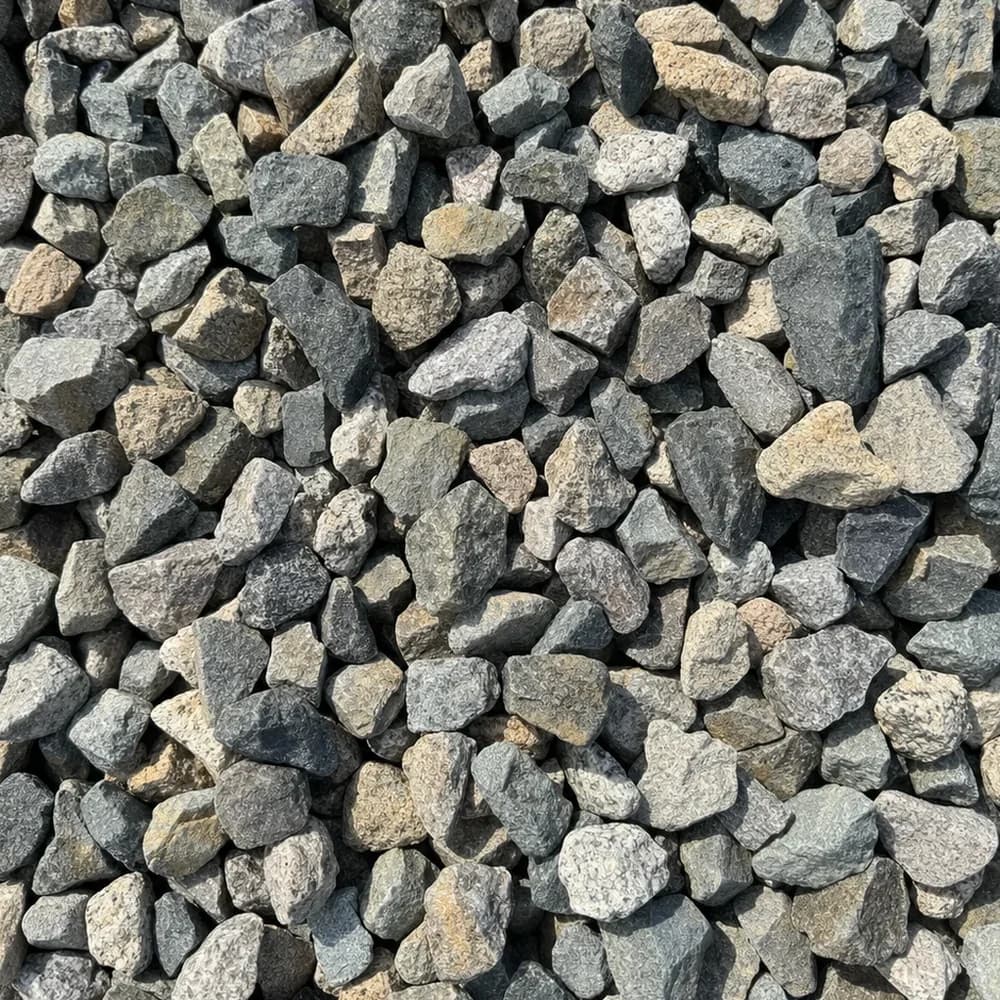
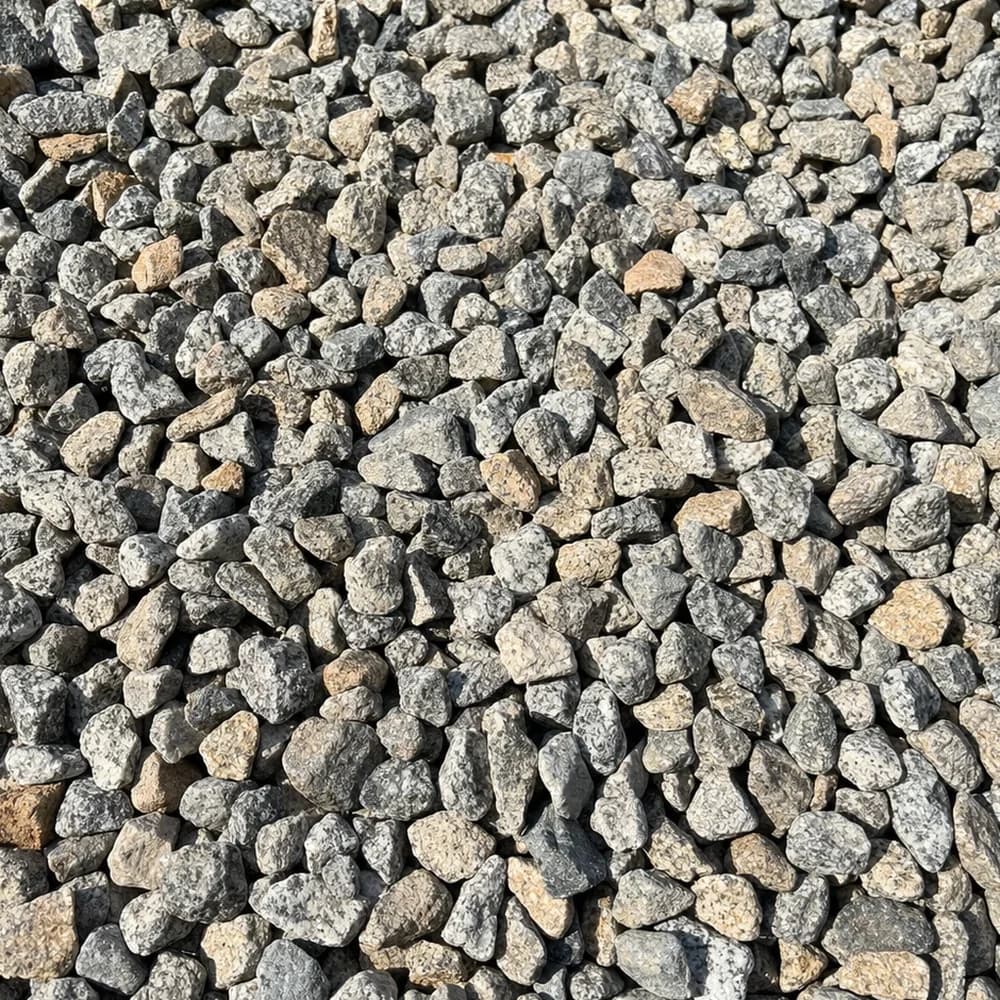
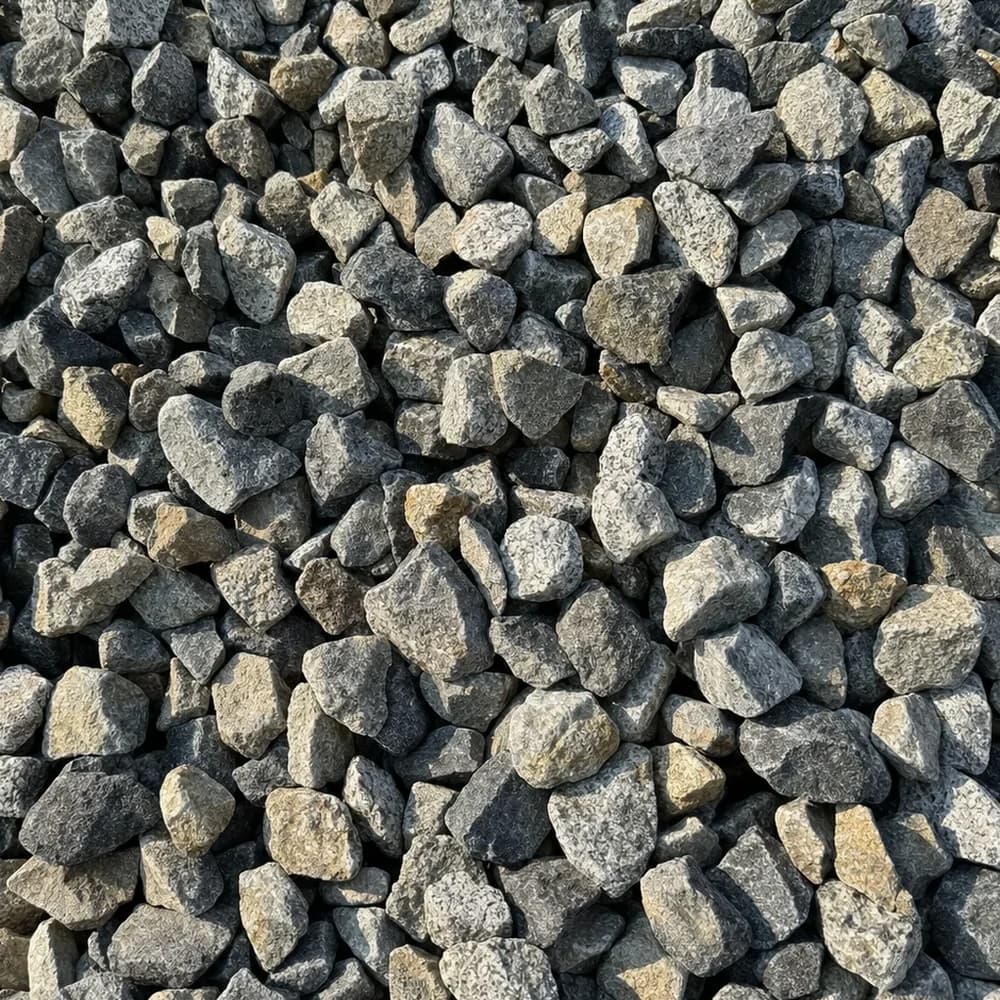
Shovel into it and your hands stay clean. No gray film, no haze off the top, and the pieces separate rather than clinging together. That is what washed means here: the fines and the dust are gone, so the spaces between the stones are open and connected from top to bottom of the pile.
The size spread is wider than the small clean gradings, running from about 3/4 inch up to an inch and a half. That gives a coarser look and bigger voids, and makes the material easy to shovel into an open trench and awkward to work into a narrow joint.
Two varieties are listed. Angular pieces have fractured faces that lock against each other, so they hold their arrangement when soil or backfill is bearing down on them. Rounded pieces are water-worn and look natural, which suits anything left exposed, but they roll under load and move on a slope. The choice is usually decided by whether the stone will be buried or looked at.
Behind a wall, around a foundation and under a dry well
The jobs that suit it all have the same shape: a defined zone, wrapped or lined, where water is collected and moved somewhere else.
Behind a segmental or block retaining wall, drain rock fills the zone directly behind the units so water reaching the back of the wall drops to a collector pipe rather than building pressure against the face. Angular is the pick here, since backfill leans on it. Around a foundation, the same idea runs as a perimeter trench with pipe at the bottom, taking water that Piedmont clay will not absorb out to daylight or to a collection point. A dry well is the third: a pit of washed stone under a downspout run that holds a storm's worth of water and lets it soak away slowly instead of dumping it on the lawn.
Septic and leach field work uses a washed drainage layer as well. Those installations are specified by the permit and the plan rather than by a supplier page, so match the size and the grading the plan calls for and confirm it with whoever is inspecting.
An RV pad, a rural lane and a garden path are all the wrong job
Three hypothetical projects that this material gets ordered for and should not.
An RV or boat parking pad has a heavy, concentrated, standing load. Clean stone with no fines will not bind, so the layer spreads sideways under a loaded axle and the pad develops hollows where the wheels sit. That pad wants a compacted base of ABC Stone with a surface over it, and drain rock only at the perimeter if the ground needs drying out.
A long rural lane fails for the same reason at a larger scale, and adds a second one. Loose stone this size migrates under traffic, so the crown flattens, the edges build up and a graded lane turns into a channel. Driveway Gravel is the listing for a lane.
A garden path is the most tempting misuse, because the stone looks good and is the least pleasant thing on this site to walk on. At up to an inch and a half the pieces roll underfoot and compact into nothing. Walkway Gravel is the listing made for that route.
How wide and how deep a drainage zone has to be on clay
Depth in a drain is not a coverage figure, it is a trench dimension, and it comes off the design rather than off a chart. What can be said generally is that the stone has to surround the pipe rather than merely sit under it, with bedding below and cover above, and the zone has to be wide enough that soil is not pressing straight against the pipe at any point.
On red clay, width does more than depth. Clay releases water slowly, so a narrow slot fills from the pipe outward and then stalls, while a wider zone gathers from a bigger face of soil. Heavy rainfall and the remains of tropical systems mean the peak flow is what matters, not the average.
Fabric lines the trench first and folds over the top of the stone once the backfill height is reached, which keeps clay out of the voids. Cap with clean material or with soil above the folded fabric, never with loose dirt raked onto bare stone. On an exposed feature such as a swale, rounded drain rock set slightly below the surrounding grade stays put better than stone sitting proud of it.
Tons for a 45-foot foundation run and a 4 by 4 dry well
Two hypothetical volumes. Tonnage uses this site's published weight for its washed crushed stone family, about 2,800 lb per cubic yard or 1.40 tons per yard. That row covers the #57 and 3/4 inch gradings, so treat it as the closest approximate figure for a material that runs a little larger.
A foundation perimeter run, 45 feet long, 18 inches wide, with 12 inches of stone:
- Width: 18 / 12 = 1.5 feet
- Depth: 12 / 12 = 1 foot
- Volume: 45 x 1.5 x 1 = 67.5 cubic feet
- Cubic yards: 67.5 / 27 = 2.5
- Tons: 2.5 x 1.40 = 3.5
A dry well, 4 feet by 4 feet, 3 feet deep:
- Volume: 4 x 4 x 3 = 48 cubic feet
- Cubic yards: 48 / 27 = 1.8
- Tons: 1.8 x 1.40 = 2.5
About 4.3 cubic yards and 6 tons between them. The river rock calculator is the one the site points at for this material, and the extra allowance it adds by default is worth keeping on trench work, where running short means reopening ground you have already backfilled.
Fabric, pipe and the stone that caps the trench
A drain is a system, and the stone is one part of it. Filter fabric, perforated pipe, a fall that runs the right way and an outlet that stays clear all matter as much as the grading. Where a trench bottom is soft rather than firm, a bridging lift of #4 Crushed Stone below the drain rock gives it a floor. Where a wall backfill zone wants a tighter, more uniform stone against the units, #57 Stone is the washed grading most often specified for it here.
Set the quantity and the delivery date together on this listing. Delivery is arranged at checkout from the ZIP code entered there, and the truck needs firm standing with a clear line to the drop. Get the trench open and the fabric laid before the load arrives, because washed stone left on a driveway is a load you will handle twice.
Quickly Calculate How Much You Need
Material: Drain Rock
How to Measure
Measure the length and width of your project area in feet
Decide on depth in inches (2" for landscaping, 4" for driveways)
Enter the values above and we'll calculate the tonnage you need
Need help figuring out the right amount? We can help!
Call or text us at (919) 752-3797 and we'll help you calculate the right quantity for your project.
Not sure how much you need? The River Rock Calculator has depth guides, coverage charts and worked examples for this material.
Frequently Asked Questions About Drain Rock
Drain Rock delivery across North Carolina
- Charlotte
- Raleigh
- Greensboro
- Durham
- Winston Salem
- Fayetteville
- Cary
- Wilmington
- High Point
- Concord
- Greenville
- Asheville