Driveway Gravel Size Chart: Crushed Stone Sizes Explained (#4, #57, #67, #8, #89, 3/4, 3/8, Screenings)
Every crushed stone size does a different job, and mixing them up on a driveway or drainage line is the fastest way to end up with a rutted base or a walkway that never drains. The size numbers, like #57 or #89, come from how the material passes through screening equipment: a bigger number does not automatically mean bigger stone. Use the driveway gravel size chart below to match the right size to your project, then read the notes on North Carolina naming quirks like ABC stone and crusher run before you order.
Driveway Gravel Size Chart: Every Crushed Stone Size at a Glance
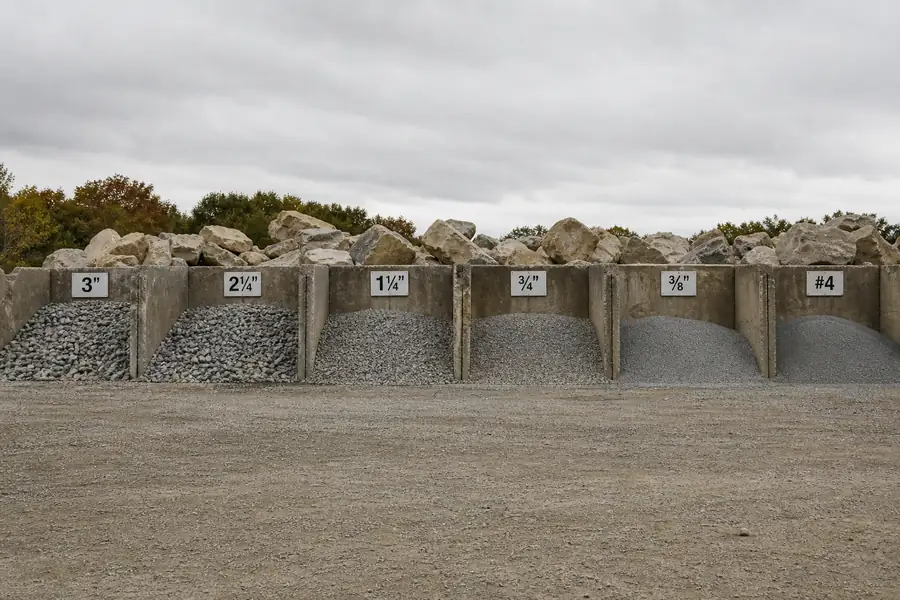
This driveway gravel size chart lines up every crushed stone size North Carolina Rock Supply delivers, from fine screenings up to riprap, with the inch range, the best use and whether it compacts or drains.
| Material | Inch Range | Best Use | Compacts or Drains |
|---|---|---|---|
| Screenings | Dust to 1/8 in | Paver joints, leveling, walkway binder | Compacts tight, drains poorly |
| 3/8 inch crushed stone | 1/4 to 3/8 in | Walkways, exposed aggregate mixes | Compacts fair, drains fair |
| #89 crushed stone | 1/8 to 3/8 in | Pipe bedding, under pavers | Compacts well, drains fair |
| #8 crushed stone | 3/8 to 1/2 in | Concrete mix, drain pipe bedding | Compacts fair, drains well |
| #57 stone | 3/4 to 1 in | Driveway topping, drainage lines | Compacts loosely, drains fast |
| 3/4 inch crushed stone | 1/2 to 3/4 in | Driveway topping, exposed aggregate | Compacts loosely, drains well |
| #67 stone | 3/4 to 1 in | Drainage fill, driveway topping | Compacts loosely, drains fast |
| #4 crushed stone | 1 to 2.5 in | French drains, large drainage fill | Does not compact, drains fastest |
| Crusher run | Dust to 3/4 in blend | Driveway base, patio base | Compacts hard, drains poorly |
| ABC stone / road base | Dust to 3/4 in blend | Road and driveway base course | Compacts hard, drains poorly |
| Riprap | 4 to 12+ in | Slope and creek bank erosion control | Does not compact, drains well |
| Railroad ballast | 1 to 3 in | Rail beds, heavy equipment pads | Interlocks under load, drains well |
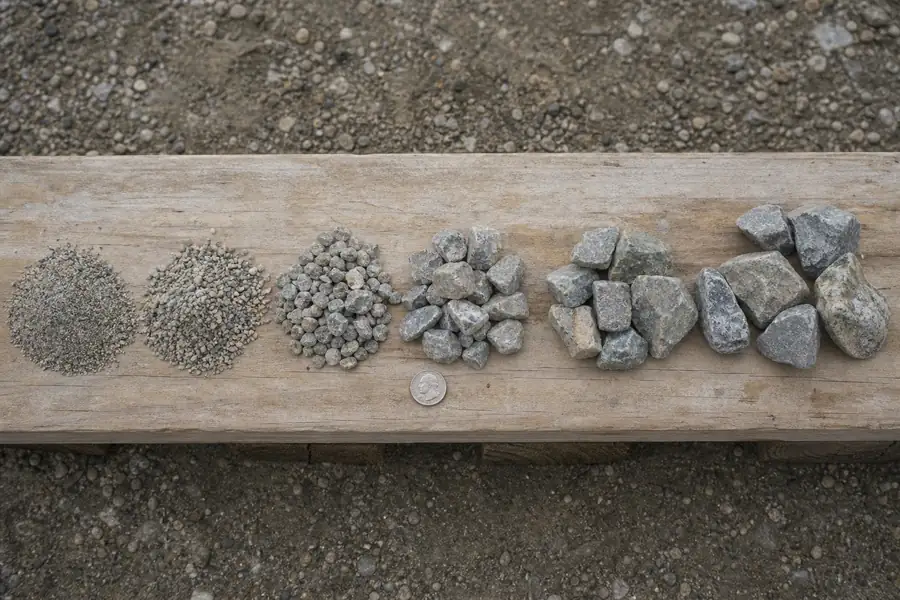
A quarter laid next to a handful of #89 or 3/8 inch crushed stone shows just how fine those grades run compared with the fist-sized rock in a #4 crushed stone or riprap load.
How Crushed Stone Size Numbers Work
Crushed stone size numbers describe a gradation, the range of particle sizes that pass through a set of screens, not one exact dimension. That is why two stones with similar-sounding numbers, like #57 and #67, can behave almost the same on a job.
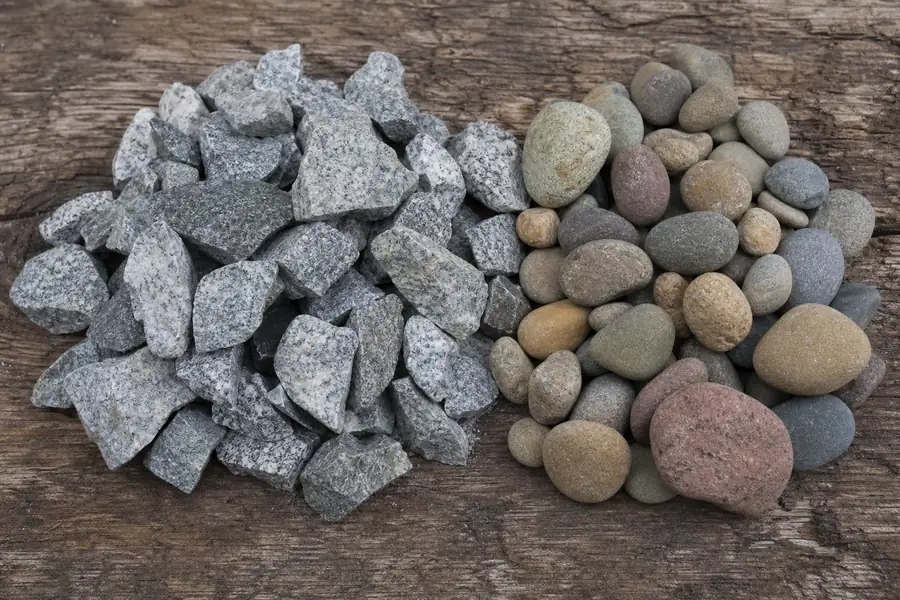
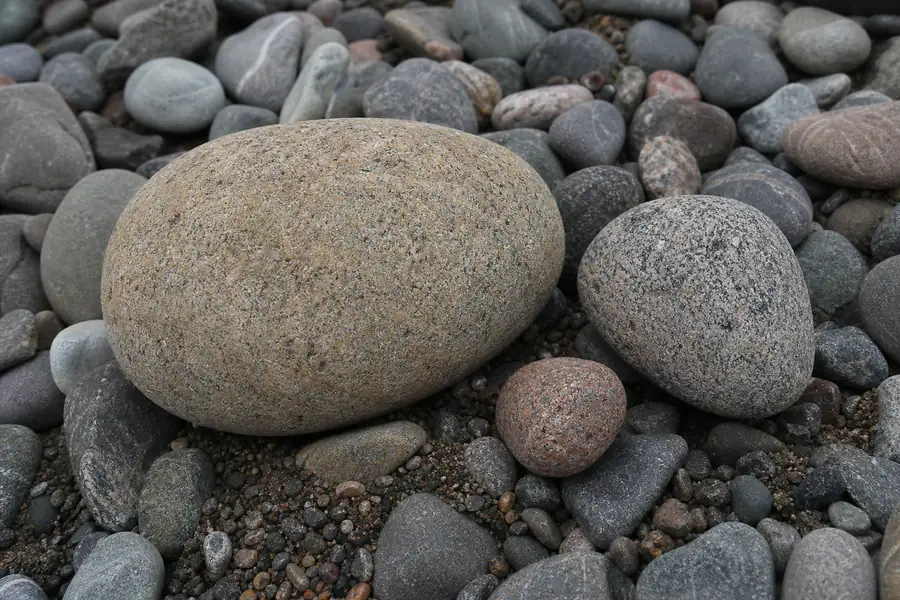
Crushed stone is quarried rock, mostly granite and gneiss in the North Carolina Piedmont, mechanically broken and screened to size. Gravel is naturally rounded stone shaped by water instead of crushed. That difference changes how a load compacts and drains, which the crushed stone vs gravel comparison covers in more detail.
Lower numbers on this chart, like #4, mean bigger stone with more open space between pieces. Higher numbers, like #89, mean finer material that packs tighter and drains slower. Screenings sit at the bottom of the scale: they run closer to sand than stone, which is exactly why they lock paver joints tight instead of moving water.
Choosing the Right Driveway Gravel Size for Your Project
Most North Carolina driveways need two different sizes, not one: a compactable base underneath and a topping that drains and looks finished on top.
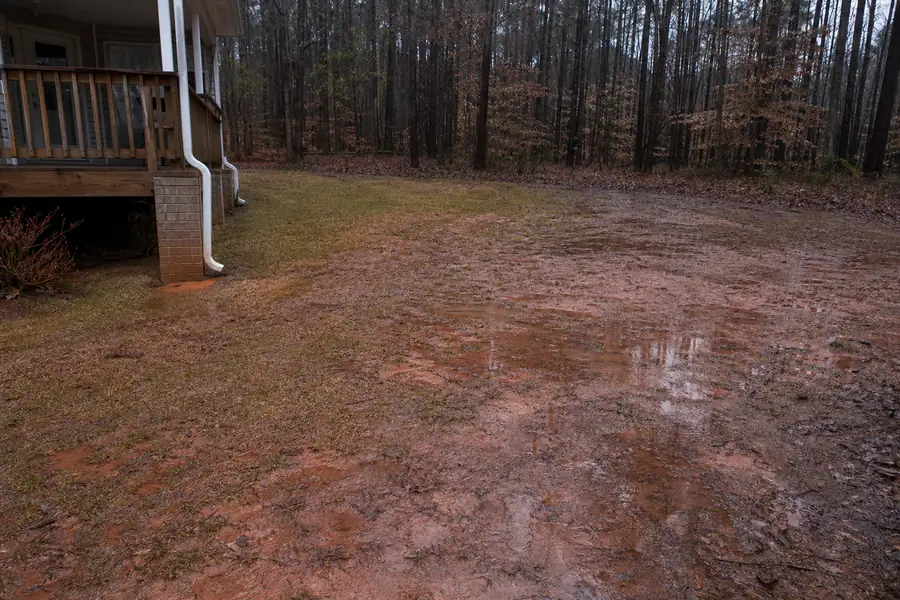
The base layer does the heavy lifting. Crusher run and ABC stone both blend crushed stone with fine material that locks together under a compactor, which is what keeps a driveway from pumping and rutting when Piedmont red clay turns greasy under a wet tire. A 4 to 6 inch compacted base is standard before any topping goes down.
On top, most homeowners choose #57 stone or 3/4 inch crushed stone for the finished driving surface, since both sizes shed water instead of holding it and do not track onto tires and floors the way finer material does. Where a driveway edge or ditch line needs extra drainage, #67 stone or #4 crushed stone handle that job because the bigger voids between stones move water fast instead of clogging with fines.
NC Naming Quirks: ABC Stone, Crusher Run and Local Terms
ABC stone and crusher run mean two closely related but distinct products in North Carolina, and treating them as interchangeable is the most common mix-up buyers make. ABC stone refers to the graded aggregate base course material North Carolina road crews specify under pavement, a mix of crushed stone and stone dust sized to compact into a hard, stable base. The breakdown of what ABC stone is in North Carolina covers where that name comes from and why it is the default choice for driveway bases statewide.
Crusher run is a close cousin. It follows the same idea of a crushed stone and fines blend, but the gradation and source vary more from supplier to supplier. The crusher run vs washed stone comparison breaks down when a compactable base like crusher run beats an open, washed stone like #57 for drainage.
Screenings go by other names around the state too. Ask for stone dust or man sand in some counties and you will get the same fine material used to fill paver joints and level flagstone.
Large Stone Sizes for Drainage and Erosion Control
Riprap and railroad ballast handle jobs no driveway gravel size can: stabilizing slopes and moving heavy water flow without shifting under pressure.
On Piedmont slopes prone to washing out after a heavy rain, riprap holds soil in place because its size and weight resist the current or runoff that would carry off smaller stone. Railroad ballast fills a different niche: angular, uniform stone in the 1 to 3 inch range that drains fast and interlocks under load, which makes it a common choice for crawlspace pads and heavy equipment pads as well as rail beds.
FAQs
What's the difference between #57 and #67 stone?
#57 stone and #67 stone are both driveway-friendly crushed stone sizes with a similar top size, generally 3/4 to 1 inch, but #67 stone runs a bit more consistent and slightly smaller on average. Either one drains well and works as a driveway topping or drainage fill, and the choice usually comes down to what a supplier has on hand and the finished look you want.
Is crusher run the same as ABC stone?
Crusher run and ABC stone are close but not identical. Both blend crushed stone with fine material so they compact into a hard base, but ABC stone follows the North Carolina gradation used for road and driveway base course, while crusher run gradation can vary a bit more by quarry.
What size crushed stone is best for a driveway?
Most North Carolina driveways use a compacted base of crusher run or ABC stone, then a topping of #57 stone or 3/4 inch crushed stone for the finished surface. That combination compacts hard underneath and drains water off the top, which keeps the driveway stable through wet Piedmont clay and heavy rain.
What is screenings used for?
Screenings, also called stone dust or man sand, is the finest crushed stone product, closer to coarse sand than gravel. It fills joints between pavers, levels a paver base, or binds a walkway surface, but it is not a standalone driveway material because it holds water instead of draining it.
Do bigger stone numbers mean bigger rock?
Not always. The number identifies a gradation standard rather than a single size, so a #4 crushed stone actually runs larger than a #57 or #89, even though the number itself is smaller. Checking the inch range for each size, rather than assuming the number scales with size, is the safest way to order the right material.