#89 Crushed Stone for North Carolina Paver Joints and Path Bedding
#89 Crushed Stone keeps a tight, compacted finish in North Carolina paver joints, flagstone beds, chip-seal surfaces, and concrete mixes.
- Size: About 3/8 inch down to fines
- Grading: #89, carries some fines
- Type: Angular crushed stone
From $437 for 1 ton, delivery included
Larger loads cost less per ton: 500 tons is $32,535 ($65.07 per ton). Pick any quantity below for a delivered price.
Free delivery included
Free delivery anywhere in North Carolina
Pick a delivery date
Weekday delivery, earliest Oct 20
Get a Free Quote
Fill out the form and our sales team will get back to you within the hour.
Size and Grading
- Size
- About 3/8 inch down to fines
- Grading
- #89, carries some fines
- Type
- Angular crushed stone
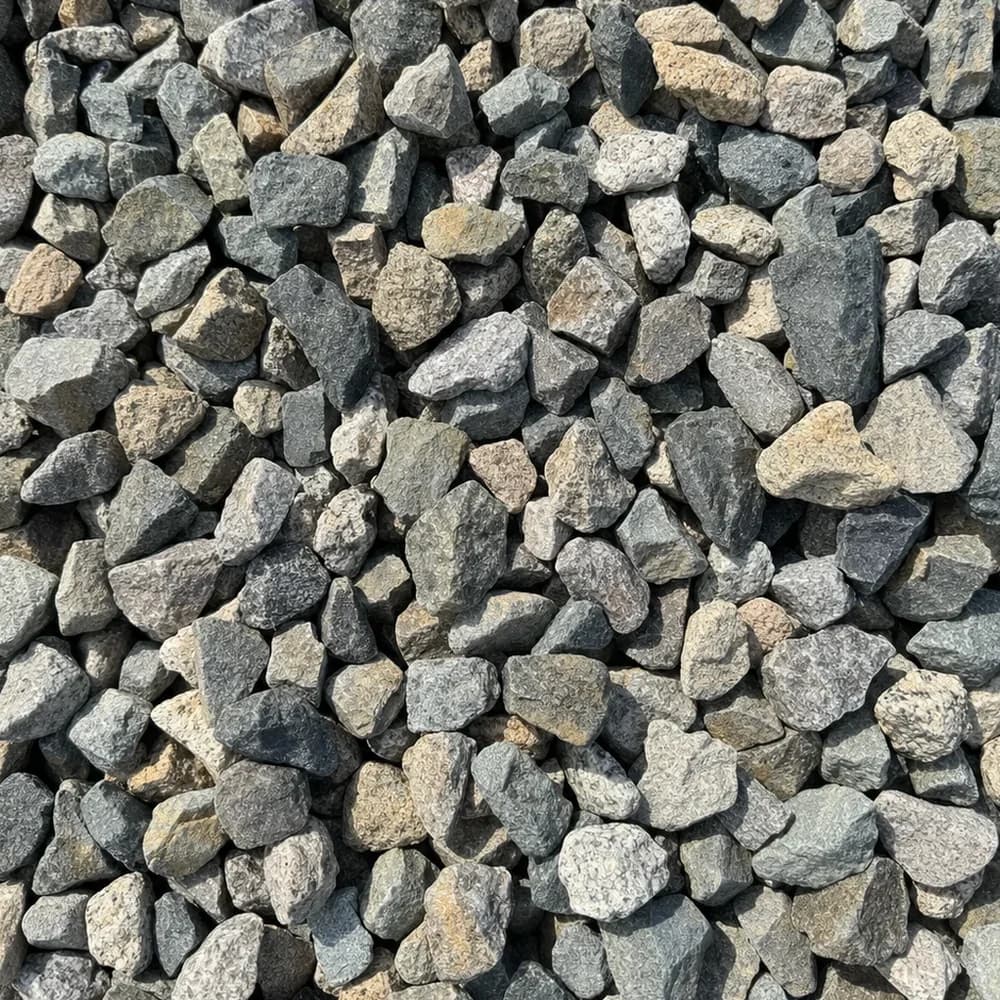
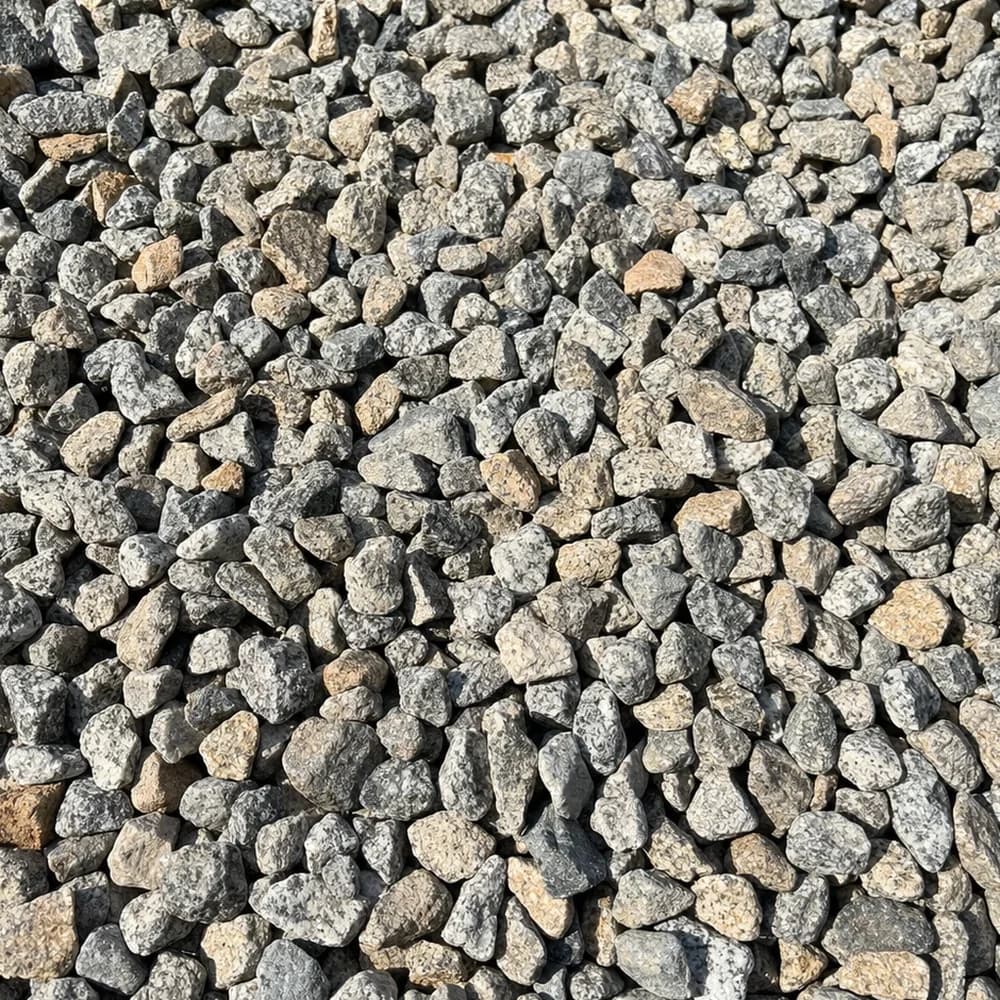
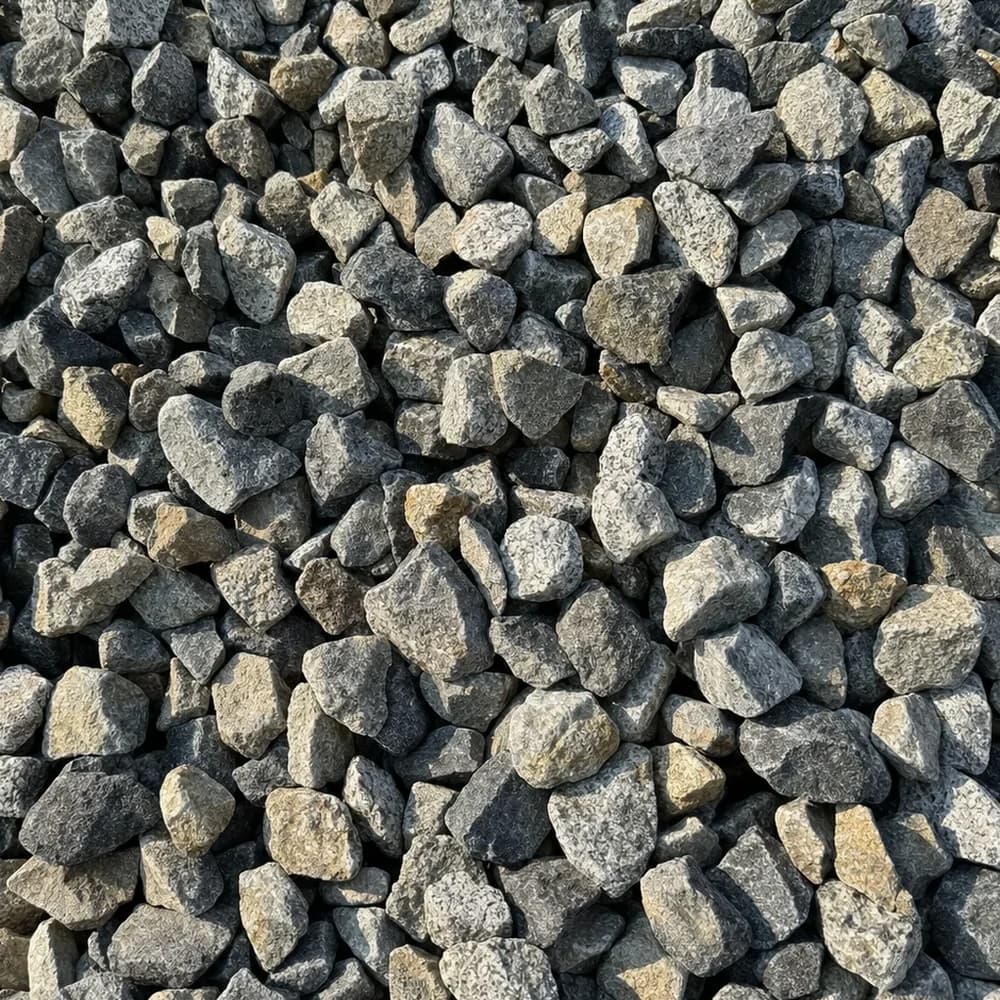
Tip a load of this out on a Piedmont driveway and the first thing you notice is the dust. Gray film on the shovel, gray on your hands, a faint haze when you pull the first few scoops off the top. That dust is not contamination and it is not something to hose off. It is the fine end of the grading, and it is the reason #89 crushed stone is worth buying for the jobs on this page and the reason it should be kept well away from anything that has to drain.
| Spec | What is listed |
|---|---|
| Size | About 3/8 inch down to fines |
| Grading | #89, carries some fines |
| Type | Angular crushed stone |
What a load of #89 actually holds: chips, grit and dust
Not one size. A clean stone is a narrow band of similar pieces with the small stuff washed away. This runs from roughly 3/8 inch at the top down through chips and grit to dust, and the small fractions are there on purpose to fill the gaps between the larger ones.
Squeeze a damp handful and it holds its shape for a second before crumbling. That is the tell, and it explains how the pile behaves on the drive: it slumps rather than spreading, it sheds rain off the top rather than taking it in, and it starts to set up if it is left sitting for a few weeks. Order it for a job that is ready.
How is this different from the #8 stone listed beside it?
The top sizes are nearly the same, which is how the two get mixed up. Everything else is opposite. #8 Crushed Stone is washed clean with little to no fines, so its voids stay open and water travels through the layer. #89 keeps its fines, so the voids close under compaction and the layer becomes a firm, tight surface instead.
That single difference decides every job. Bedding a pipe, filling a French drain, sweeping a permeable paver joint: those need the clean one, and putting this material in them seals the very thing that is supposed to carry water. Setting flagstone level, jointing a standard paver field, surfacing a path so it stops shifting underfoot: those need this one, and the clean stone will rattle around in them forever.
The nearest thing to it on the other side is Screenings, which is finer again and is what most people here use for a flagstone setting bed. Think of #89 as the step between the two: more stone in it than screenings, more fines in it than a washed grading.
Will it hold up around a fire ring in the Piedmont?
Yes, and it is one of the better uses for it. A fire pit surround takes chair legs being dragged, people standing in one spot, and a mower running the edge. A clean rounded stone rearranges itself under all three. This material, spread thin over a firm base and compacted, holds a texture that stays put and sheds rain off toward the edges rather than pooling in the middle.
The compromise is dust. A compacted surface gives off a little of its fine fraction when it is swept or scuffed, which is fine on a patio path and less welcome against pale cushions. Keep the ring itself clear and start the stone a foot or so out from the fire.
Does it belong under an equipment pad or a gravel drive?
Under, sometimes. On top, no.
A pole barn or equipment pad is carrying concentrated load onto ground that holds water for days after a storm. The load-carrying layer under a pad like that is a compacted base course, and in this state that means ABC Stone or Crush and Run built up in lifts. Where #89 earns a place is above that base and below a set surface, as a thin leveling and seating layer for pavers, slabs or a mortar bed.
A single-car gravel drive is the job people most often get wrong with it. A drive wants a top course with real stone in it that tires can bite into. At 3/8 inch and down, this material makes a smooth, tight surface that looks excellent for a season, then starts to ravel where wheels turn and to wash into a rut where the drive falls away toward the road. Heavy rainfall and tropical systems make short work of a fine surface on any grade. On a flat, lightly used parking apron it can work as the finish over a proper base. On a sloping drive, put Driveway Gravel on top instead.
How deep should it go, and what has to be underneath on red clay?
Deep is not the goal with this material. It is a seating and jointing layer, so an inch or so as a bedding course under a unit and a thin surface course over a compacted base are the realistic ranges, and the site's general guidance of about 2 inches for landscape work is the sensible upper end for a path finish. Past that it stops being a bedding layer and starts being an unstable cushion that pavers sink into.
Measure it loose as you spread it and expect to lose a little depth once the plate has been over it, because fines moving into the voids is the entire point of the material. On red clay the layer underneath matters more than the layer itself. Piedmont clay softens when it stays wet and will let a thin bedding course deform no matter how well it was compacted, so a base of ABC stone or crush and run goes down first, compacted, with fabric between the clay and the base where the ground stays soft. Coastal Plain sand is firmer to work on but shifts sideways under load, so the base still goes in and edge restraint does more of the work.
What does the tonnage work out to for a 16-foot ring and a 12 by 30 pad?
Two hypothetical areas, worked at the same depth, using the site's published weight for its #89, #8 and 3/8 inch chip family: about 2,800 lb per cubic yard, or 1.40 tons per yard. Treat the figure as approximate.
A fire pit surround, 16 feet across overall, with a 4-foot pit left open in the middle, at 2 inches:
- Full circle: 3.14 x 8 x 8 = 201 square feet
- Pit area to deduct: 3.14 x 2 x 2 = 12.6 square feet
- Net area: 201 - 12.6 = 188 square feet
- Depth: 2 / 12 = 0.167 feet
- Volume: 188 x 0.167 = 31.4 cubic feet
- Cubic yards: 31.4 / 27 = 1.16
- Tons: 1.16 x 1.40 = 1.6
A parking apron, 12 feet by 30 feet, surfaced at 2 inches over an existing compacted base:
- Area: 12 x 30 = 360 square feet
- Depth: 2 / 12 = 0.167 feet
- Volume: 360 x 0.167 = 60 cubic feet
- Cubic yards: 60 / 27 = 2.22
- Tons: 2.22 x 1.40 = 3.1
About 3.4 cubic yards and 4.7 tons across the two. The paver base calculator handles the bedding side of a job like this, and the stone tonnage tool will run an area straight to tons if you would rather skip the arithmetic. Set the amount and the delivery date together on this listing; delivery is arranged at checkout from the ZIP code entered there, and the truck needs a firm spot and a clear line to it.
Quickly Calculate How Much You Need
Material: #89 Crushed Stone
How to Measure
Measure the length and width of your project area in feet
Decide on depth in inches (2" for landscaping, 4" for driveways)
Enter the values above and we'll calculate the tonnage you need
Need help figuring out the right amount? We can help!
Call or text us at (919) 752-3797 and we'll help you calculate the right quantity for your project.
Not sure how much you need? The Stone Calculator has depth guides, coverage charts and worked examples for this material.
Frequently Asked Questions About #89 Crushed Stone
#89 Crushed Stone delivery across North Carolina
- Charlotte
- Raleigh
- Greensboro
- Durham
- Winston Salem
- Fayetteville
- Cary
- Wilmington
- High Point
- Concord
- Greenville
- Asheville