Railroad Ballast for North Carolina Pads, Lanes and Track Beds
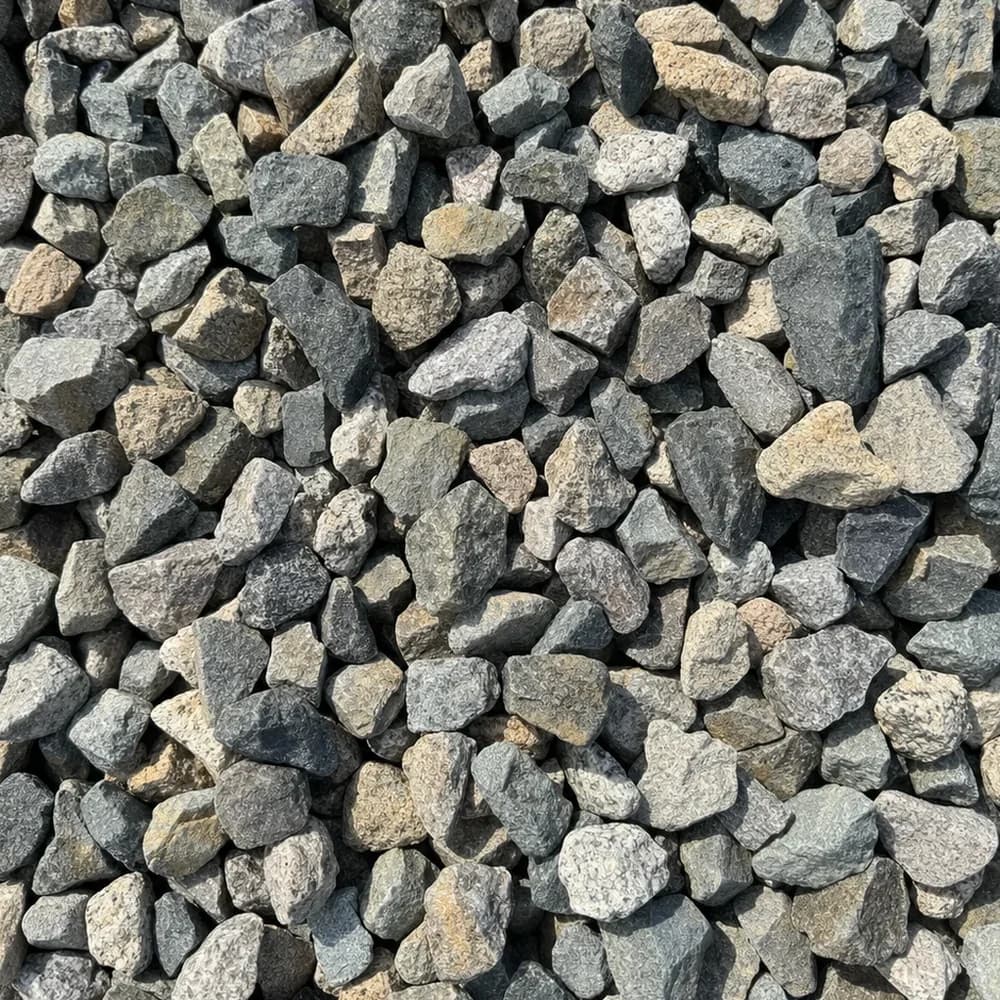
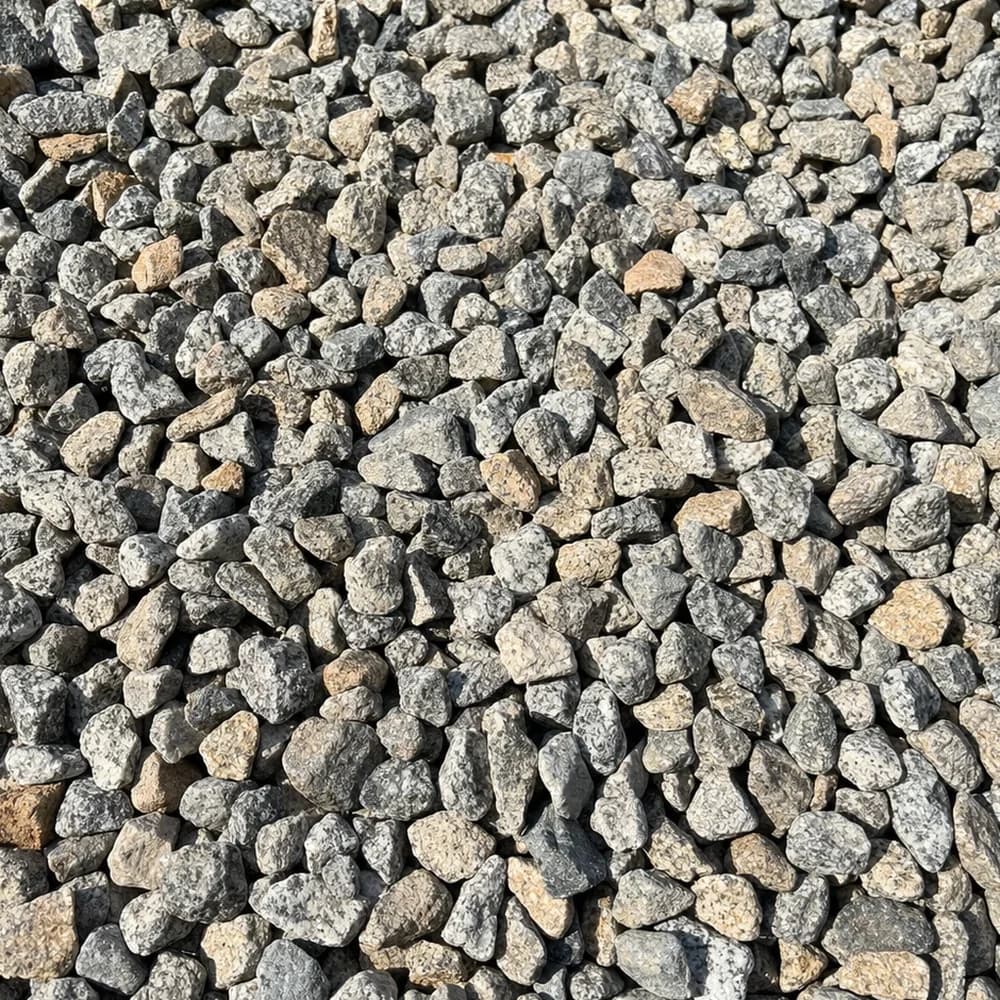
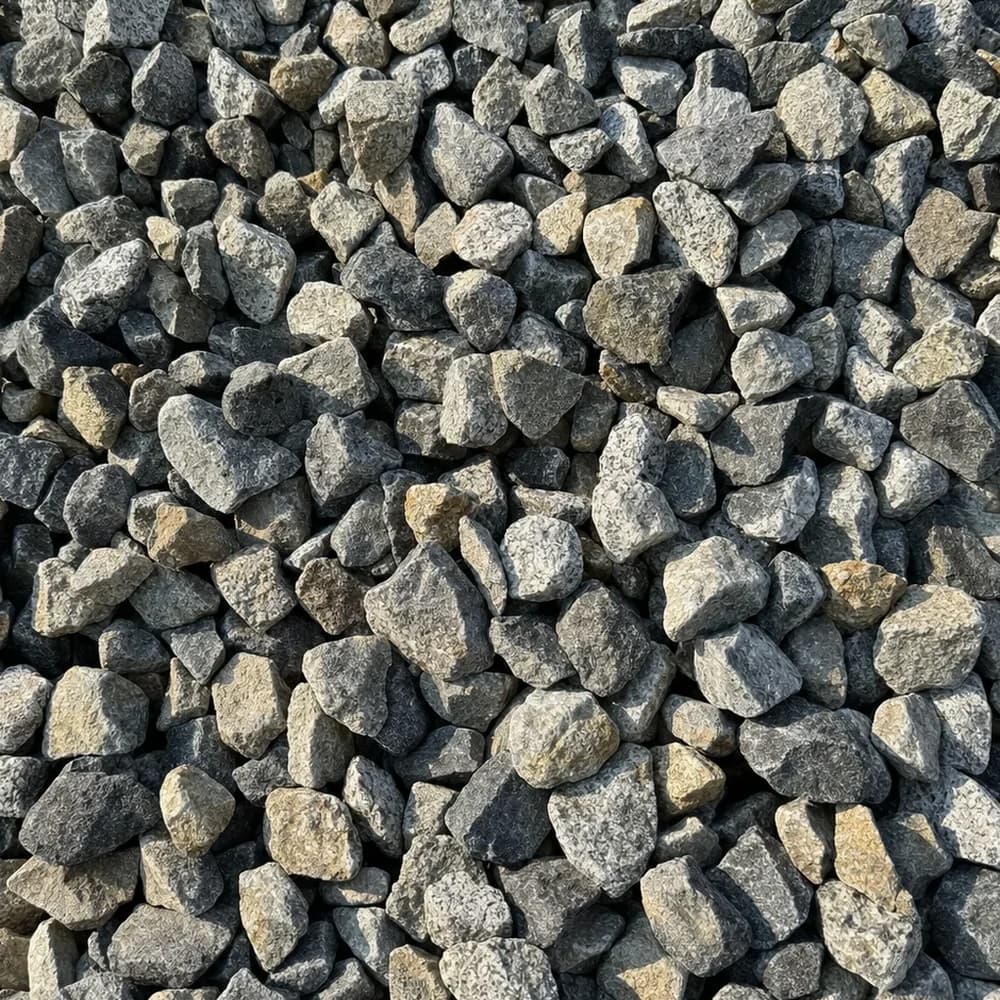
Railroad Ballast keeps an open, angular stone surface under heavy use in North Carolina pads and access routes, rather than forming a fine compacted finish.
- Size: Roughly 1 inch to 2.5 inches
- Grading: Graded to interlock under load while draining freely
- Type: Large angular crushed stone
From $437 for 1 ton, delivery included
Larger loads cost less per ton: 500 tons is $32,535 ($65.07 per ton). Pick any quantity below for a delivered price.
Free delivery included
Free delivery anywhere in North Carolina
Pick a delivery date
Weekday delivery, earliest Oct 20
Get a Free Quote
Fill out the form and our sales team will get back to you within the hour.
Size and Grading
- Size
- Roughly 1 inch to 2.5 inches
- Grading
- Graded to interlock under load while draining freely
- Type
- Large angular crushed stone
Two piles sit side by side in most yards and get confused constantly. Railroad ballast runs roughly one inch to two and a half. #4 crushed stone runs about 3/4 inch to 1-1/2 inches. An inch of difference at the top end sounds like little, and it changes how a layer behaves under a loaded axle, how much water it moves, and how much of it you need.
Railroad ballast and #4 stone sit an inch apart at the top and behave differently
The listing is Railroad Ballast, roughly one inch to two and a half inches, graded to interlock under load while draining freely, large angular crushed stone.
| Railroad Ballast | #4 Crushed Stone | |
|---|---|---|
| Size | Roughly 1 to 2.5 inches | About 3/4 to 1-1/2 inches |
| Grading intent | Interlock under load, drain freely | Coarse open layer |
| Typical role | Track beds, heavy pads, industrial access | Heavy-duty base, gabions, high-volume drainage |
| Weight per cubic yard | About 2,900 lb | About 2,900 lb |
The practical difference is at the top of the range. Larger pieces bridge further across soft ground and are harder for a wheel to displace, which is what the grading is meant to deliver. The trade is placement: a layer this size never reads as level, cannot be raked smooth, and is awkward to walk across. Where the ground is firm to start with and the load is ordinary, the smaller stone is the easier material to live with.
Order it when the load is heavy and the ground will not dry out
Three conditions make ballast the right call, and it usually takes at least two of them.
The load is genuinely heavy. A track bed, a pad a tractor or an excavator sits on, a lane a loaded feed truck uses in all weather. Ordinary car traffic does not need this size.
The ground stays wet. Piedmont clay holds water for days after a storm, and a lane crossing a seep or a low draw never fully dries. Larger stone bridges those soft lengths rather than disappearing into them.
The water arrives all at once. Tropical remnants drop the year's worst rain in hours, and a layer with voids this large keeps carrying water when a finer layer has already choked.
Leave it alone for beds, paths and anything walked on
Stone at this size is unpleasant underfoot, impossible to wheelbarrow across, and unkind to a mower that finds a stray piece. It does not belong on a garden path, a play area, a patio surround, or any surface people cross regularly.
It is also not a finish for a residential drive. Cars ride on the points, tires take punishment, and the surface never evens out. A drive that needs help on soft ground gets ballast as its bottom lift and something finer above it.
A ditch lining, a rock garden and a garage pad, ranked by fit
Three hypothetical jobs on one rural property, in order of how well ballast serves them.
The shed or garage pad is the strong fit. Point loads from a structure need spreading, and on clay that softens seasonally a bottom lift of ballast over geotextile does that better than anything smaller. Place it six inches deep, top it with a compacted layer of ABC Stone, and finish with whatever the building calls for.
The culvert outlet or ditch lining is a partial fit at best. It handles the drainage, but water leaving a pipe at speed will move stone of this size once the flow is real, particularly on a Piedmont clay slope after a tropical system. Outlet protection wants armor heavy enough that moving water cannot roll it, which is what RipRap is listed for. Ballast is only reasonable in a shallow ditch with gentle flow.
The xeriscape or rock garden bed is the wrong fit. Gray angular rock at this size looks like a work yard, traps leaf litter in the voids where it cannot be raked out, and makes planting or weeding around it miserable. River Rock or Large River Rock is what a decorative bed wants.
It is the bottom lift, not the layer you look at
The most useful thing to understand about ballast is that it is structure, not surface. On a rail bed it sits under sleepers, which spread the load across it and keep anything from riding on individual stones. On a pad or a lane, the equivalent of those sleepers is the layer above.
That means three courses on soft ground. Geotextile first, so clay cannot pump up into the stone. Ballast next, six inches or more, to bridge and drain. Then a compacted base of ABC stone or Crush and Run to fill the surface voids and give a working level, with a wearing course over that if vehicles will use it daily.
Skipping the middle layer is the usual mistake. Stone this large left bare stays loose at the surface indefinitely, because nothing fills the gaps between pieces.
Tons for a 100-foot farm lane and a 16 by 20 equipment pad
Two hypothetical jobs, both as a six-inch bottom lift.
The lane, 100 feet long by 10 feet wide:
- Area: 100 x 10 = 1,000 square feet
- Depth: 6 / 12 = 0.5 feet
- Volume: 1,000 x 0.5 = 500 cubic feet
- Cubic yards: 500 / 27 = 18.5
The pad, 16 feet by 20 feet:
- Area: 16 x 20 = 320 square feet
- Depth: 6 / 12 = 0.5 feet
- Volume: 320 x 0.5 = 160 cubic feet
- Cubic yards: 160 / 27 = 5.9
That is 24.4 cubic yards. This site publishes the #4 stone and railroad ballast family at approximately 2,900 lb per cubic yard, or 1.45 tons per yard, so 24.4 x 1.45 comes to 35.4 tons. Round to 36 and you have a little to work with at the edges. The stone calculator will take a lane that changes width, and the five percent it adds by default covers ground that is not flat.
Set quantity and delivery date together on this page. Delivery is arranged at checkout from your ZIP code, the truck needs firm standing and a clear line to the dump spot, and on a long lane it is worth planning several piles along the run rather than one at the end. The access requirements are set out separately.
Quickly Calculate How Much You Need
Material: Railroad Ballast
How to Measure
Measure the length and width of your project area in feet
Decide on depth in inches (2" for landscaping, 4" for driveways)
Enter the values above and we'll calculate the tonnage you need
Need help figuring out the right amount? We can help!
Call or text us at (919) 752-3797 and we'll help you calculate the right quantity for your project.
Not sure how much you need? The Stone Calculator has depth guides, coverage charts and worked examples for this material.
Frequently Asked Questions About Railroad Ballast
Railroad Ballast delivery across North Carolina
- Charlotte
- Raleigh
- Greensboro
- Durham
- Winston Salem
- Fayetteville
- Cary
- Wilmington
- High Point
- Concord
- Greenville
- Asheville