How to Build a Gravel Driveway: Base Layers, Depth, Crown and Compaction
Quick answer: A solid gravel driveway needs 8 to 11 inches of compacted stone in three layers (road base, crusher run, surface gravel), a 2 to 4 percent center crown for drainage, and each layer compacted separately before the next goes down. A typical 12 by 100 foot driveway takes roughly 57 tons of stone total across all three layers.
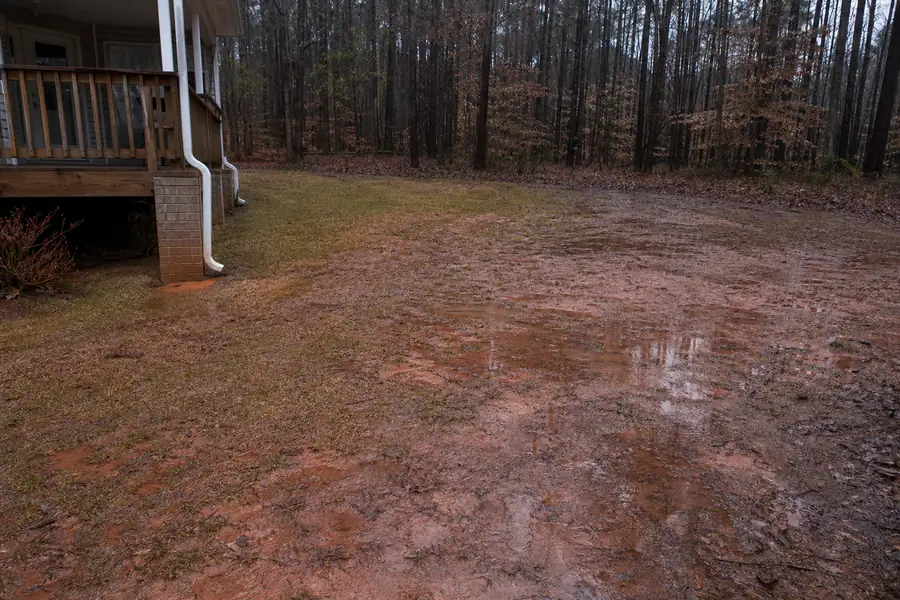
A gravel driveway holds up in North Carolina when it's built in compacted layers with a shaped crown, not dumped from one load and driven on. Piedmont red clay turns greasy under wheel loads, so the base does the work that frost depth handles in colder states. This guide walks through the layers, depths, crown percentage and compaction steps that keep a gravel driveway solid through a wet Carolina winter, with a worked tonnage example for a standard 12 by 100 foot drive.
What You Need to Build a Gravel Driveway
Building a gravel driveway takes three stone layers, a fabric barrier and basic compaction equipment. Gather these before you break ground:
- Road base (ABC stone) for the compacted foundation layer, 4 to 6 inches deep
- Crusher run for the middle stabilizing layer, 2 to 3 inches deep
- #57 stone or driveway gravel for the finished surface layer, 2 inches deep
- Woven landscape fabric to keep the base from mixing into the clay subgrade
- A plate compactor or vibratory roller
- A rake, string line and shovel for shaping the crown
Step 1: Excavate and Prep the Subgrade
Excavate the driveway path 8 to 10 inches below finished grade, stripping topsoil, roots and any soft, wet clay that pumps underfoot. If the driveway will connect to a state-maintained road, check North Carolina's driveway permit and culvert rules before you dig; most counties require a culvert pipe sized to the roadside ditch.
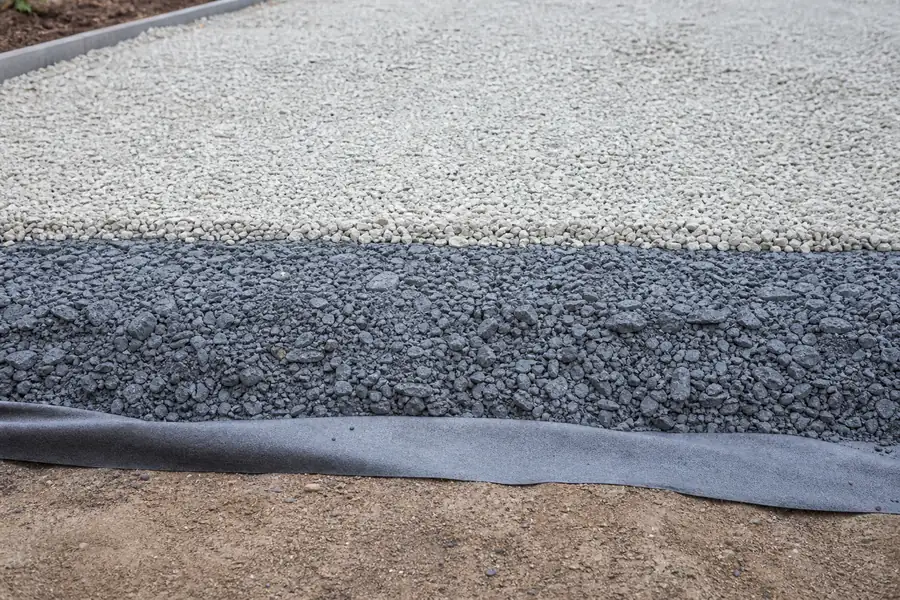
Once the subgrade is graded and any soft spots are undercut and backfilled, roll out landscape fabric across the full width of the cut. It keeps Piedmont red clay from pumping up into the base stone and turning it into a soft, muddy layer that won't compact.
Step 2: Lay and Compact the Base Layers
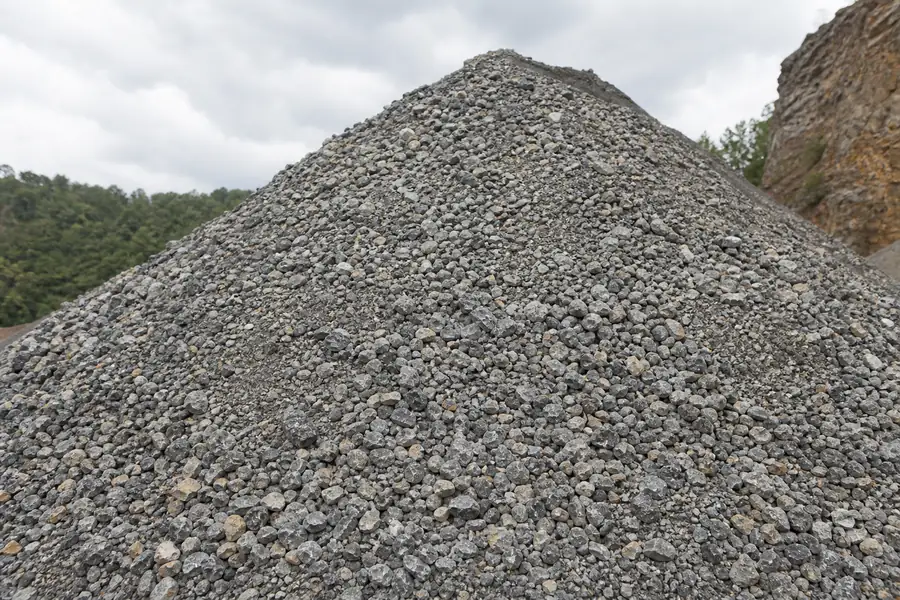
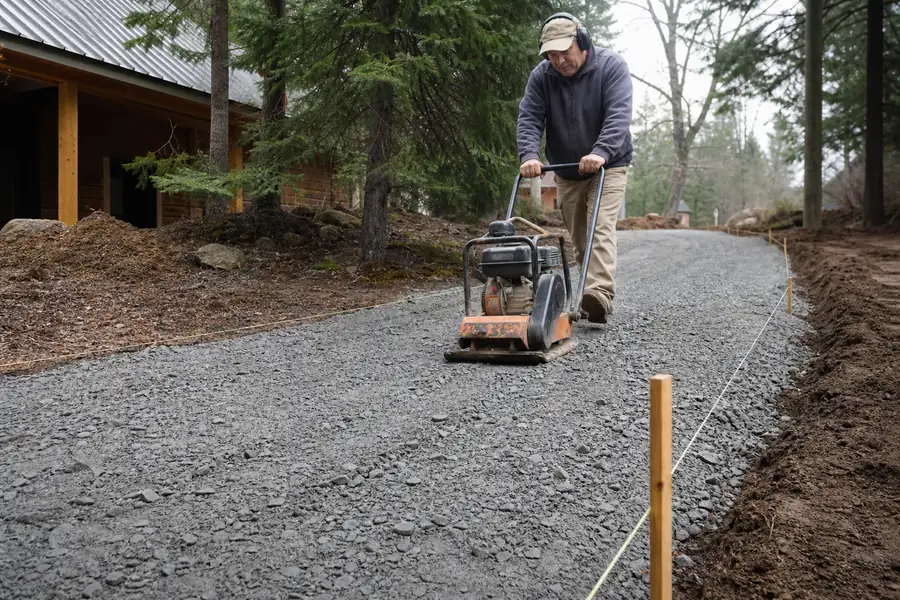
Spread road base, also called ABC stone after North Carolina's aggregate base course spec (see our full guide to ABC stone in North Carolina for more on the material), in 2 inch lifts, compacting each lift with a plate compactor before adding the next, until the layer reaches 4 to 6 inches total. After the road base is compacted, add crusher run in a single 2 to 3 inch lift and compact it again.
Compacting each lift on its own matters more than the total depth. An uncompacted 6 inch layer settles unevenly under a vehicle's weight and the surface cracks and ruts within a season. For how to place and dampen each lift before compacting it, see the crush and run page.
Step 3: Crown the Driveway for Drainage
A gravel driveway needs a crown of 2 to 4 percent so water runs off to the shoulders instead of pooling in the middle and softening the base. On a 12 foot wide drive, a crown in that range puts the center about 1.5 to 3 inches higher than each edge.
Shape the crown into the road base layer first with a rake and string line, then carry that same slope through the crusher run and surface stone so the finished driveway doesn't flatten out. Skipping the crown is the biggest reason gravel driveways rut and pothole through North Carolina's wet winters: water with nowhere to go sits on the clay underneath and turns the base soft.
Step 4: Add the Top Layer and Compact
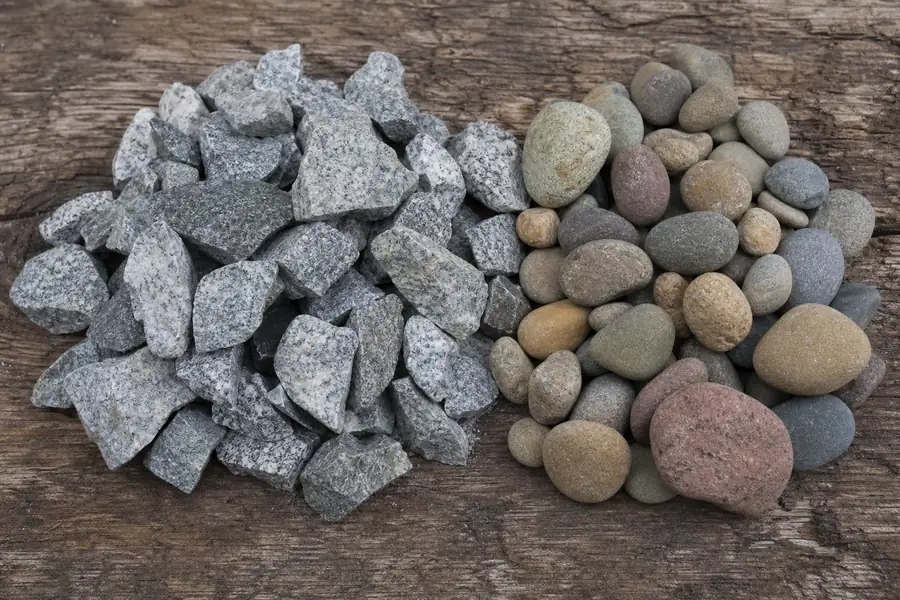
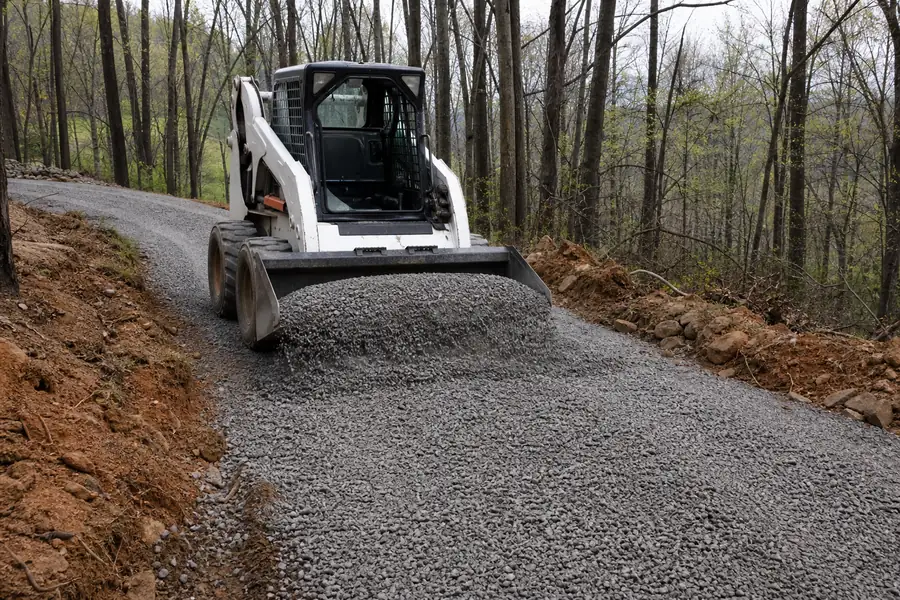
The finished layer is 2 inches of #57 stone or driveway gravel, compacted flush with the crown already shaped into the base below. #57 stone locks together tighter underfoot and holds up better under regular vehicle traffic, while a driveway gravel blend gives a softer, more finished look on a shorter approach drive. For a full breakdown of which surface stone fits a given driveway, see best gravel for North Carolina driveways.
Compact the surface layer the same way as the base, in one pass with a plate compactor, and check that the crown still runs straight down the middle before calling the job done.
How Much Gravel Do You Need for a Gravel Driveway?
A 12 by 100 foot gravel driveway (1,200 square feet) takes roughly 57 tons of stone spread across the three layers, using the standard that one ton of crushed stone covers about 100 square feet at 2 inches of depth.
| Layer | Material | Depth | Tons for 12x100 ft |
|---|---|---|---|
| Base | Road base (ABC stone) | 4-6 in | ~30 tons |
| Middle | Crusher run | 2-3 in | ~15 tons |
| Surface | #57 stone or driveway gravel | 2 in | ~12 tons |
| Total | All layers | ~9.5 in compacted | ~57 tons |
Those figures assume a flat, rectangular drive at compacted depth; curves, slopes and a wider crown add material. Run the exact length and width through the gravel calculator for the surface layer and the crusher run calculator for the base and middle layers to get delivery-ready tonnage for each.
FAQs
How deep should the base be for a gravel driveway in North Carolina?
Most gravel driveways need 8 to 11 inches of total compacted depth across the road base, crusher run and surface stone layers. Piedmont clay and coastal sand both move under a shallow base, so skimping on depth is the fastest way to end up with ruts by the first wet season.
Do I need landscape fabric under a gravel driveway?
Yes, on North Carolina's clay and sandy soils a woven fabric barrier is worth the cost. It keeps the subgrade from mixing up into the base stone, which is what causes a driveway to go soft and pump mud after heavy rain.
What's the best gravel for the top layer of a driveway?
#57 stone and driveway gravel blends are the two most common choices. #57 stone locks together tighter for daily vehicle traffic, while a driveway gravel blend gives a smoother, more finished surface for lighter use.
Do I need a permit to build a gravel driveway in North Carolina?
Only if the driveway connects to a state-maintained road. In that case NCDOT typically requires a driveway permit and a culvert sized to the roadside ditch; county-maintained roads have their own separate rules, so check with the local county office before excavating.
How long do I need to wait between compacting each layer?
No curing time is needed. Compact each lift as soon as it's spread and level, let the compactor pass over it a few times, and move straight on to the next layer the same day.