Best Gravel for North Carolina Driveways: Layers and What Holds on Red Clay
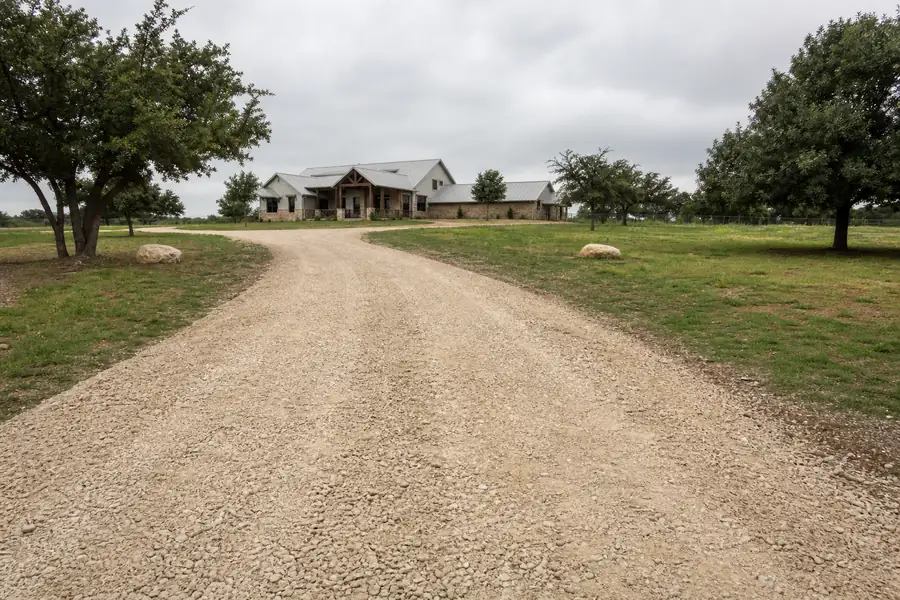
North Carolina driveways fail for wet reasons more than cold ones. Piedmont red clay holds water and turns greasy under a loaded tire, and summer thunderstorms and tropical storm remnants send runoff straight across the drive. Along the coast the problem flips, and loose sand lets stone sink out of sight. Pick the wrong gravel and you are regrading after the first wet season. Build it in the right layers and it carries traffic for years.
- Best surface stone: angular crushed stone such as #57 stone or driveway gravel, not rounded pea gravel or river rock
- The base does the real work: compacted ABC stone with crush and run on top of it
- Red clay needs a deeper base and a crowned surface that sheds water
- Coastal sand needs enough compacted base to bind the stone in place
What's the Best Gravel for a North Carolina Driveway?
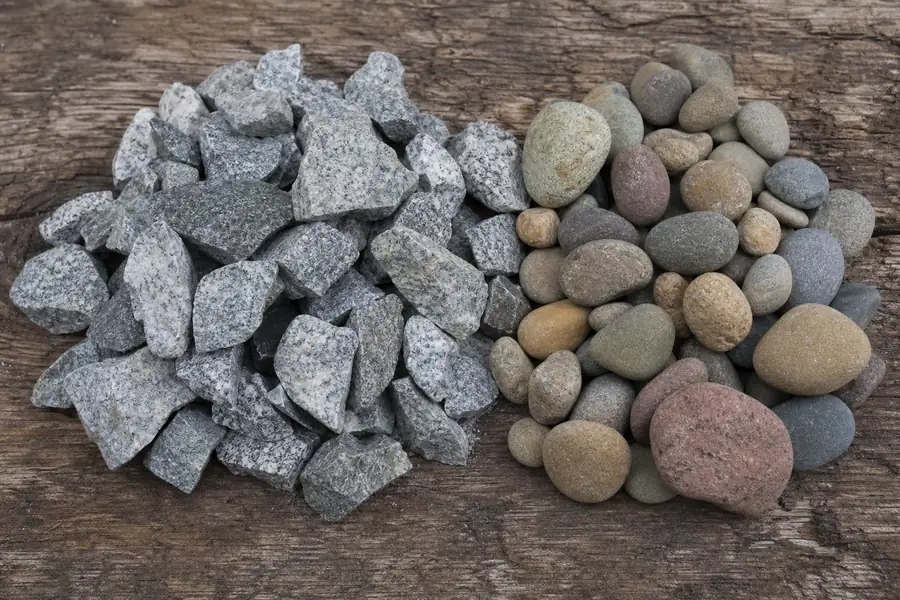
The best surface gravel for a North Carolina driveway is angular crushed stone, such as #57 stone or our driveway gravel. 3/4 inch crushed stone does the same job. Angular edges bite into each other when a tire rolls over them, so the surface locks instead of shifting.
Round stone does the opposite. It rolls out of the way under weight, which is why pea gravel and river rock do not belong on a drive. Surface stone on its own will not carry a truck over wet clay, though. It needs a compacted base doing the structural work underneath.
The Three-Layer Driveway North Carolina Ground Needs
A driveway that holds up here is built in compacted layers, not dumped from one load and driven on. Each layer is spread and compacted before the next goes down.
| Layer | Material | Depth (compacted) | Job it does |
|---|---|---|---|
| Base | ABC stone | 4 to 6 in, 6 to 8 in on red clay | Carries the load over the subgrade |
| Middle | Crush and run | 2 to 3 in | Fills voids and locks the base surface tight |
| Surface | #57 stone or driveway gravel | About 2 in | Driving surface that sheds water |
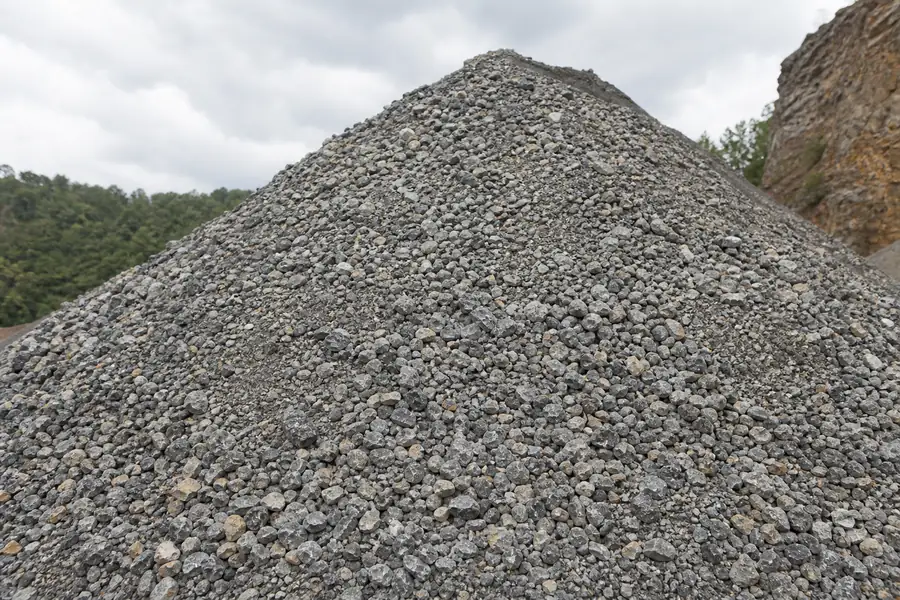
ABC stone, short for aggregate base course, is the crushed stone and fines blend that goes down under nearly every driveway and pad in the state. Our guide to ABC stone in North Carolina covers depth and tonnage for the base, and crush and run vs #57 stone explains why one compacts and the other drains.
Matching the Base to North Carolina Ground
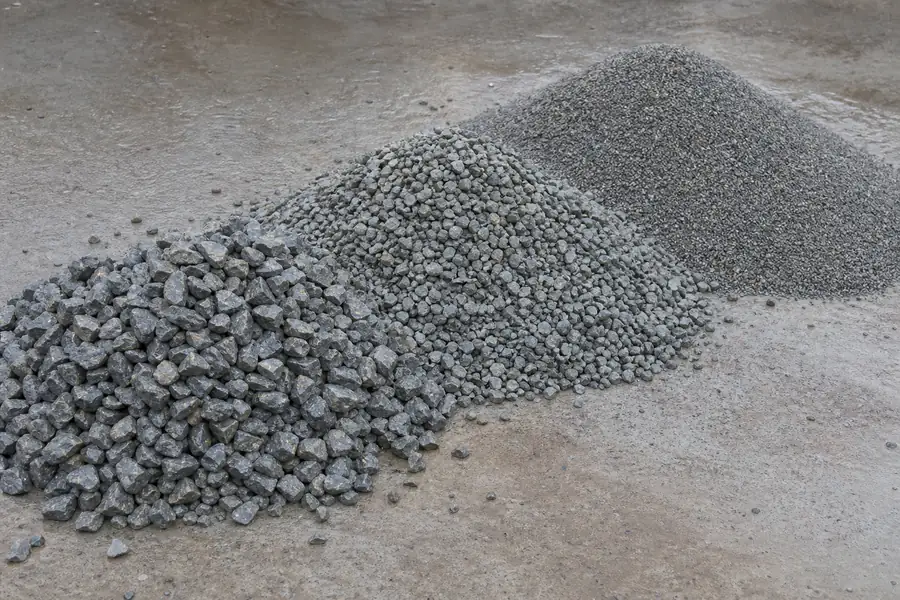
The soil under the driveway decides how thick the base has to be more than the stone on top does. The frost line here only reaches about 12 inches, so water, not frost, sets the depth.
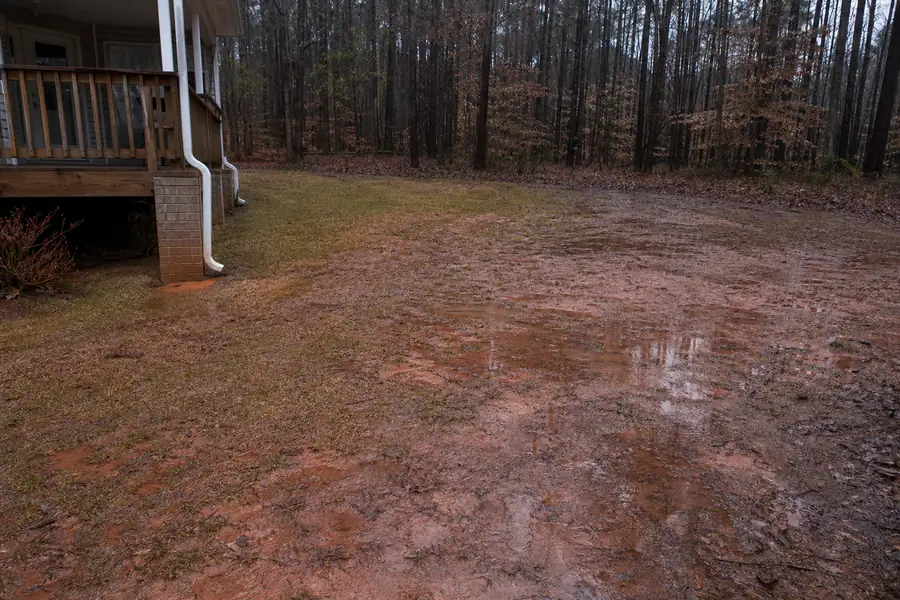
Piedmont red clay runs through Charlotte, Greensboro and much of the Triangle around Raleigh and Durham. It barely drains, and once it is saturated it squeezes up between the stones under a loaded tire. Strip the topsoil down to firm clay and lay landscape fabric. Then build 6 to 8 inches of compacted ABC stone. Gravel driveways on Piedmont red clay walks through that build step by step.
Coastal plain and Sandhills sand around Wilmington and Fayetteville is the opposite problem. It drains well but it is loose, so base stone works its way down into it instead of sitting on top. Compacted ABC stone binds the layer together; go to the deeper end of the range, or add fabric between the sand and the base.
Mountain driveways near Asheville and Boone deal with steep grades and fast runoff. Water running down the wheel tracks carries loose surface stone with it, so keep the surface compacted and give the drive a crown or cross slope that sends water to a ditch before it builds speed.
Rain, Runoff and Humidity
Heavy rain does more damage to a North Carolina driveway than frost does. A crown of 2 to 4 percent across the width lets water run off to the edges instead of soaking into the base. Where the drive sits below a slope, a French drain filled with drain rock or #57 stone along the uphill edge catches water before it reaches the driveway.
Humid weather keeps clay subgrade damp for days after a storm. Compact each layer when the ground has firmed up, because clay rolled while it is soft keeps its water and moves later.
Why Pea Gravel and River Rock Fail on Driveways
Pea gravel and river rock fail on driveways because their rounded shape never locks together. Tires push the smooth stones apart instead of compacting them, so ruts form fast and the gravel migrates toward the lawn or the ditch.
Rounded stone also sinks into wet red clay instead of bridging it. It suits a garden path or a dry creek bed, where natural pea gravel and river rock look right and carry no vehicle weight. Let angular crushed stone carry the driveway.
How Much Driveway Gravel Do You Need?
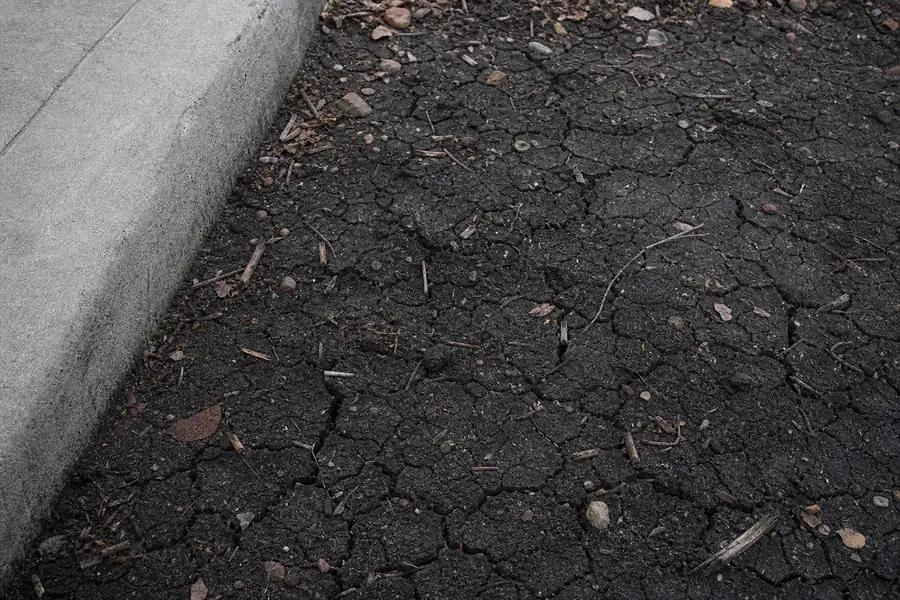
A standard 12 by 100 foot driveway built in three layers takes roughly 57 tons of stone in total, as worked through in our guide on how to build a gravel driveway. For the base alone, one ton of ABC stone covers about 50 square feet at 4 inches deep and about 33 square feet at 6 inches.
Measure your own drive and run the numbers through the road base calculator and the gravel calculator before you order. Ordering short means a second delivery, and ordering long means paying for stone you do not need. For the towns we deliver to, see gravel delivery across North Carolina.
FAQs
What is the best gravel for a driveway in North Carolina?
Angular crushed stone such as #57 stone or driveway gravel over a compacted ABC stone base and a layer of crush and run. The angular surface stone locks under traffic, and the base carries the load over red clay or sand.
Can I use pea gravel for a driveway?
Pea gravel is a poor choice for a driveway because its round shape rolls apart under tires instead of locking together. It works for walkways and decorative beds, but it ruts quickly under vehicle traffic.
How thick should the base be on red clay?
On Piedmont red clay, build 6 to 8 inches of compacted ABC stone, about 2 inches more than the 4 to 6 inches that works on well-drained ground. The extra depth stops saturated clay from pumping up into the gravel.
Is crush and run the same as ABC stone?
They are close relatives and some contractors use the names interchangeably, since both are crushed stone with the fines left in. On this site, ABC stone is sold as road base for the main base layer and crush and run is the 3/4 inch minus material used as the middle layer or for pads.
How much gravel does a typical driveway need?
A 12 by 100 foot driveway built with a full three-layer section takes roughly 57 tons of stone in total. Depth and width change that number, so run your measurements through a gravel calculator before ordering.